
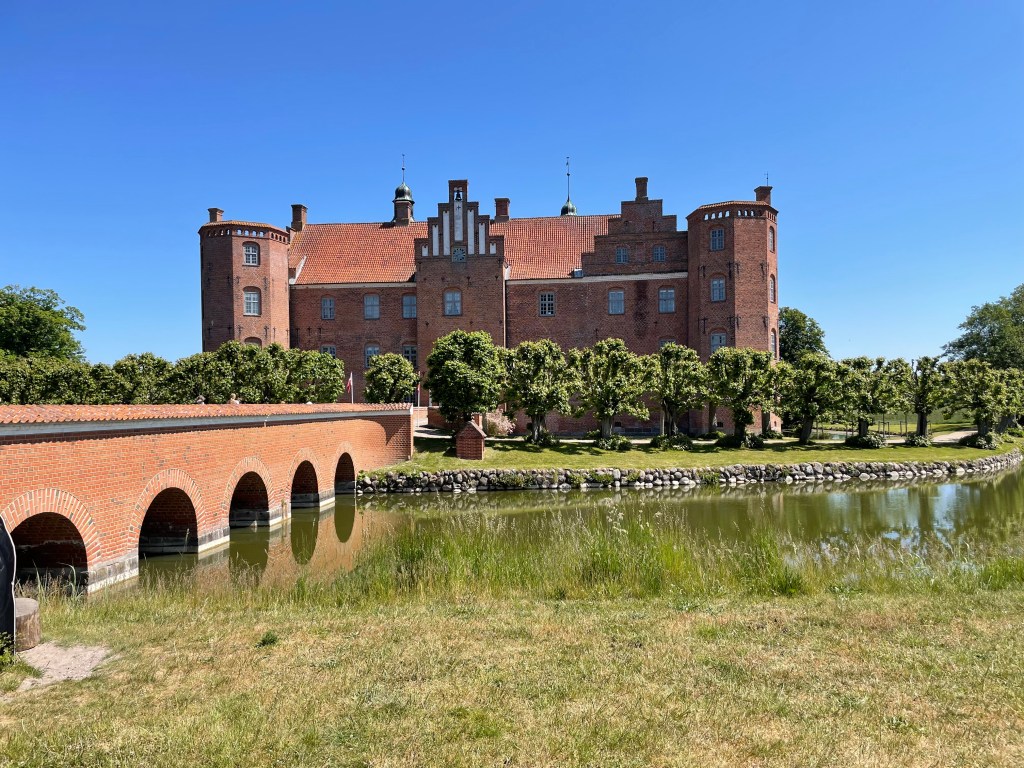
Today we purchased an excursion from the cruise ship to Gammel Estrup or The Green Museum and Rosenholm Castle. We left the port a little after 11 and arrived at the Green Museum (which is the house and the whole area) a little before noon. Gammel Estrup is a manor house that you can tour and it also has a national museum with exhibitions on hunting, forests, agriculture and food. You can also walk around the grounds and tour the gardens, machines, the old smithy, apiary, farm workers’ house, greenhouse, fields and stables, apple orchard, farm animals, orangeries, ice house, carp ponds, and the forester’s cottage.

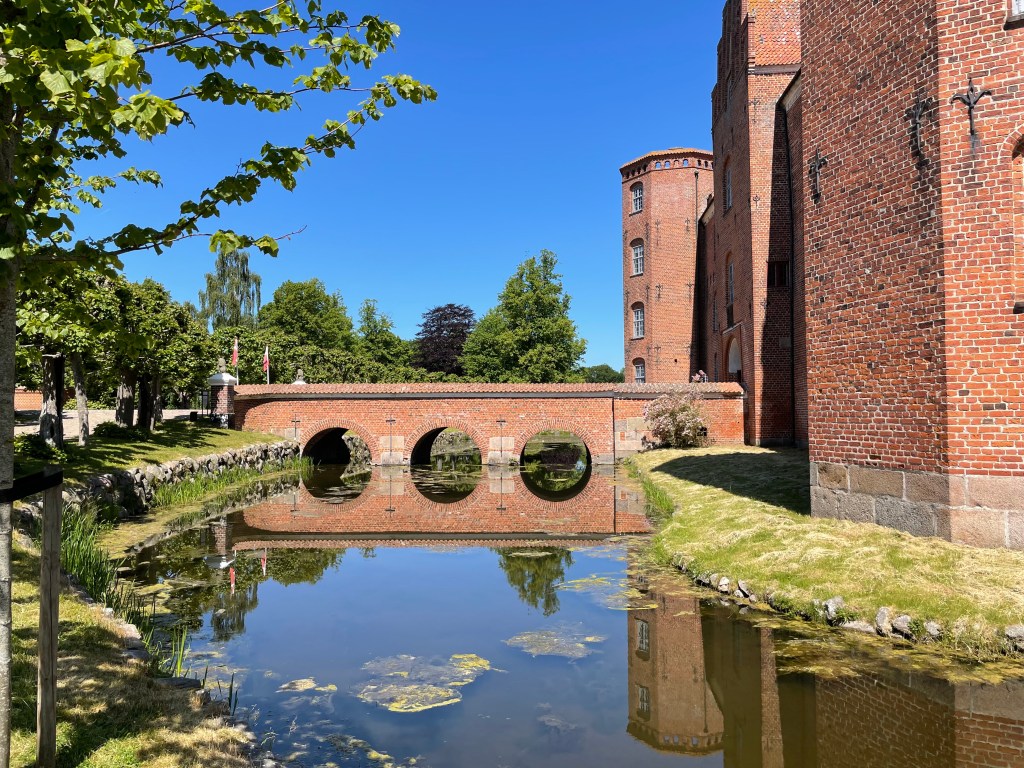
Our tour guide gave us a lot of information about Denmark while the bus drove through the countryside. She said that we could walk around with her in the manor house and she would give us information about each room or we could go on our own. We could get free cake along with tea or coffee around 1:20 and we had to be back on the bus at 1:50. We didn’t have a lot of time to see many things. We were the most interested in the house. We decided not to stay and listen to the guide. Each room had an explanation that we could read. Our group was about 33 people and we wouldn’t be able to get clear pictures if we stayed with the guide. It turned out to be an excellent idea. We had to walk through two other groups speaking another language off and on, but it was otherwise pretty empty.
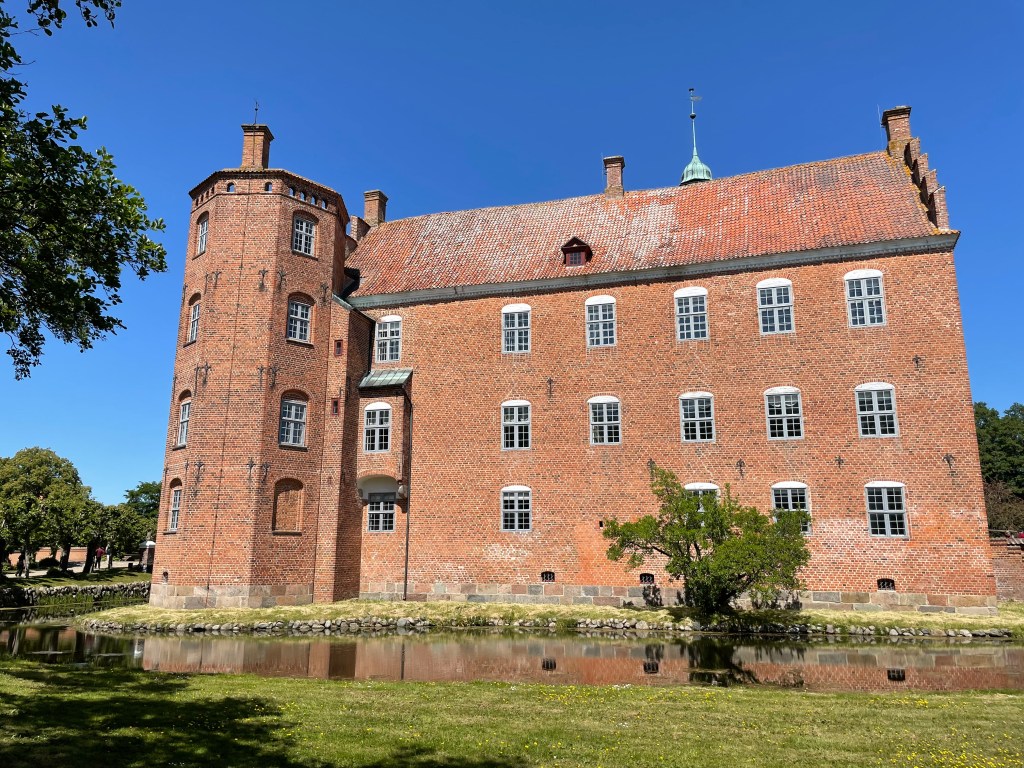
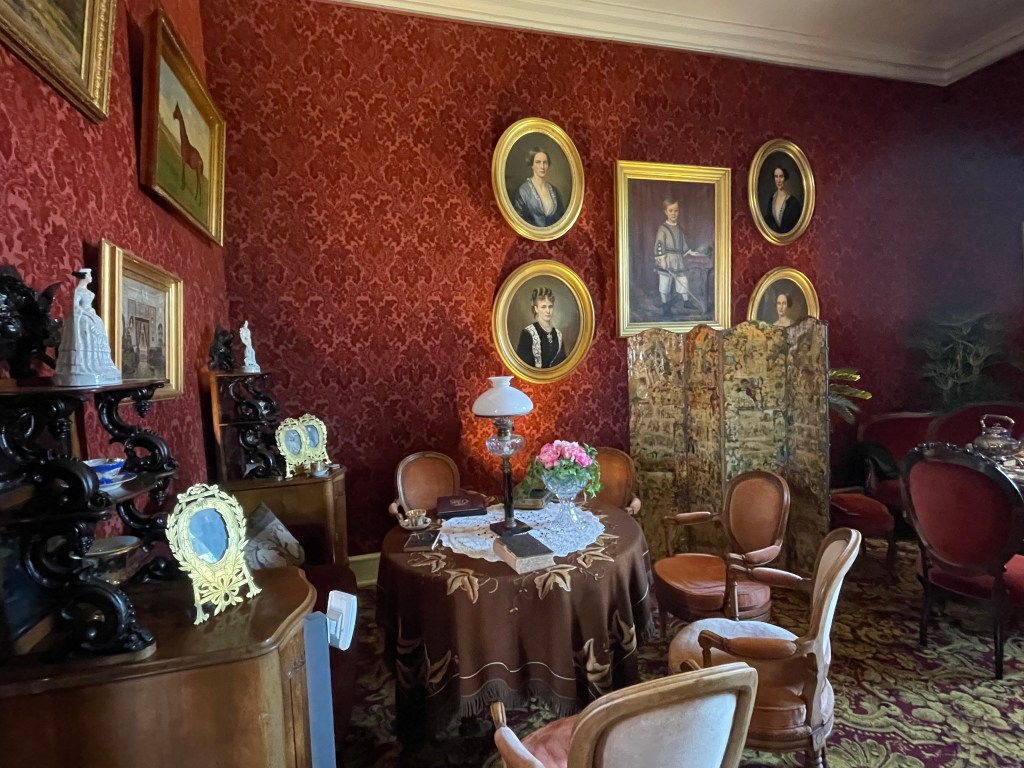
Gammel Estrup has been in the possession of the Scheel family for 600 years. It was converted into a museum in 1930 because in 1926 a new inheritance law made it too difficult for the family to retain ownership. Each section of the house pertained to different centuries and it was fascinating to see the differences in both decor and use of the rooms.
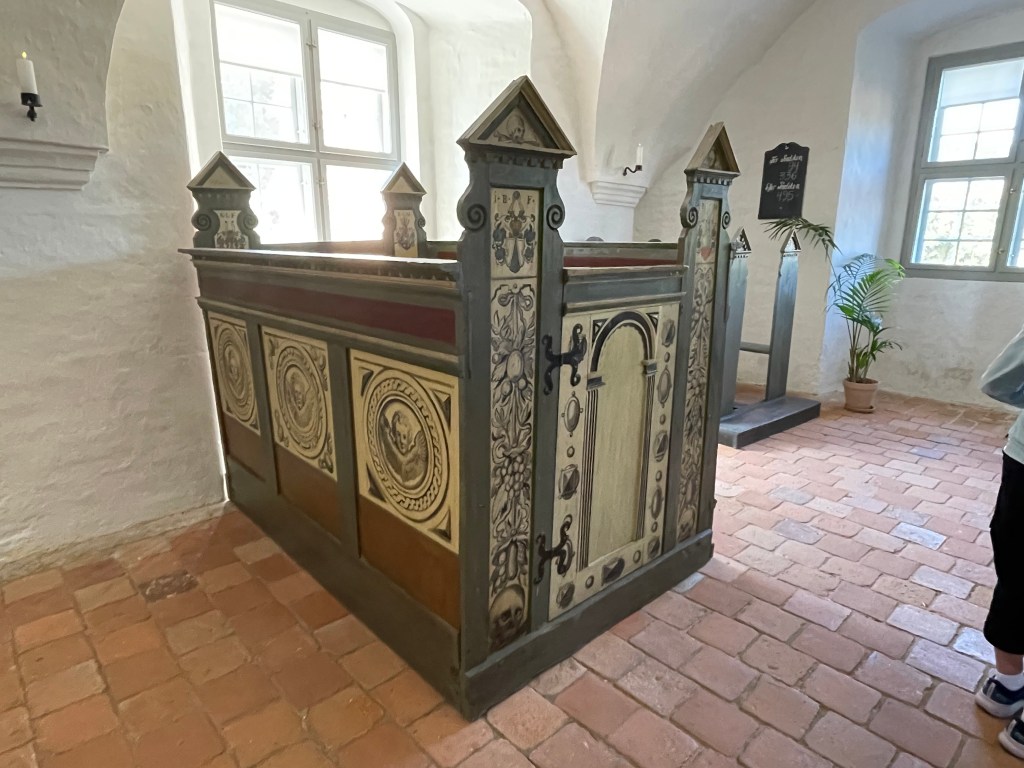
We started in the chapel. The family established a Catholic chapel and therefore established what religion needed to be followed. In the passage by the chapel we were asked to put on coverings over our shoes. We could then enter the Parlour. These rooms were used in the 16th and 17th centuries.

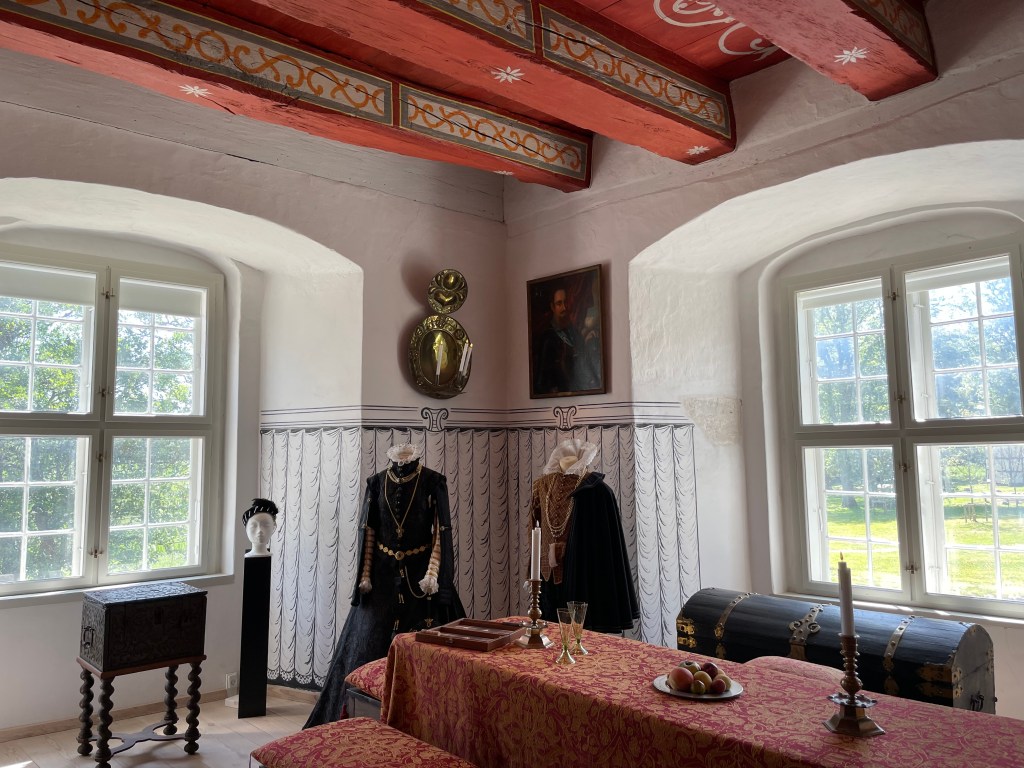
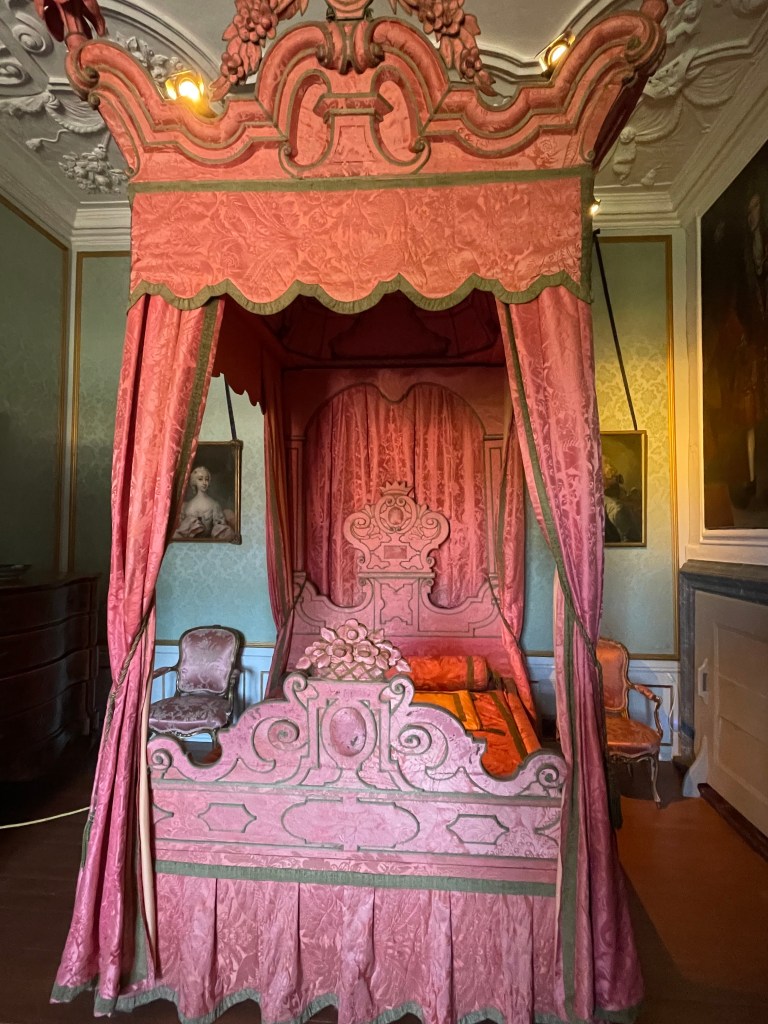
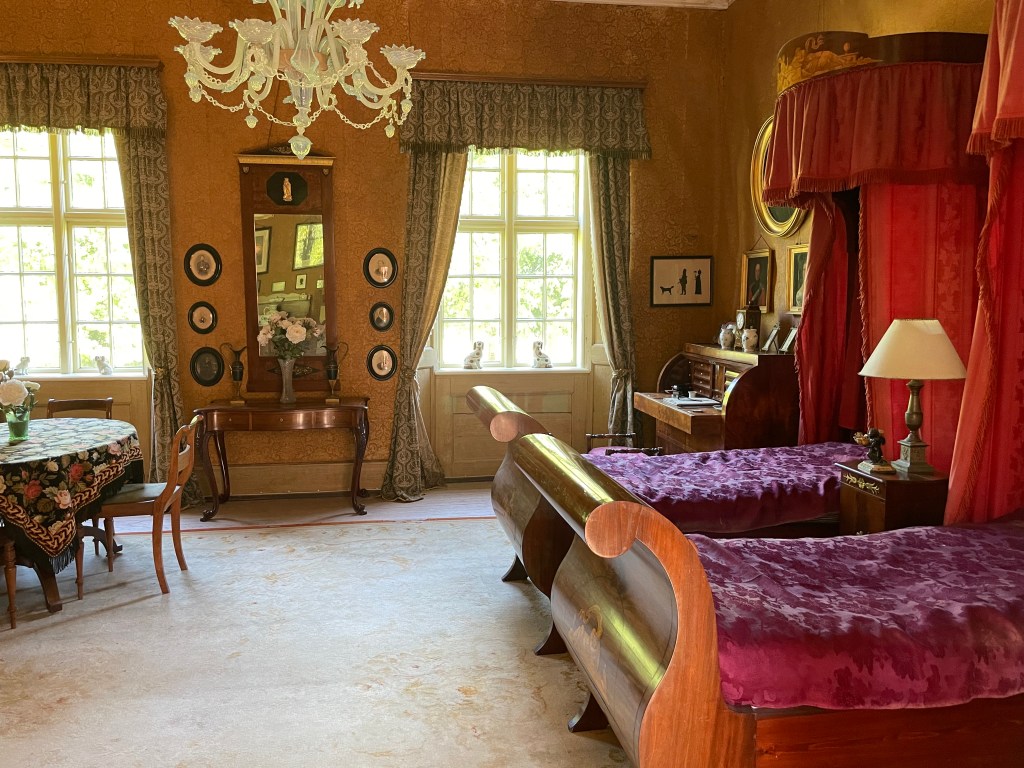
We proceeded upstairs to the 18th century rooms. We started in the antechamber where they would greet guests. Off to one side was the Red Bedroom, which was the countess’ room. She also had a cabinet room (where she got dressed) and the Countess’ Chamber. Her Lady’s maid also had a room right off her bedroom so the maid could be called at any time.
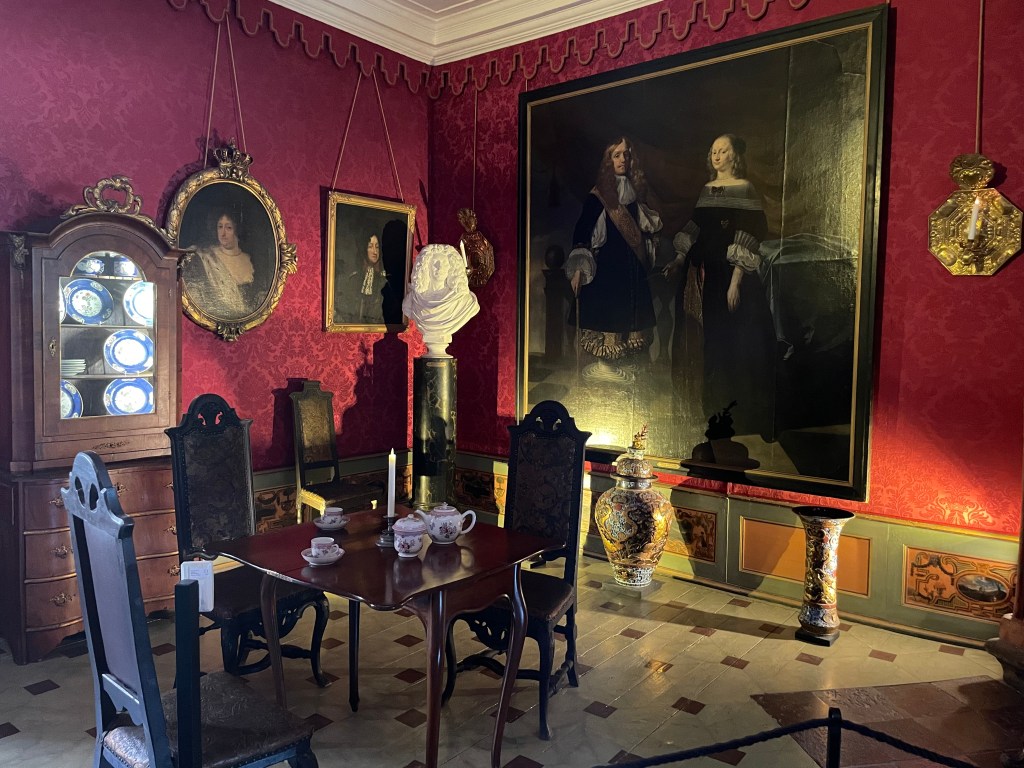

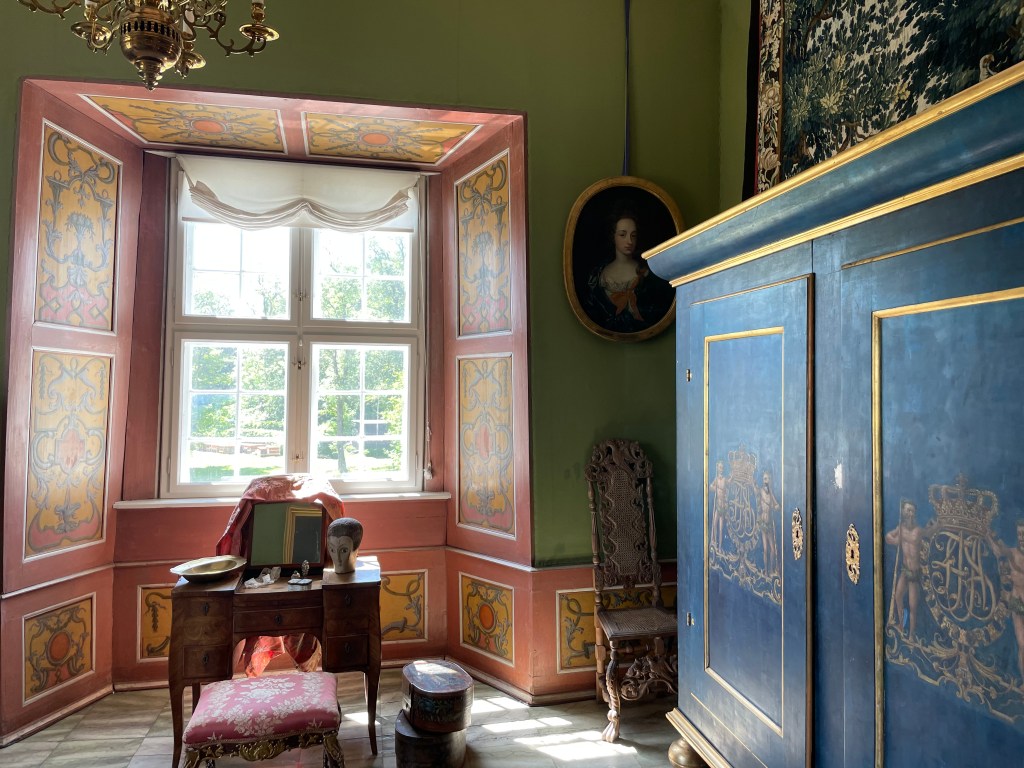
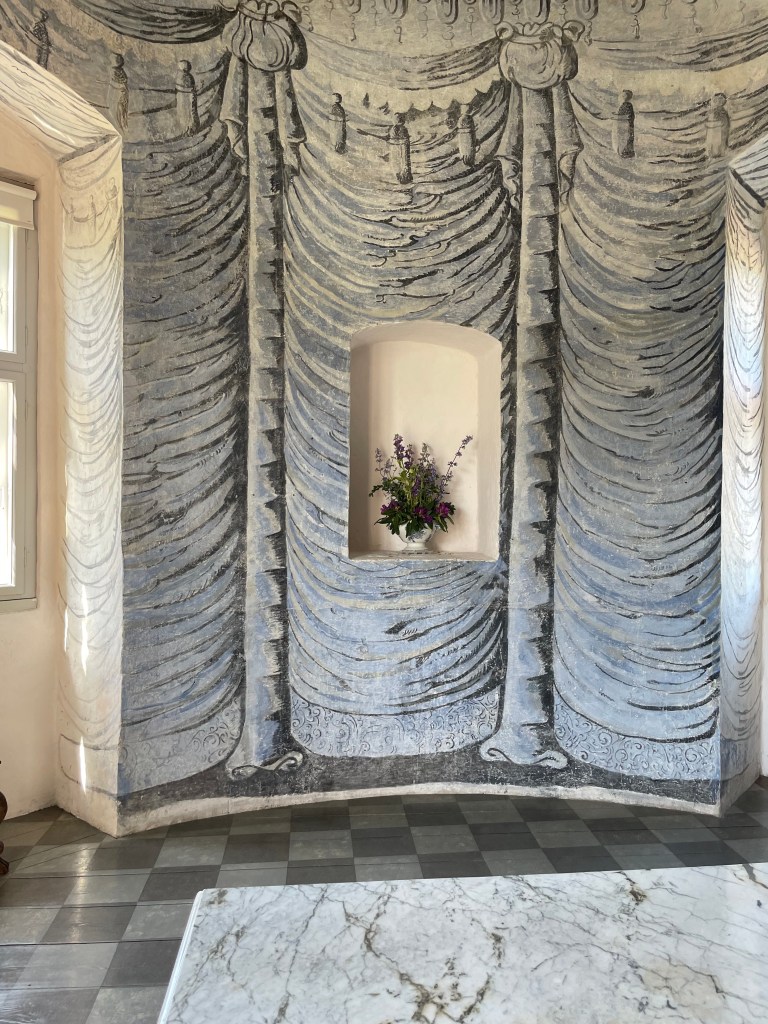
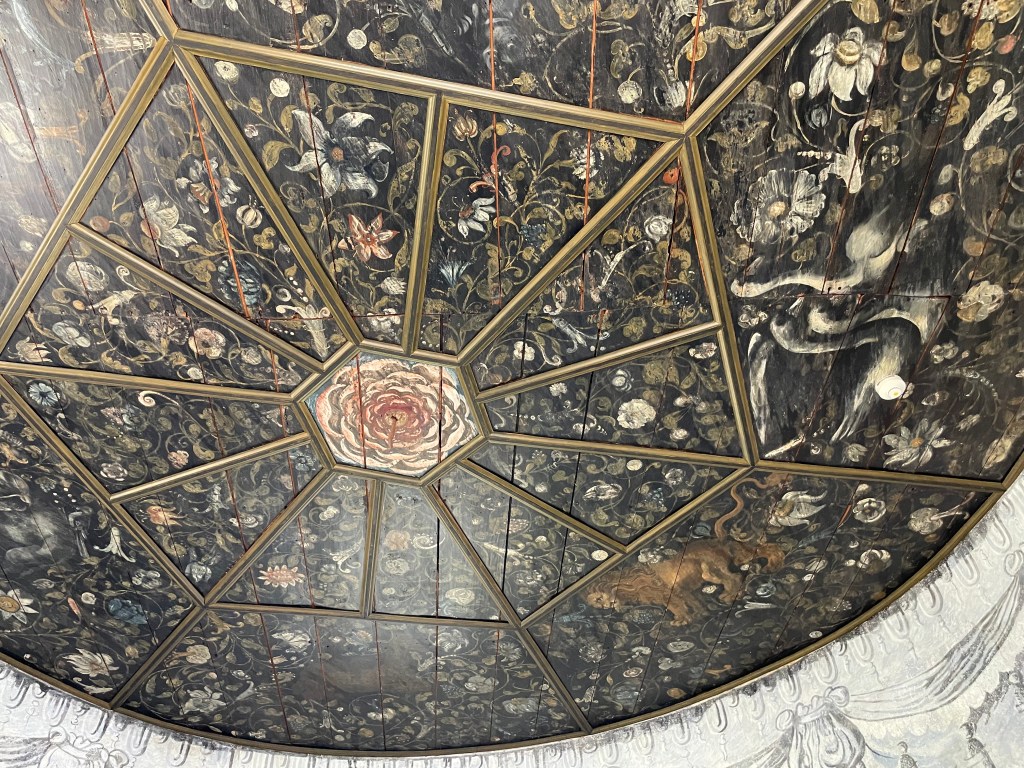
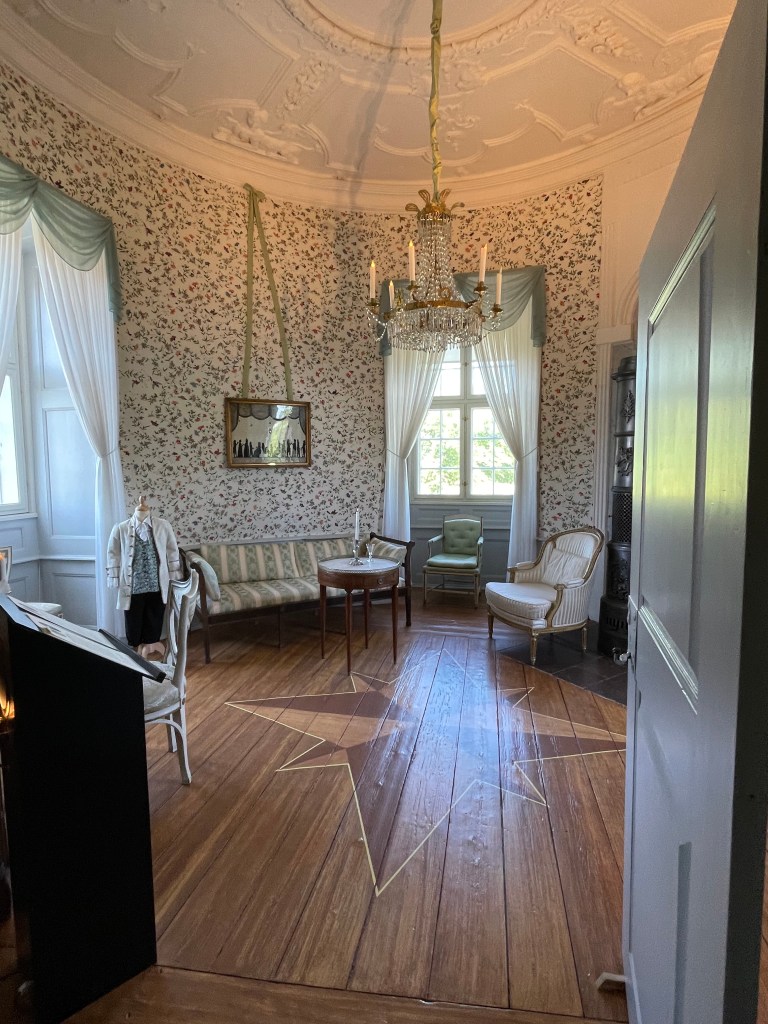
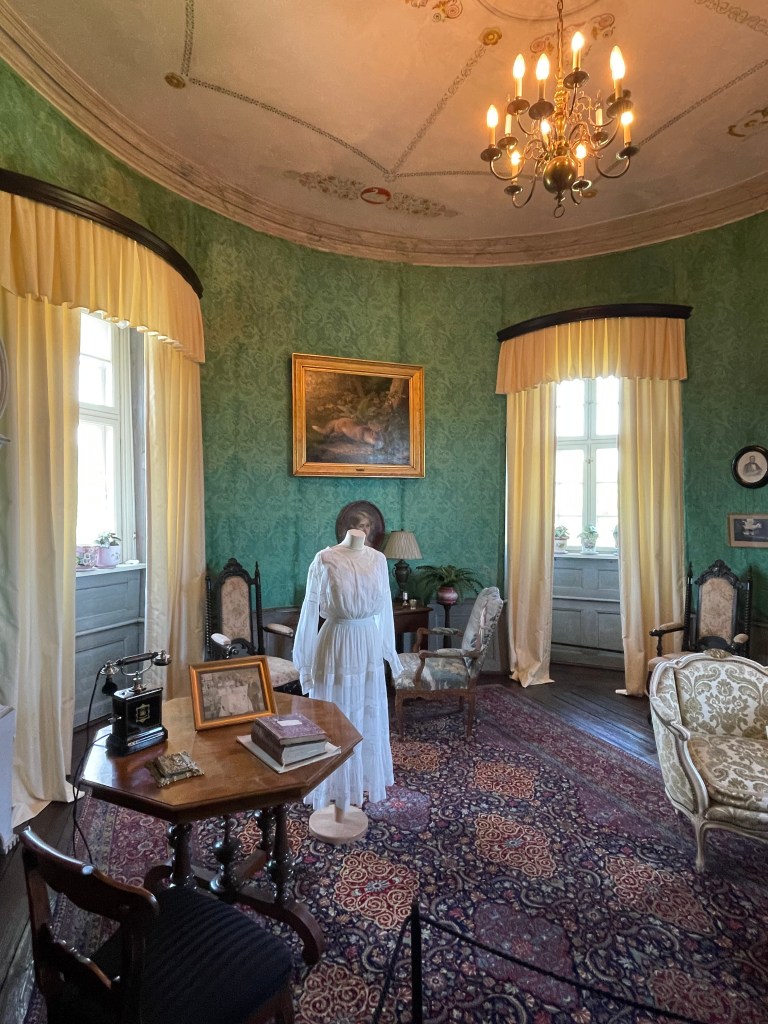
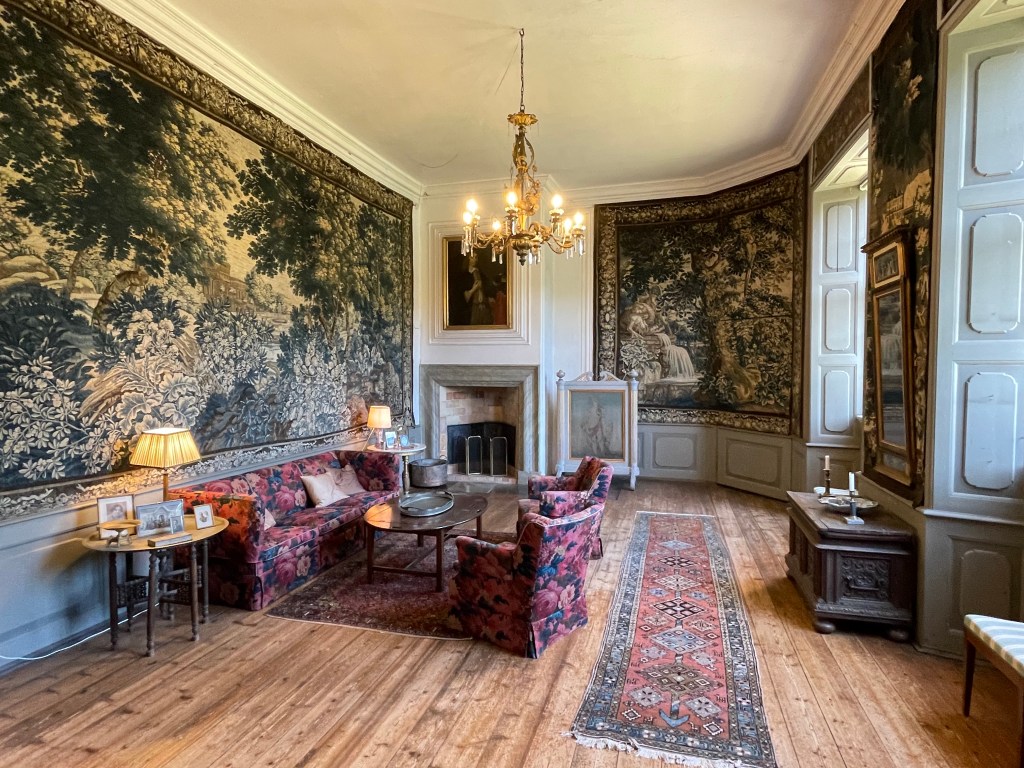
The Great Hall and the Blue Tower Room were next. I loved floors in this house along with the wallpaper or painting on the walls. The ceilings were also grandiose in most rooms, so be sure to take a look at them in the pictures.
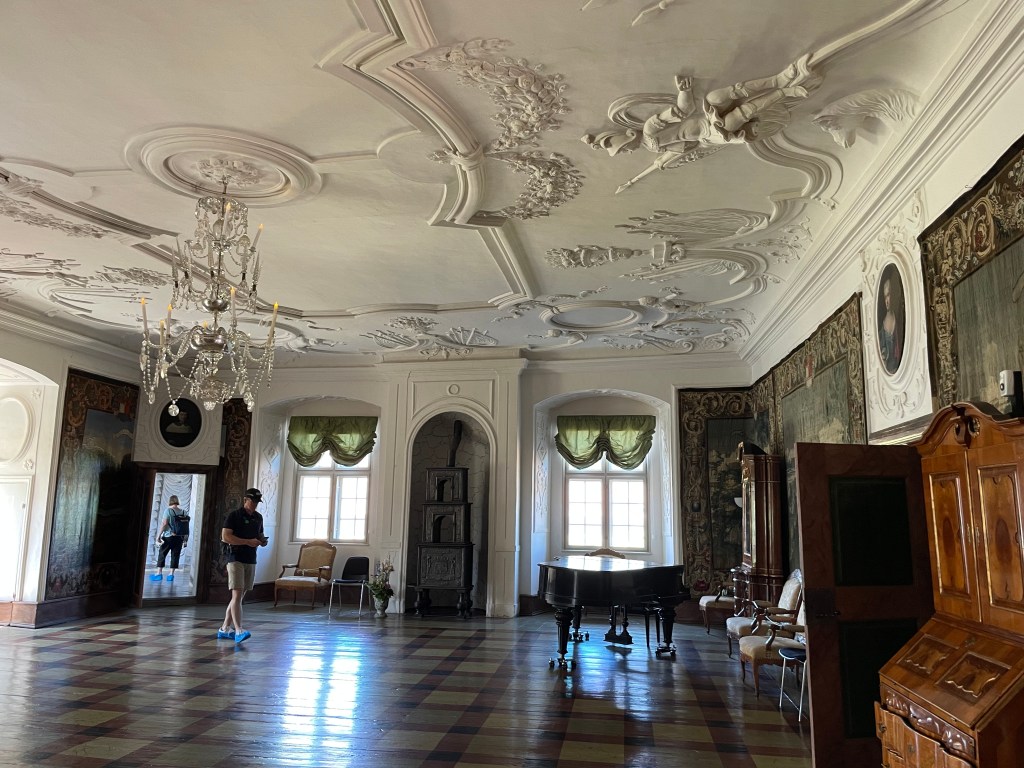
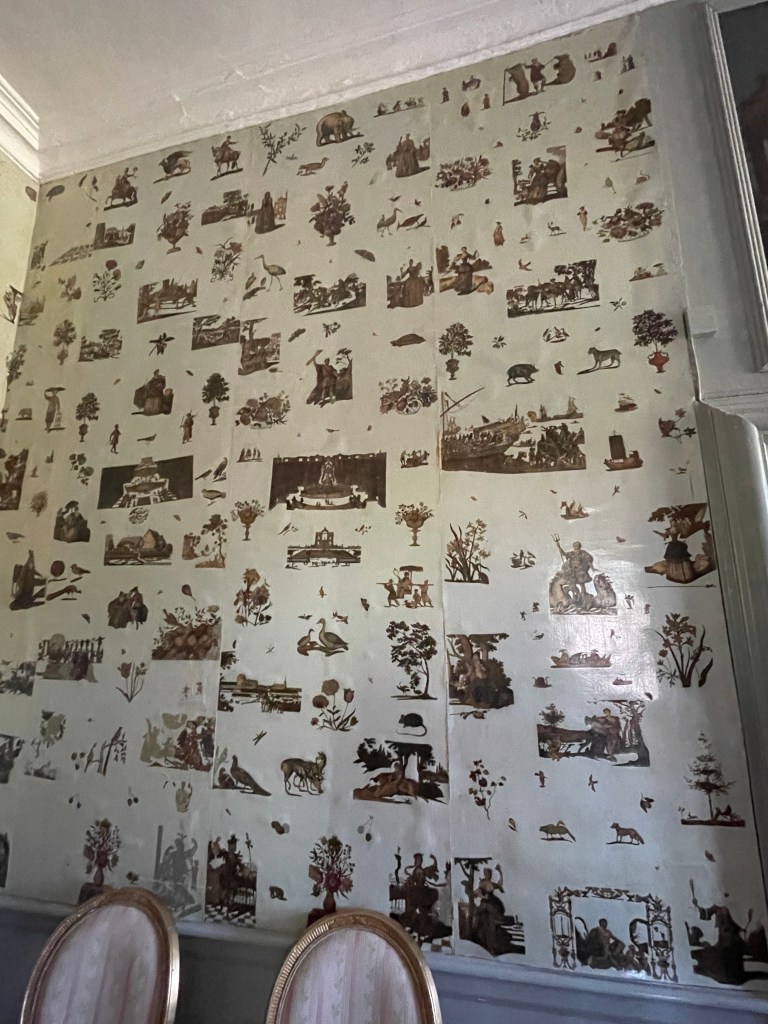
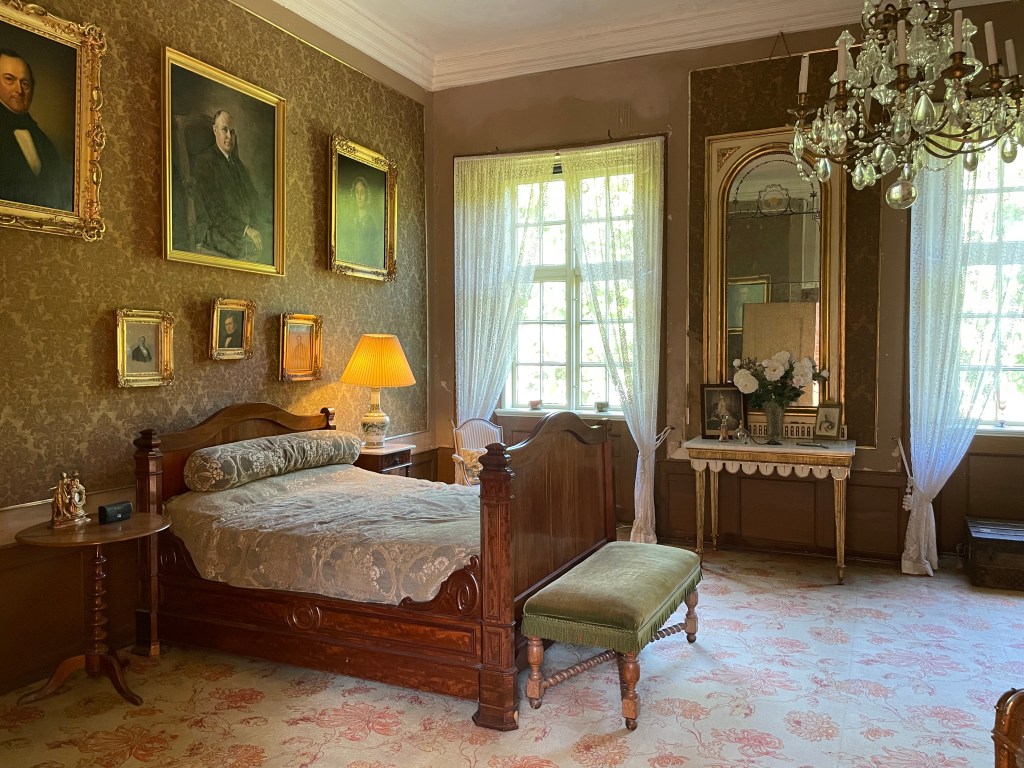
I found it interesting the the Count’s Bedroom was right off the dining room. He also had portraits of both his wives on the walls of his bedroom. The first wife died in childbirth and he did not have any children with his second wife. I’m not sure how happy I would be to have my husband’s first wife on the wall next to his bed. The small cabinet off of the count’s bedroom had this cool wallpaper that has been there for over 280 years! Talk about durable!! It looks like when you cut pictures out of magazines and put them on your wall. I thought it was pretty neat.

The Count’s roundel (which I think refers to the round shape of the town room) seemed a bit feminine to me. It may be the wallpaper.
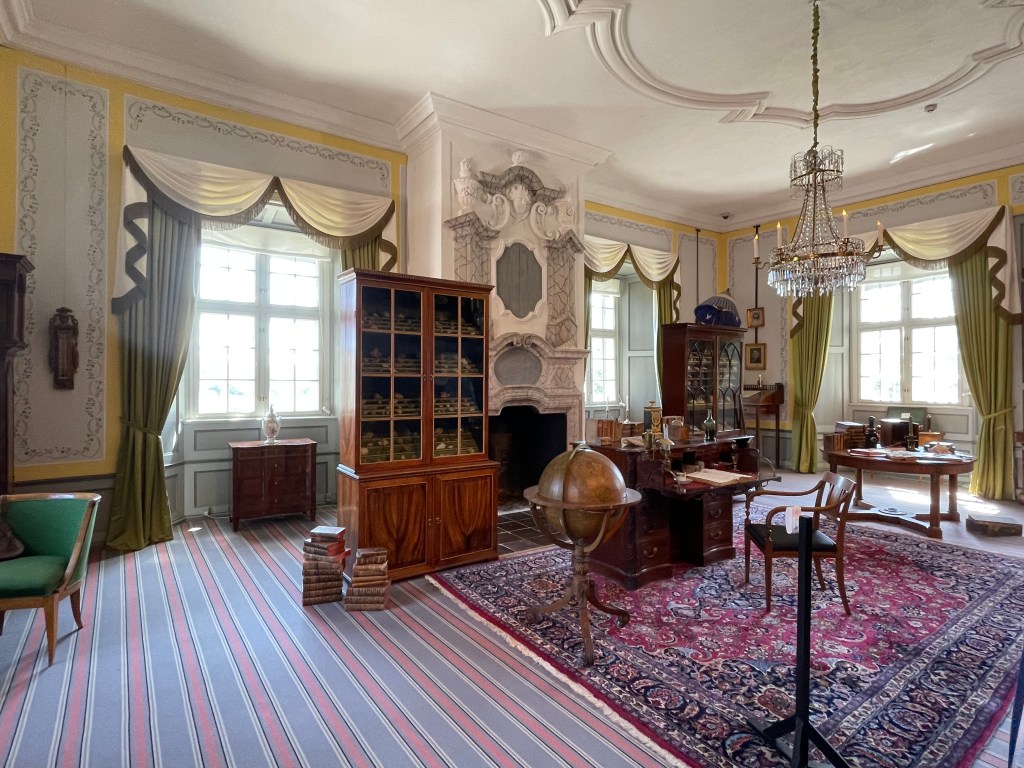
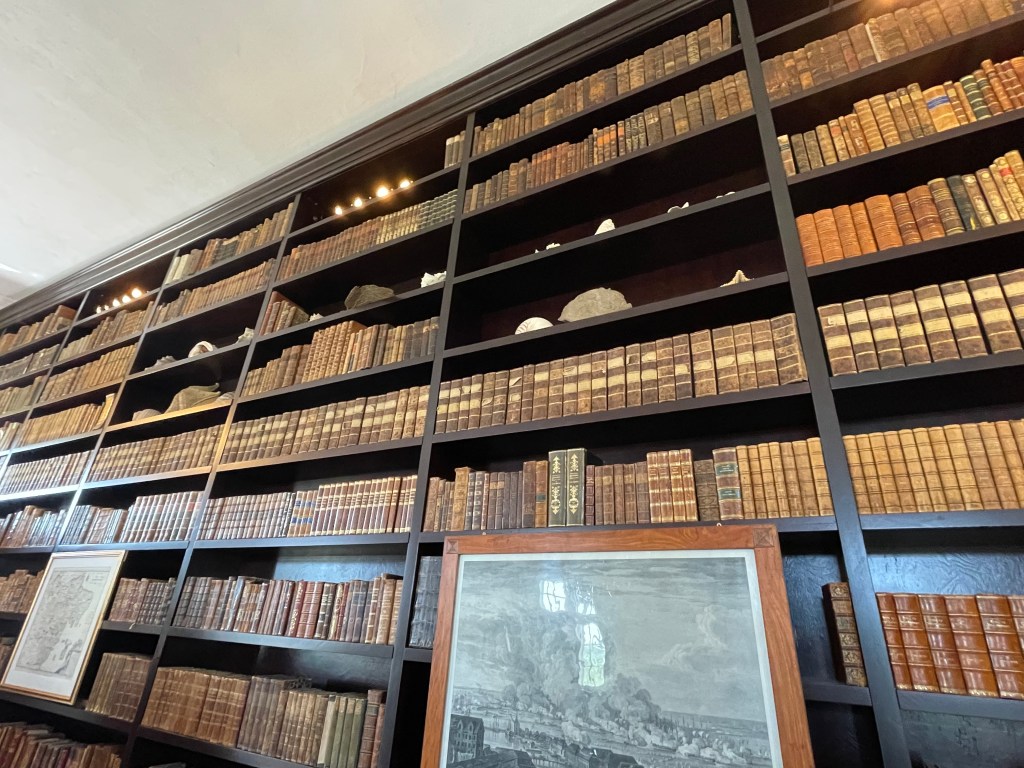
The third floor is from the 19th century. The Count’s study was really neat. He had an extensive shell collection and devices for measurement. He also had an entire wall filled with books.
The Yellow Room was used as a guest bedroom. The wallpaper is distinctly Asian in style. It was rather elaborate.

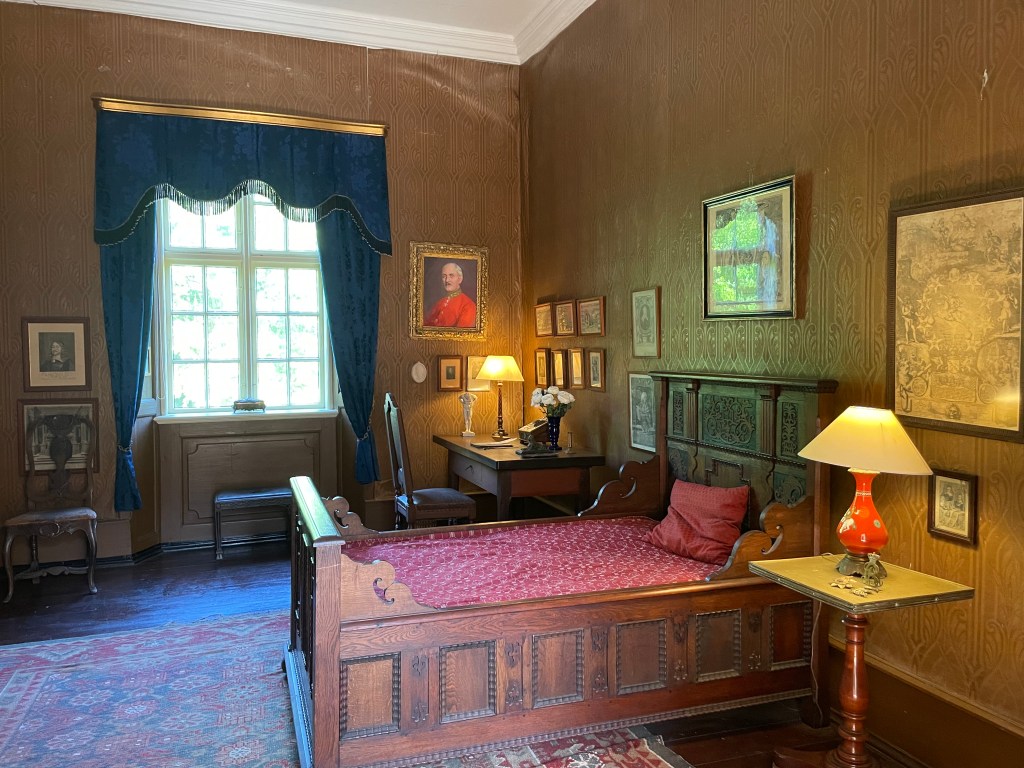
The next two rooms were the billiard room and the Tower Chamber by the Billiard room. The Tower chamber was my favorite room in the whole house. I could definitely see myself hanging out and reading books. It was not a room for women, though. It was where the men went after dinner if they were not playing billiards. It was to sit and smoke in a quieter environment. I love the window seats and the bookshelves lining the round walls. If I had a tower room, it would be modeled after this one!
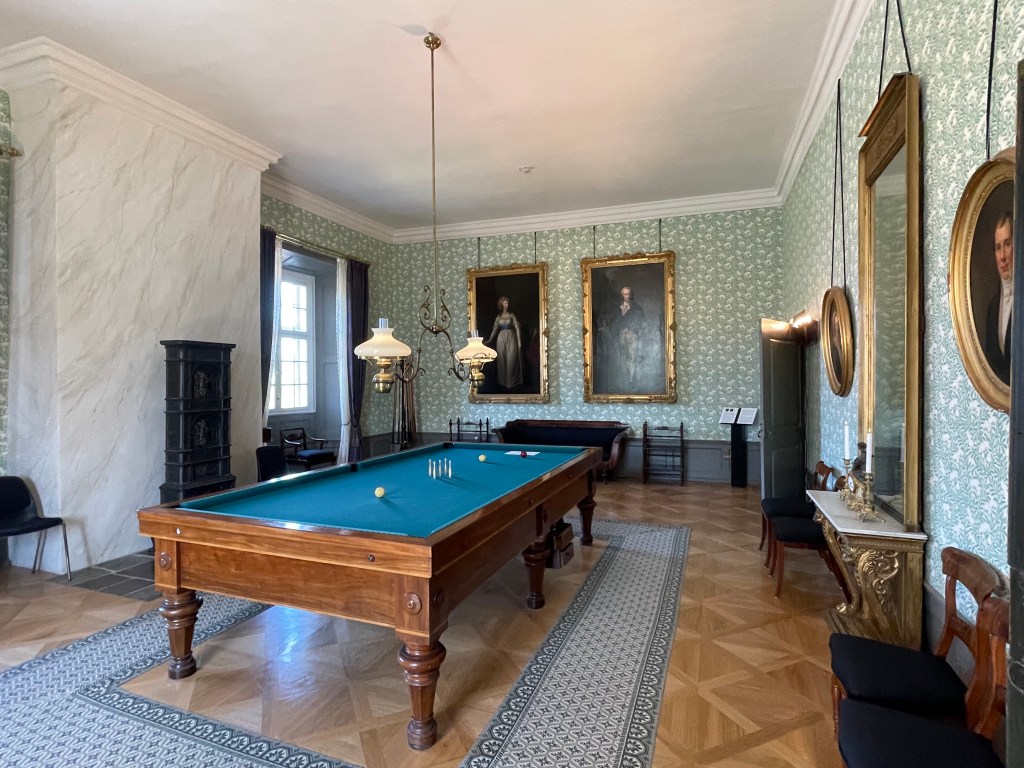

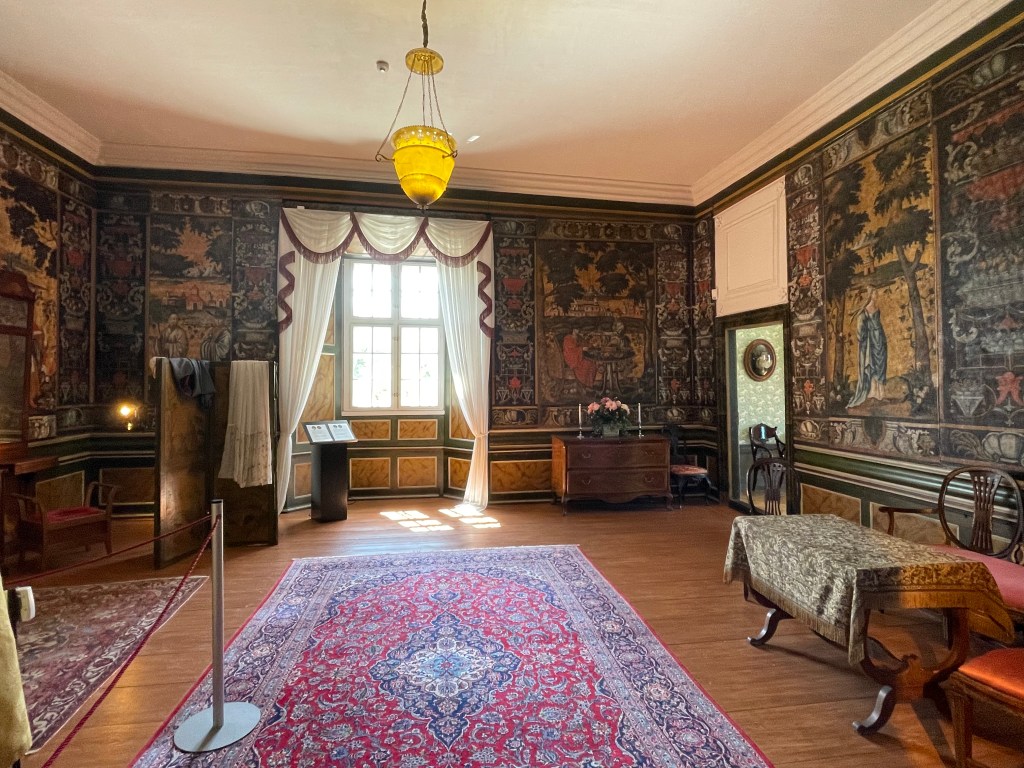
I thought the wallpaper in the room for the women to meet was unreal.

The last rooms were the most modern of the manor house. There is a drawing room with family pictures and room for everyone to hang out together. The parents’ bedroom is one room together and it is right next to the children’s bedroom.
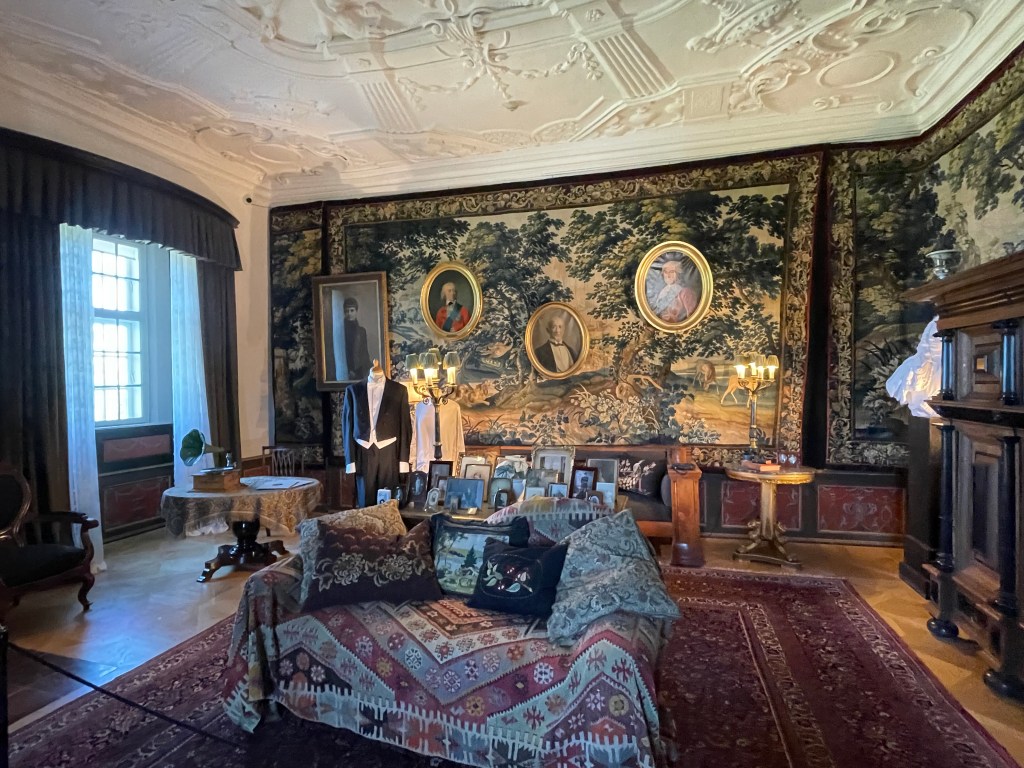

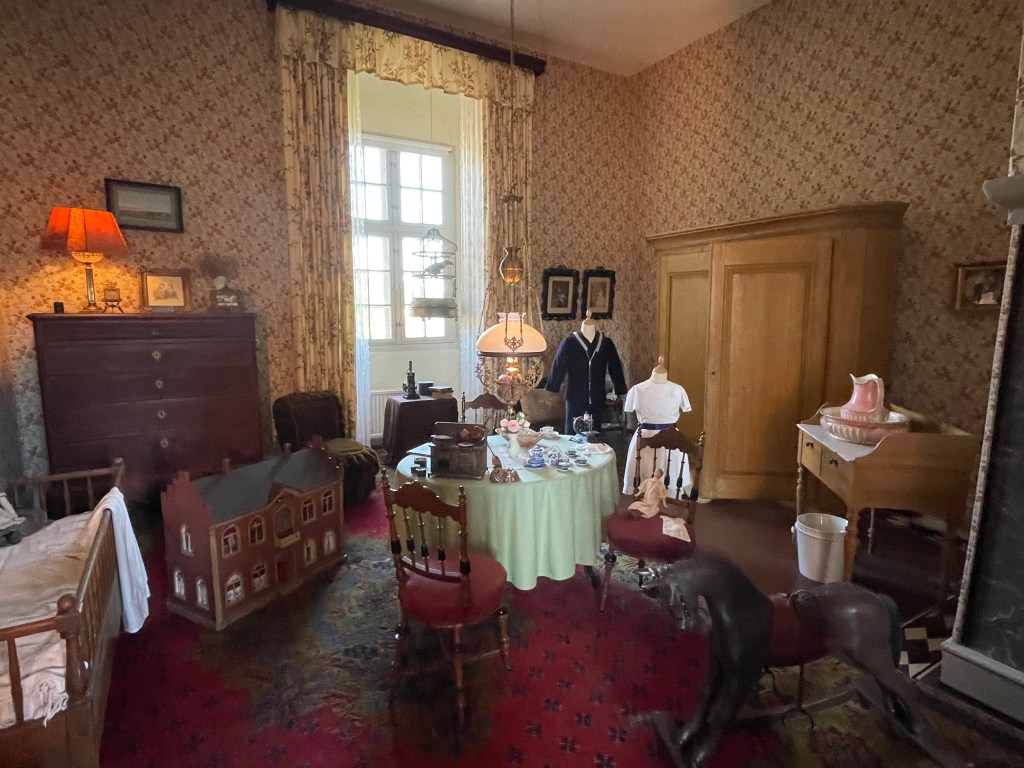
On the ground floor, across a walkway is the kitchen and the bedroom for the cook was right next to the kitchen. The last cook at the manor house was 24 years old and had lots of experience as a cook. She married the steward and left the manor house with him about the time that they had to sell it.
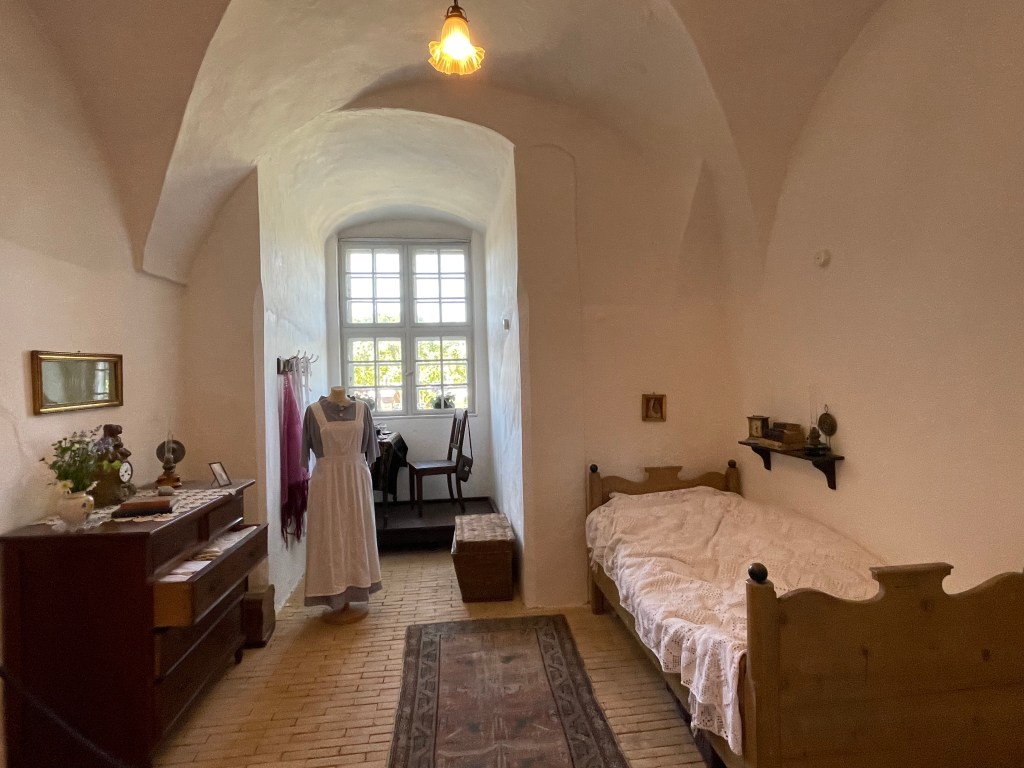
I love looking through old houses and this was amazing. They did a really great job reconstructing the rooms including the floors (many of which were painted wood, just as they were back when people lived there) and the wallpaper.
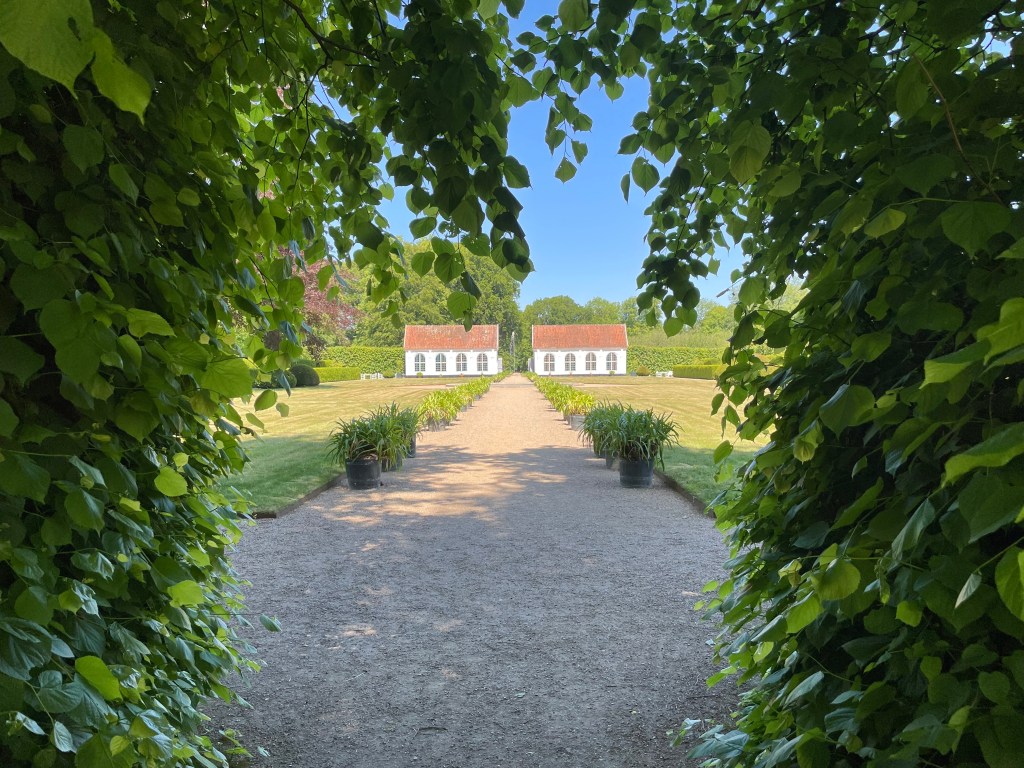
After eating some rhubarb cake, which was delicious and not sour at all, and burning my tongue on hot tea, we took a walk around the grounds. We didn’t have a lot of time and someone told us that none of the flowers were blooming yet in the garden, so we checked out the machinery and a little bit of the gardens. I’m sure you could spend the whole day there. They even have workshops for kids and families in the summertime. There was a group of people who set up a whole picnic.

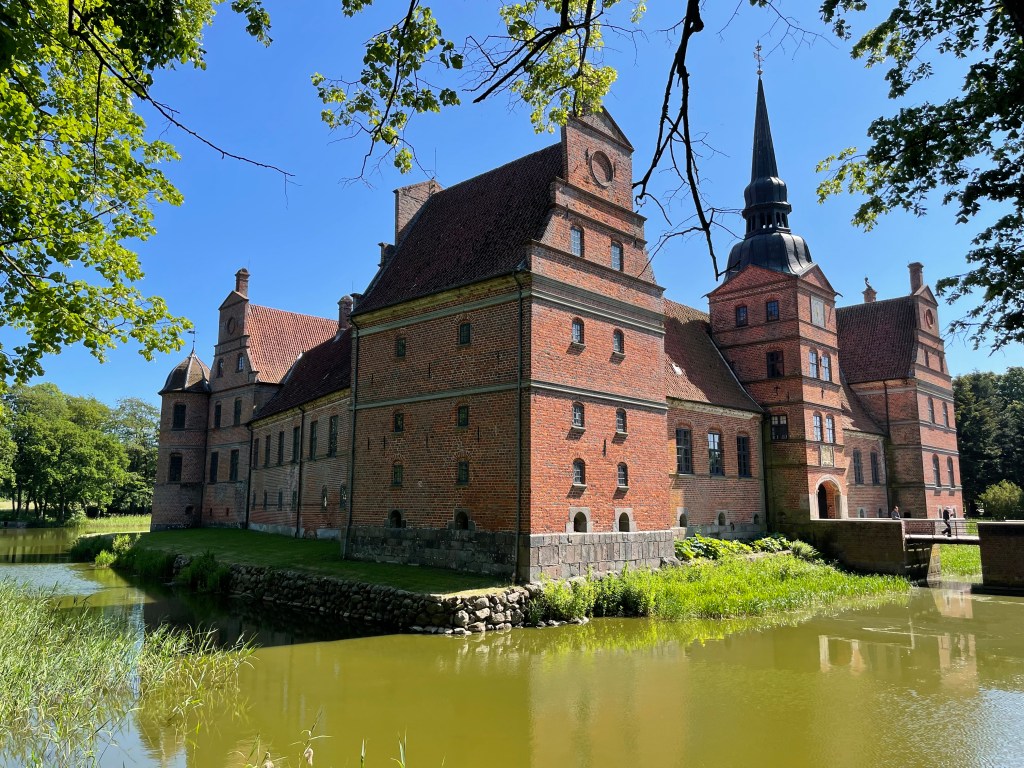
We boarded the bus and headed to Rosenholm Castle. My husband asked the tour guide why some places were called manor houses and other places were castles, even if they looked the same. She said that if royalty ever lived on the grounds, even if the building did not exit anymore, it was called a castle. This castle is still owned by the same family that built it in the 1500s and they still come and live there. This family is one of the oldest in Denmark, the Rosenkrantz. Perhaps you know them from Shakespeare? That is where he got that name. They also rent out part of the castle for weddings and other celebrations. We were only allowed to view one floor.
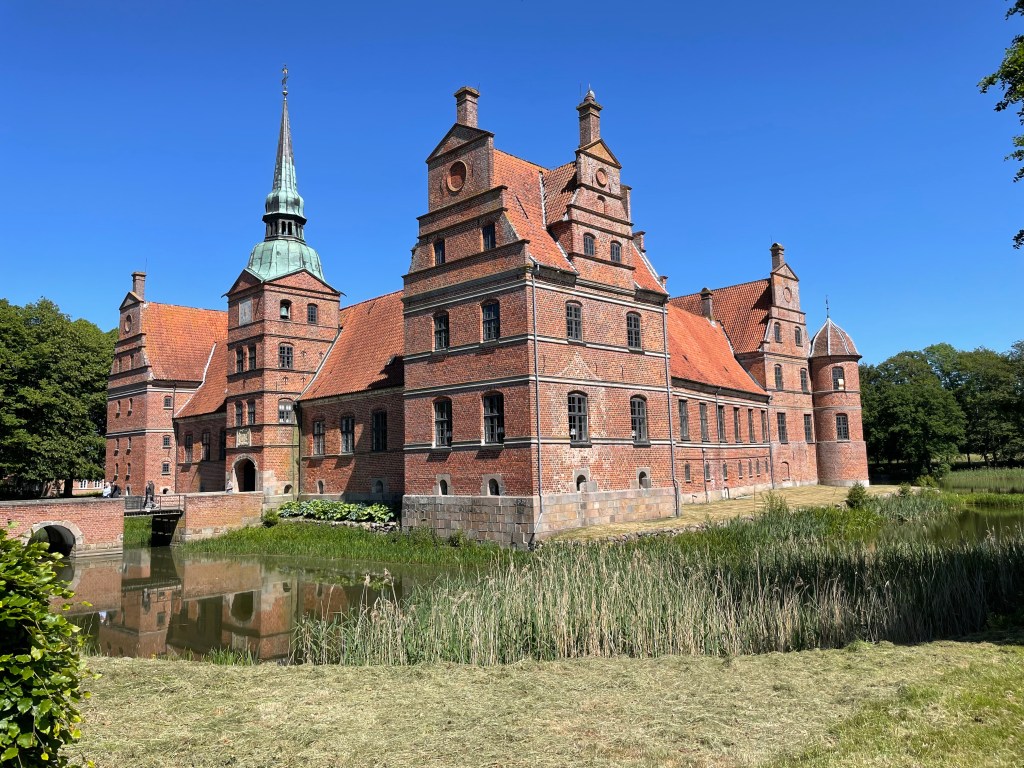

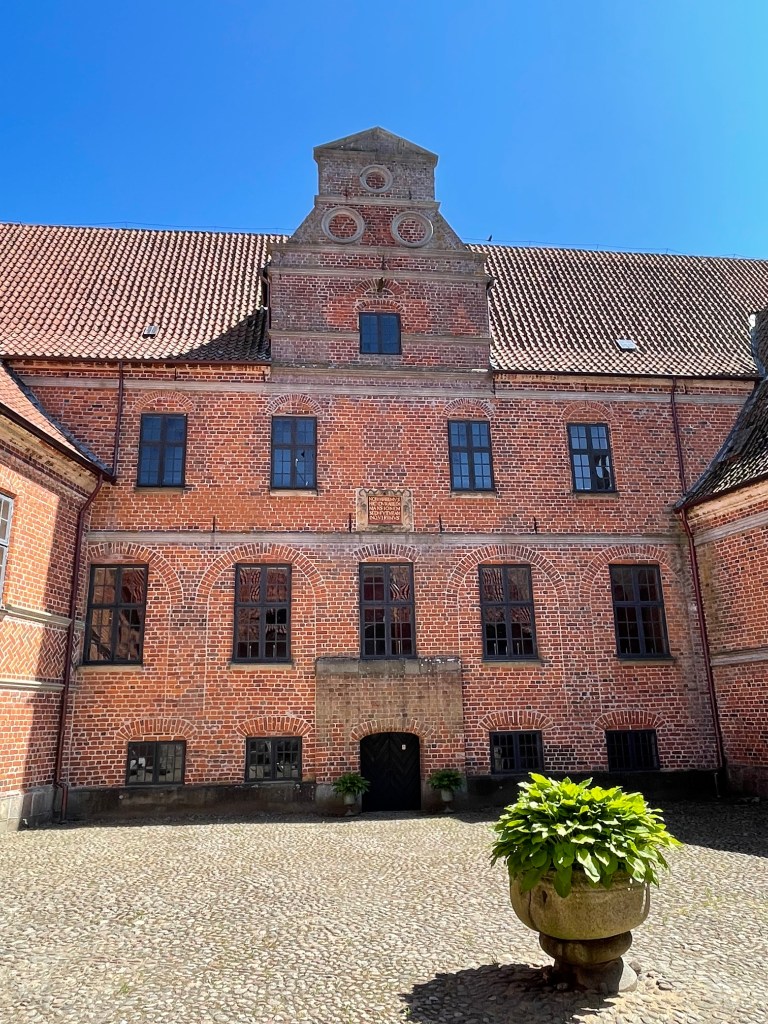
Our tour started outside in the courtyard. She explained that each section was constructed at a different time period. The first section, which was built in the 1500s, followed Italian architecture and had a lot of open archways. They quickly learned that it didn’t fit with the climate in Denmark and filled them in. You can see from the picture where those archways were built.
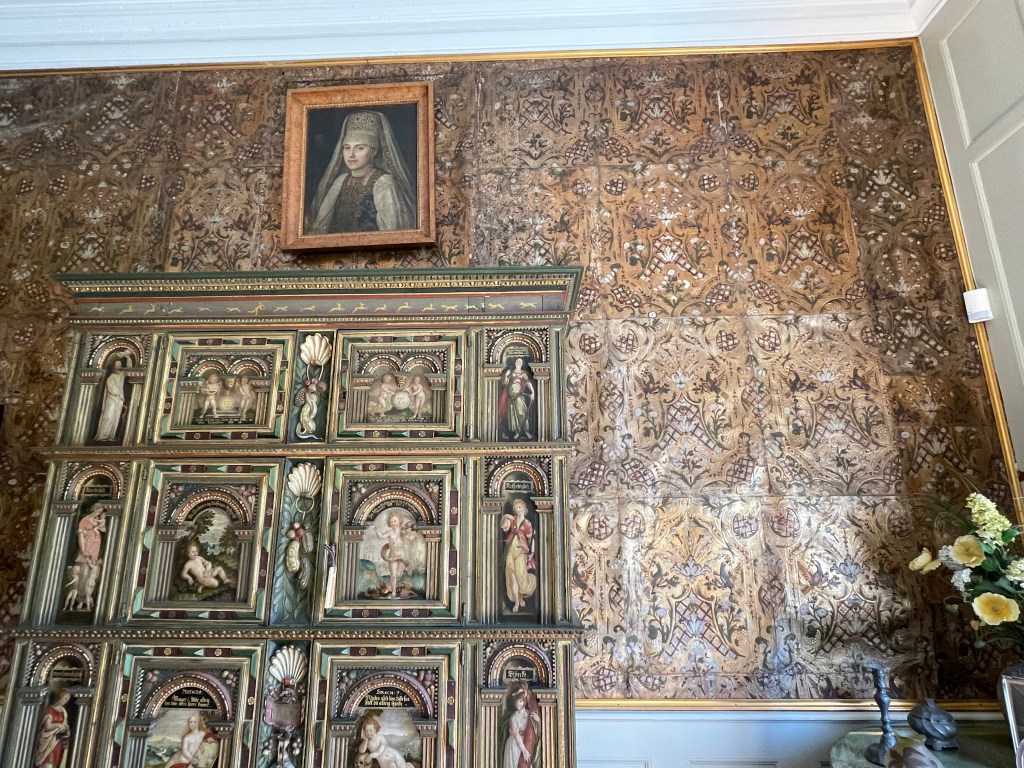
Inside the castle seemed to be in a bit of disrepair. You could see frayed wall hangings and bubbled up wallpaper plates. Of course these were all objects that are hundreds of years old, so I can understand the issue. The wooden cabinet that is pictured is actually a puppetry cabinet. They simply filled in the opening with wood painted red. It’s from the 1500s. The other cabinet in the room, which has pictures of the virtues on it is now used as a bar.
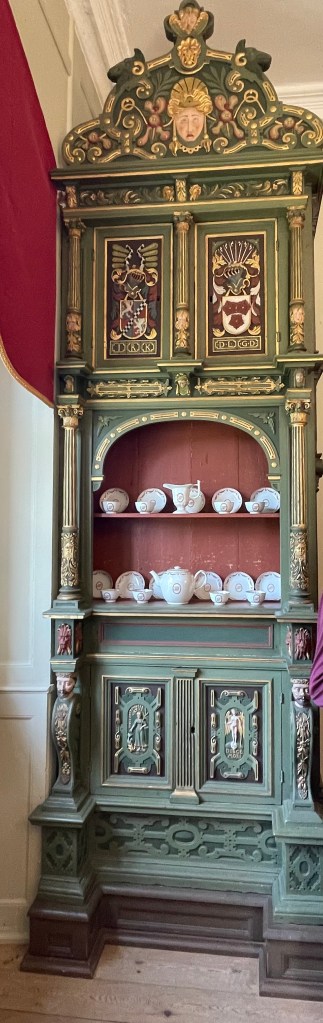

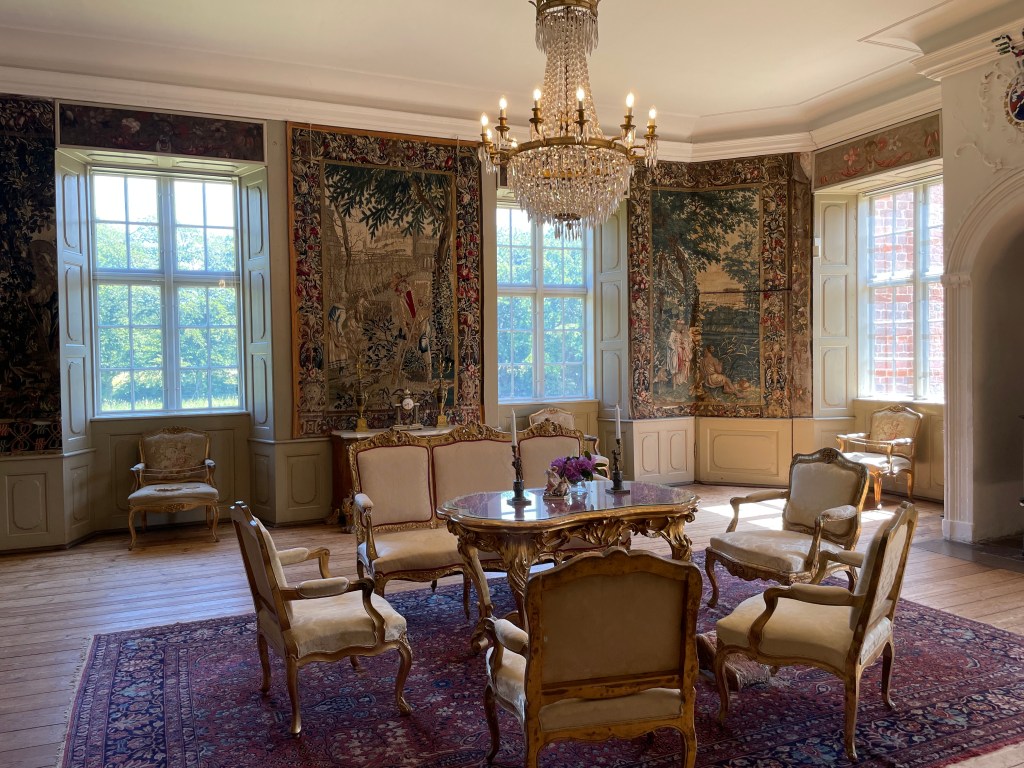
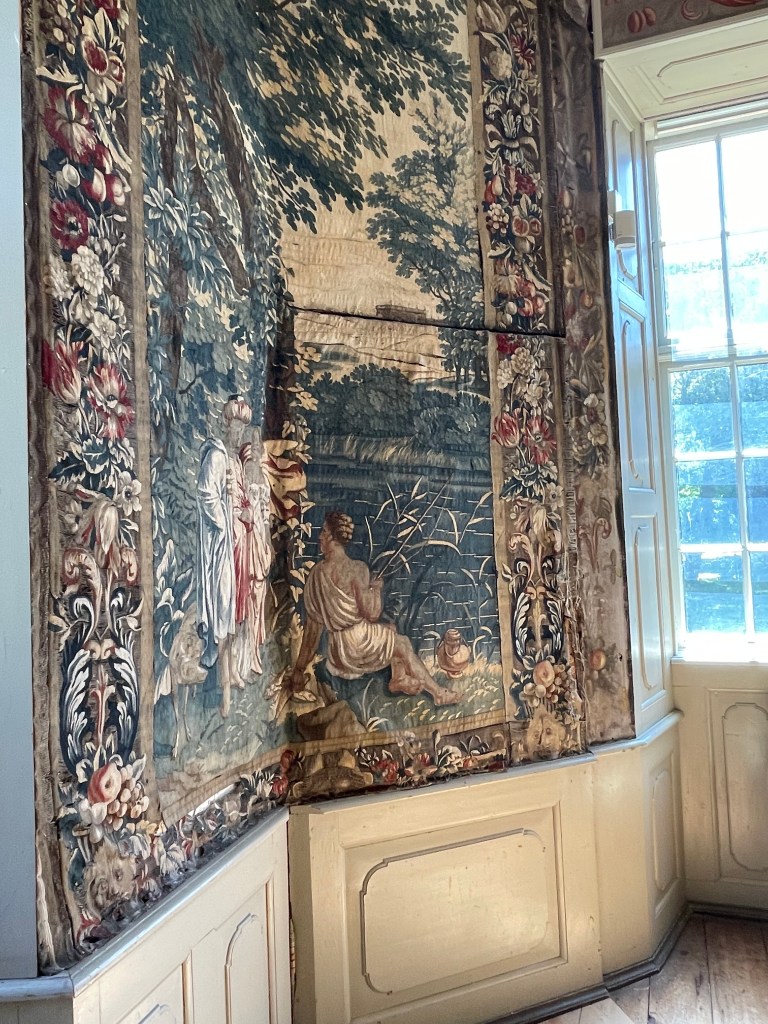
She described paintings of famous people and members of the family, but my pictures are about the furnishings and wall hangings. You can see this one tapestry didn’t fit the wall and the cut it so they could use the door behind it! Scandalous!
The library had books from Martin Luther! You can see one sitting on the table. The guide had to use white gloves to open it for us.

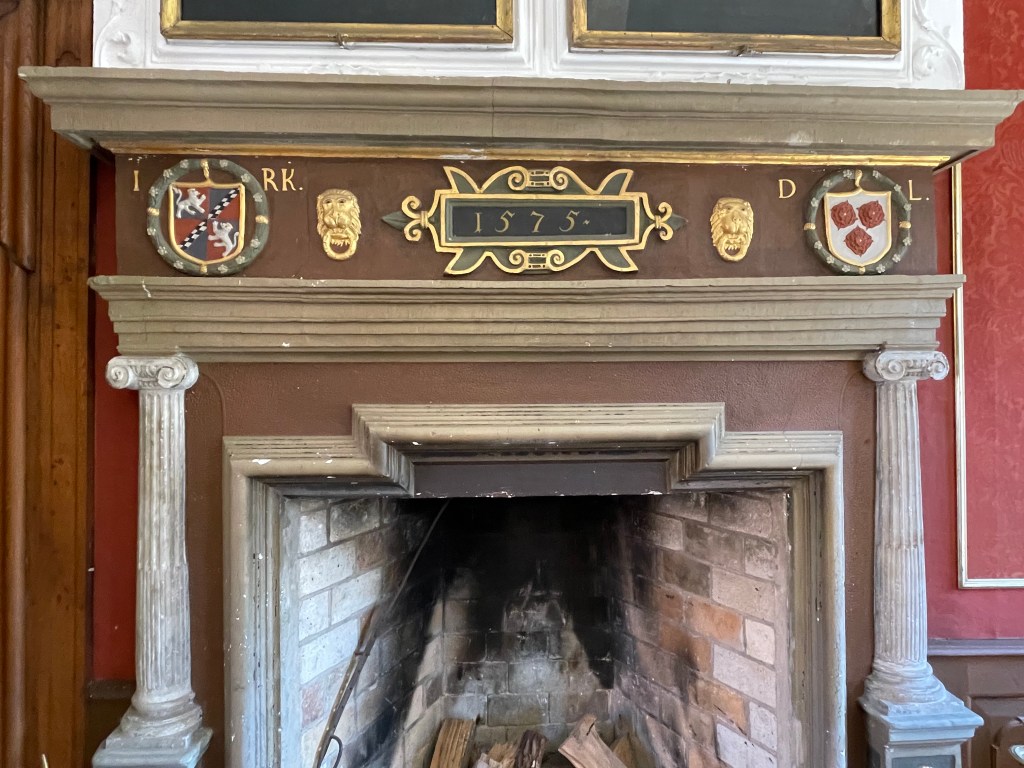
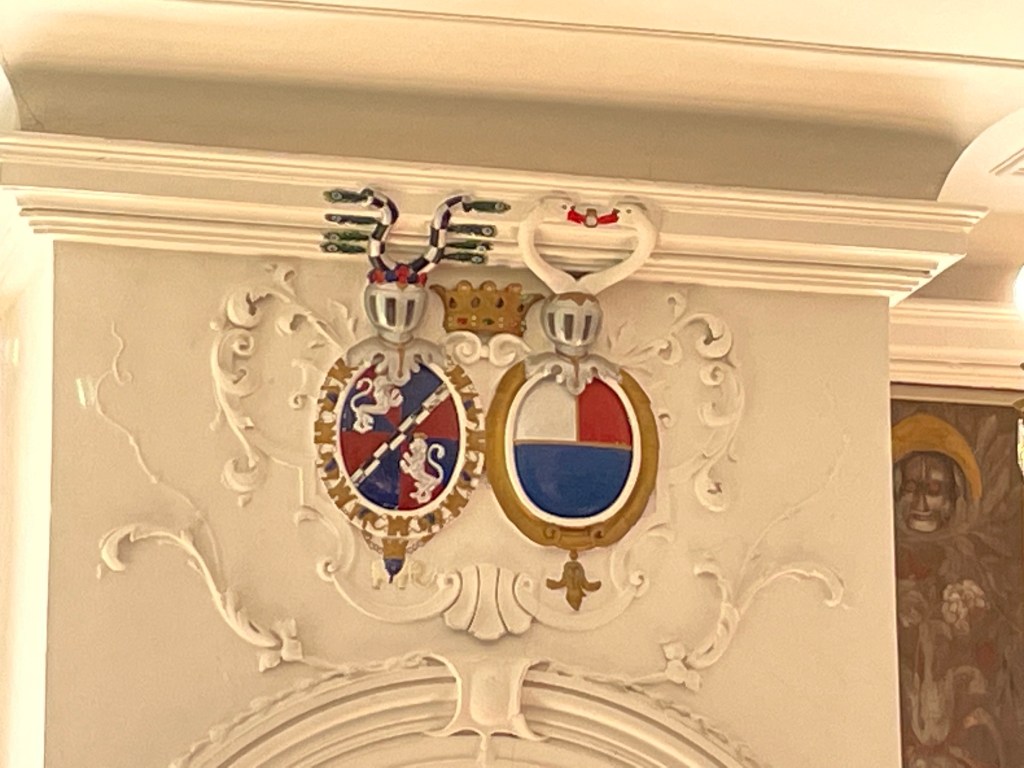
The coats of arms are interesting because they depict the coming together of the two families of the manor house we visited and the castle. It’s like Romeo and Juliet except they actually lived happily ever after. I love the swans (which mate for life) with the ring and their necks shaped like hearts. It’s very romantic.
This last room had a secret hidden in the walls. They found human remains of a woman. They thought is that perhaps it was from a saintly person and they were placed there to protect the house from evil. The bones were excavated and the owner put the skull in one of the guest bedrooms. You can see it in one of my pictures.
The three bedrooms had three famous guests that often stayed there. One was a famous Danish writer that you may have seen in the movie Out of Africa, who was played by Meryl Streep. Her name was Baroness Karen Blixen. I can’t remember the names of the other two, but I’m pretty sure it was a king and his wife. The last bedroom is called the ghost bedroom because of the skull on the nightstand. That owner has an interesting sense of humor.

When we arrived back in port, we thought about heading out to check out some sights of Aarhus, but after looking at the map we decided we were too tired to do so. Instead we checked out the racing sailboats that crossed the Atlantic. There is also a picture of the public library, which is considered the most beautiful library in Denmark.


 Bonney Voyage