

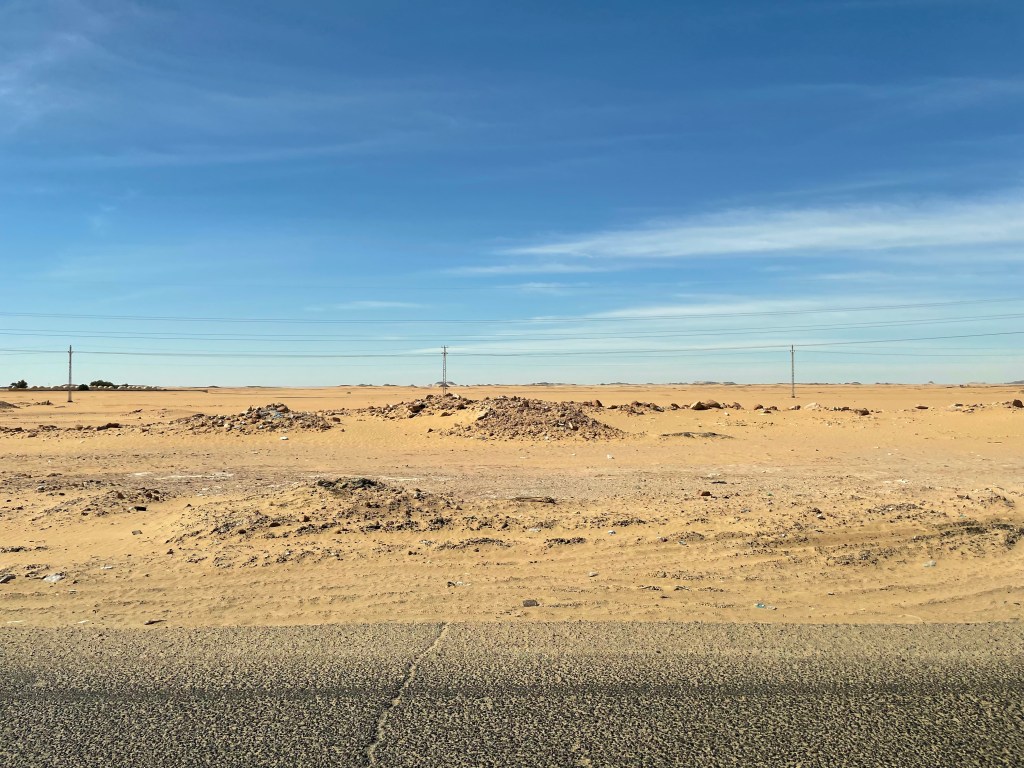
We woke up at 3:30am in order to take a bus to Abu Simbel, which is in the middle of nowhere. The bus ride consisted of a lot of sand views (when I was awake). It took about 4 hours to get there, after only one stop to stretch our legs. There are actually two temples. One is for King Ramses II and the other is for one of his 57 wives (his favorite), Nefertari. Both temples had to be moved when they built the high dam of Aswan. They were located 60 meters below where we visited them. The relocating started in 1964 and was completed in 1968.
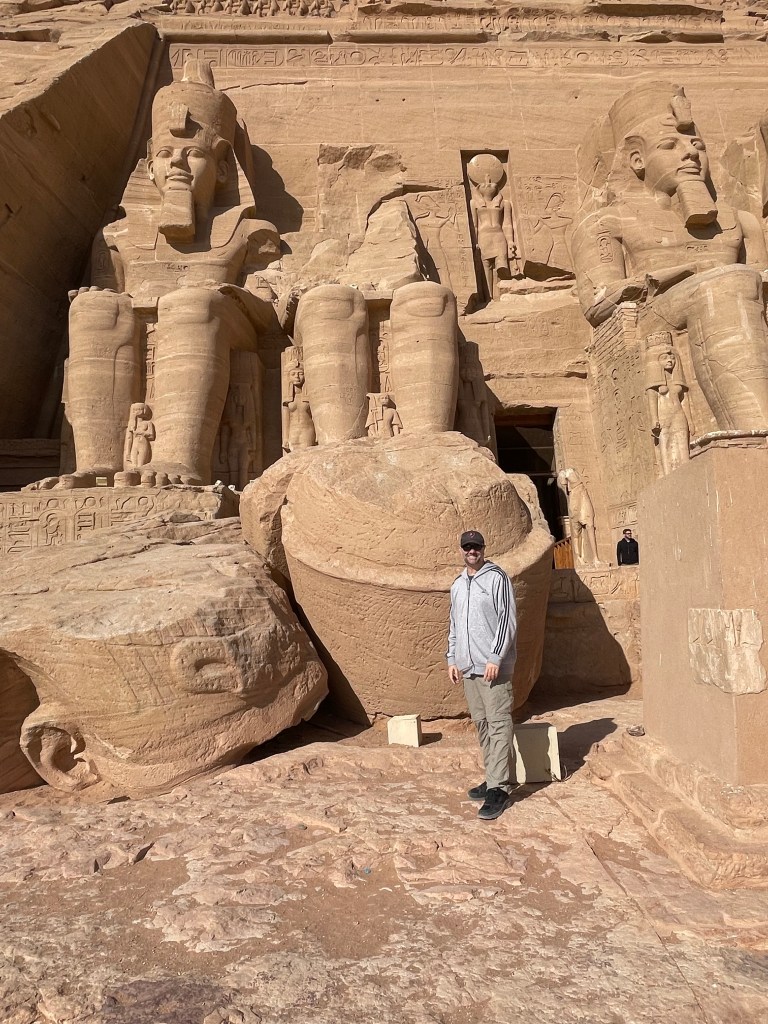
The stone figures on both temples are massive. They measure 8 meters from shoulder to shoulder. The lips of the statues are a meter across. My husband is 6’2, you can see how he compares to the fallen head of the statue.
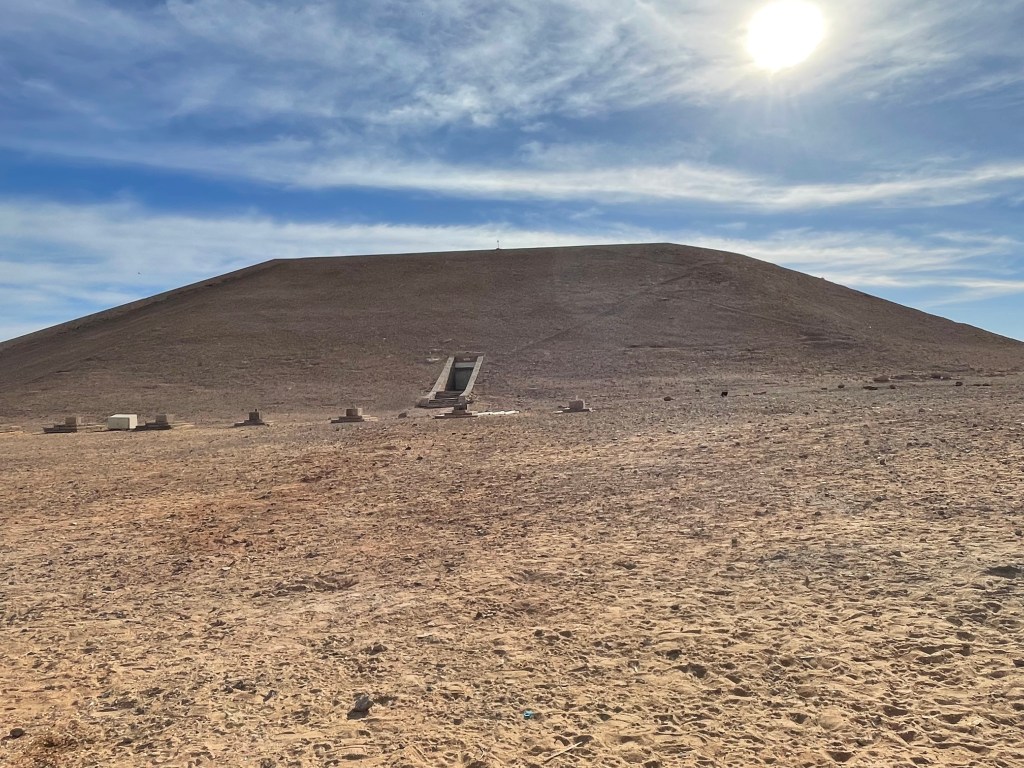
They had to recreate the mountain that the temple was carved into. They did so with a fake mountain.
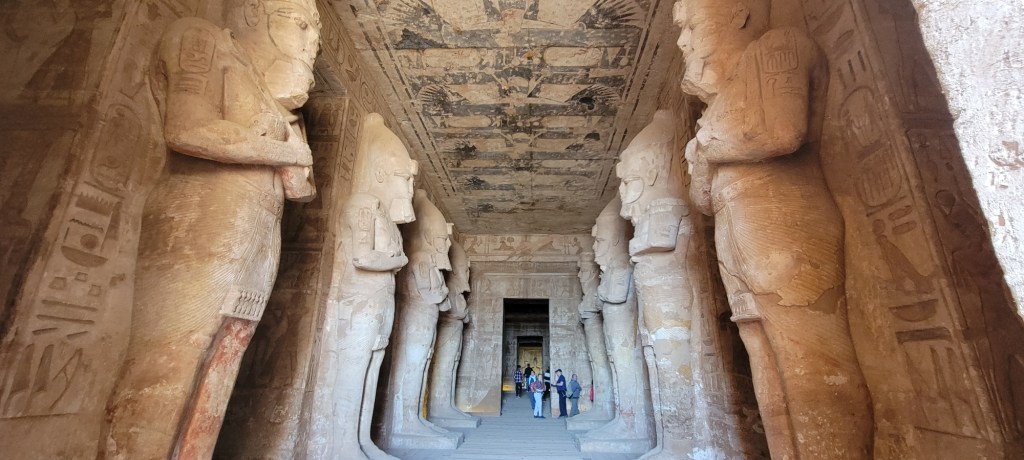

Inside the temple there are eight statues that are built into the columns and at the very back you can see four life size statues of Ramses II with three other gods. One is the god of darkness, one is the god of everything (Amen Ra) and the other god is a combination of Horus and Ra. On October 22 and February 22 the sun will cast a perpendicular line over the eyes of these statues. It’s a very popular time to visit the temple. It’s the celebration of the sun.
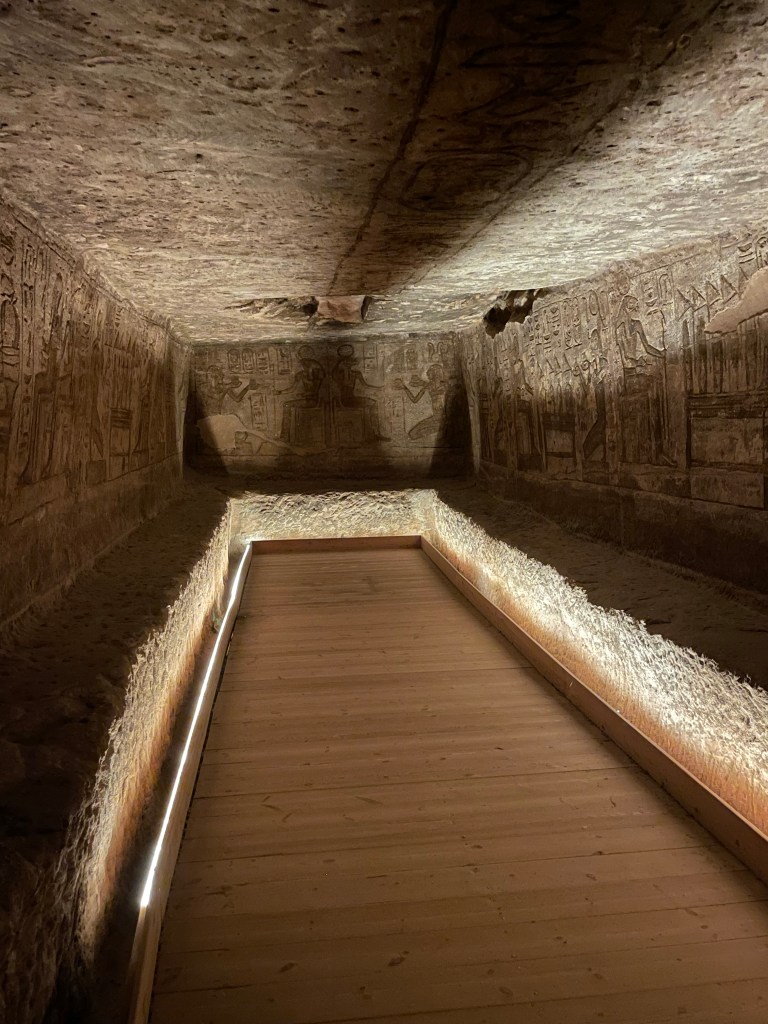

Inside the temple there are several smaller rooms that have murals of Ramses giving different gods offerings.
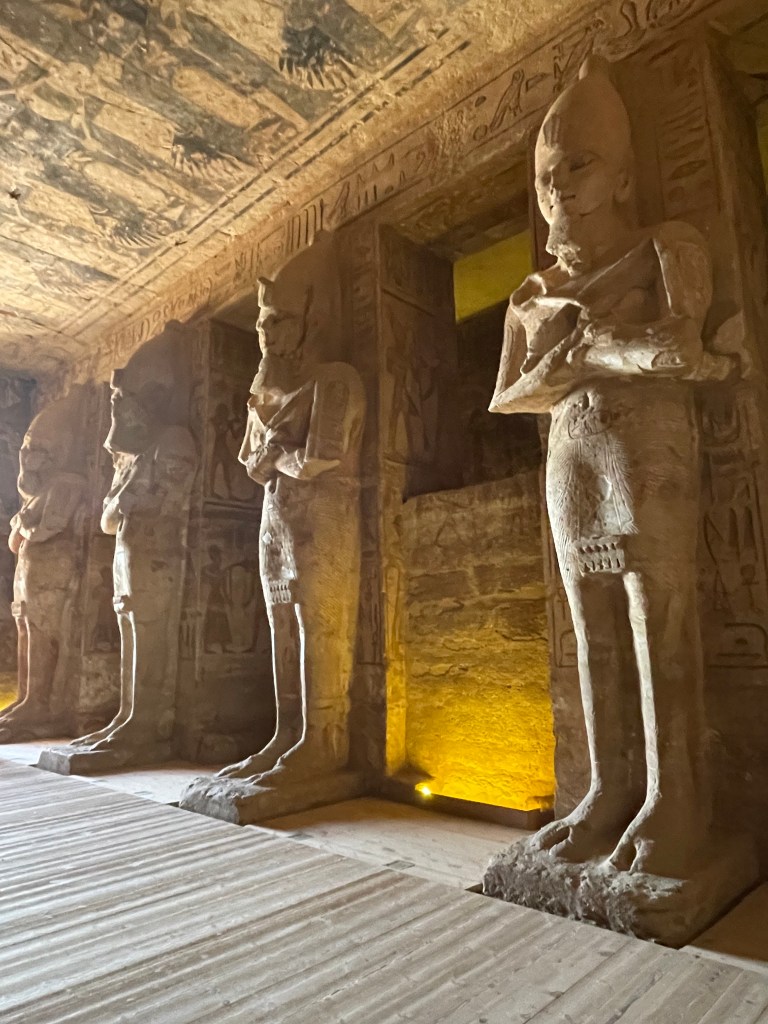
We were lucky that the temple cleared out while we were visiting and we got some pictures without tourists.

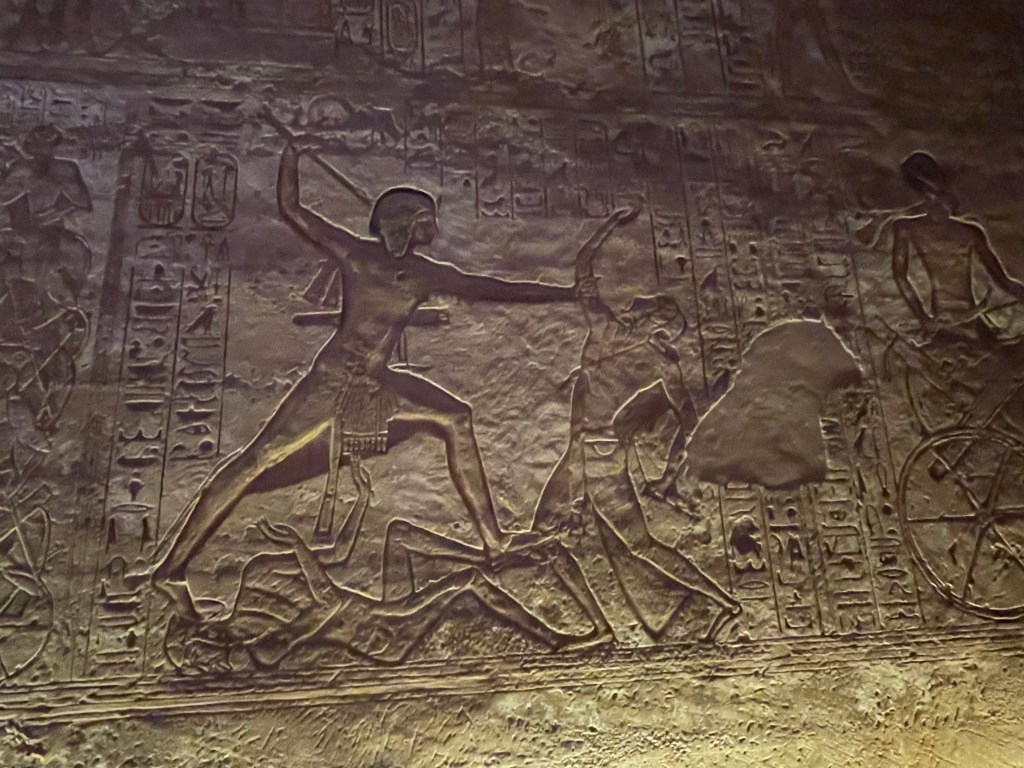
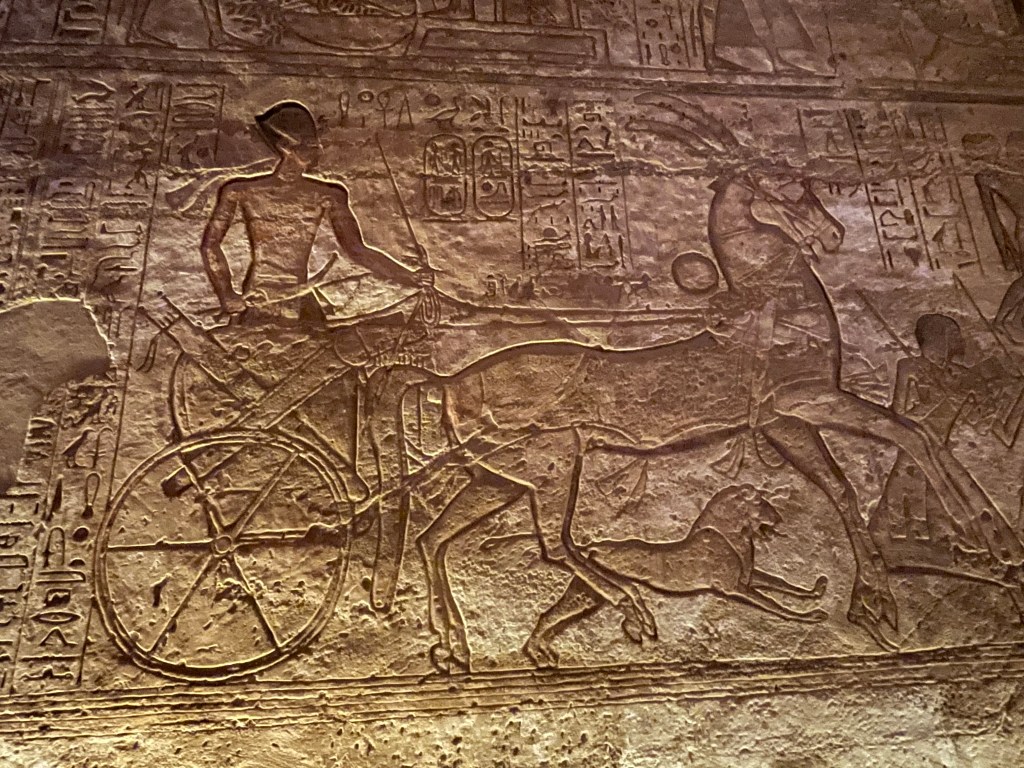
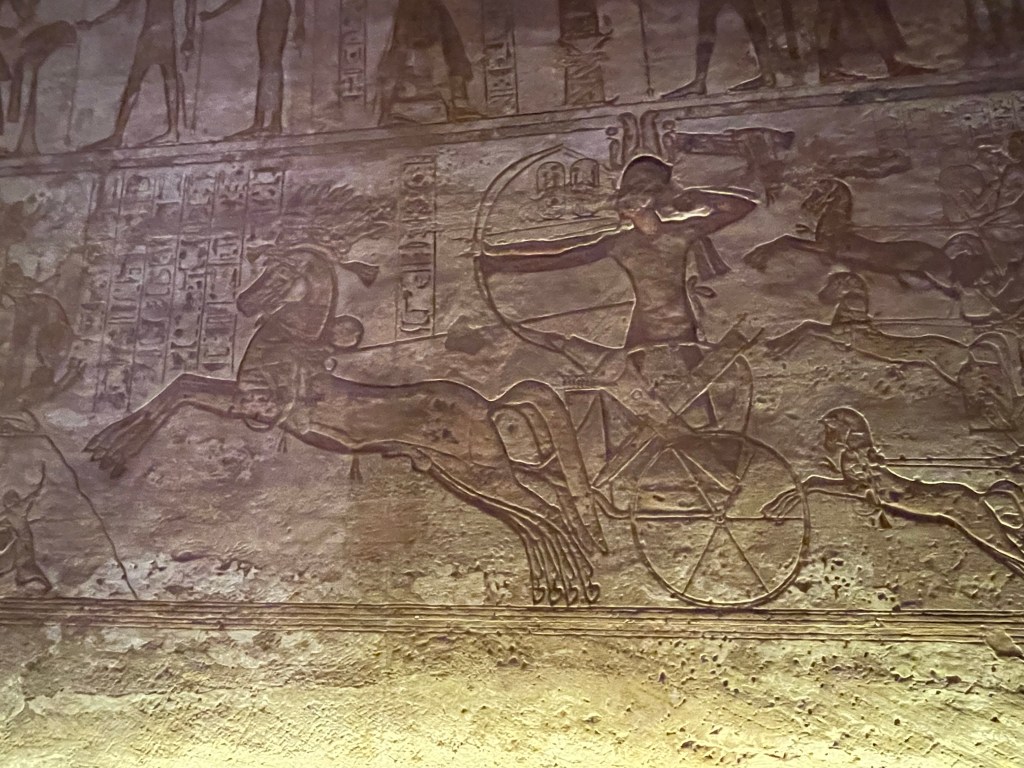
My other favorite carvings were of Ramses II smiting his enemies. (There are a lot of these in both temples.) There are other carvings depicting him in battle, leaving battle, and receiving the concession of the enemy. The one of Ramses II in battle has two arms. Egyptologists believe that the artist messed up the first arm and made it straight with no muscle and then had to put plaster on it to make it look better and in the ensuing 3000 years, the plaster fell off.
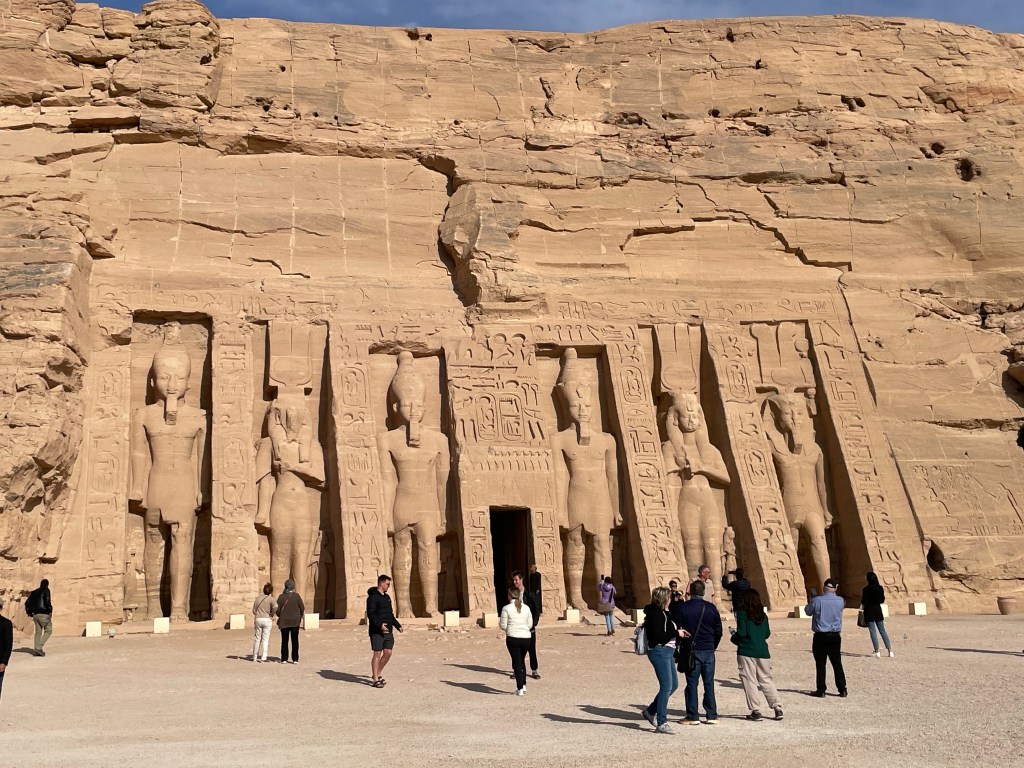
Nefertari’s temple also has huge statues at the entrance. There of the statues depict Ramses II and one is Nefertari (second from the right). It is significant that the statue of Nefertari is almost the same size as Ramses II, which demonstrates his respect and love for her. She was his favorite out of 57 wives.
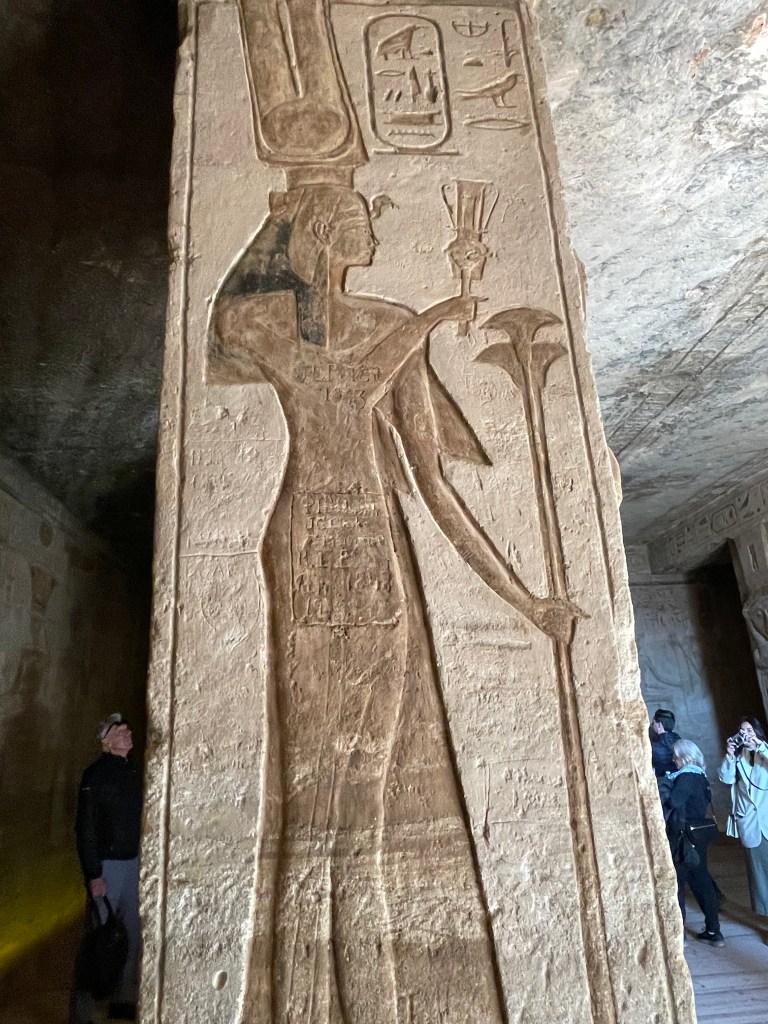
In her temple, I loved this carving of Nefertari in a see through dress. It indicates that she was a very beautiful woman.
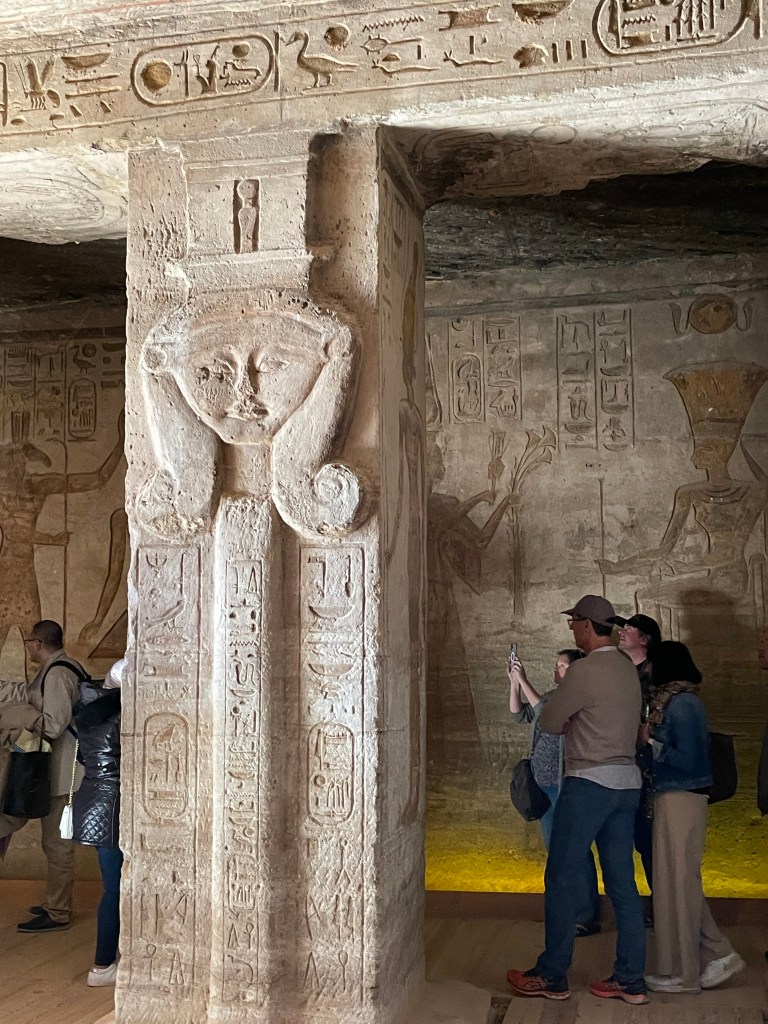
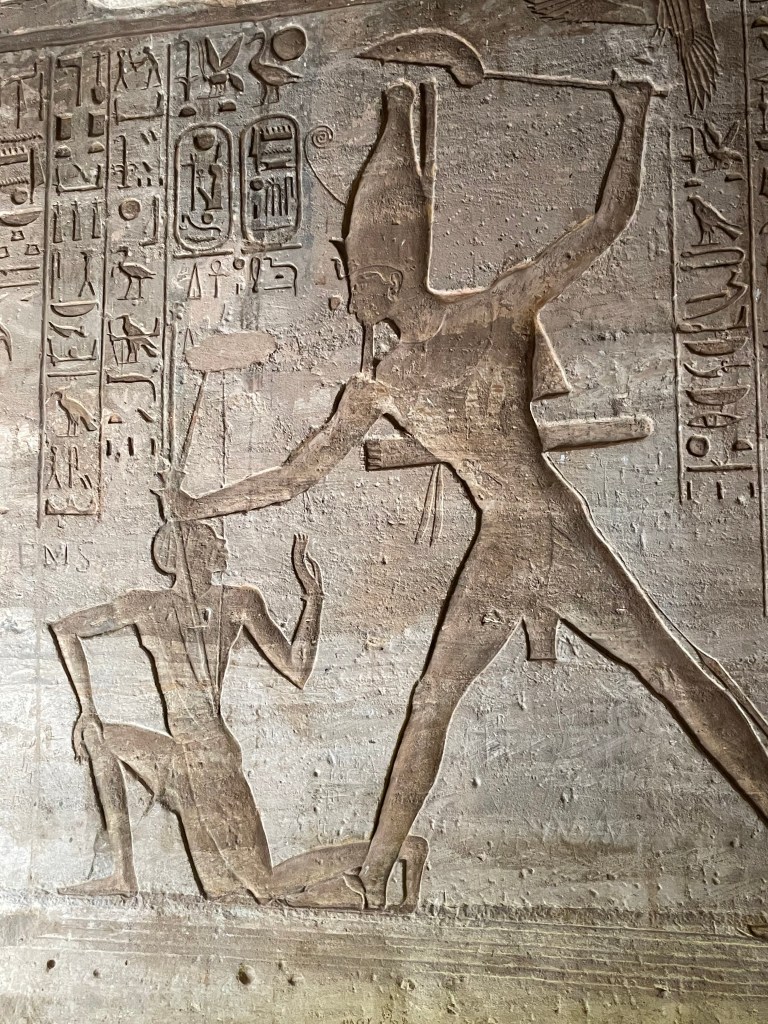
The inside is decorated with columns with the head of the goddess Hathor. There are also several carvings of Ramses II smiting his enemies with his scepter.
Although it was a very long bus ride, I thought the trip was worth it to see this temple. The sheer size and details of the carvings inside were unreal. There were also some paint still visible on the statues inside Ramses temple. I could not believe the amount of graffiti that was also on the statues. There were dates from the 1800s, which just shows that people were stupid even back then and didn’t respect these incredible statues or the history they represent.

 Bonney Voyage