Breakfast was very early because the rest of the groups on the boat went to visit something in Edfu. Our tour company does not recommend going there because it take 30 minutes to walk there or you can ride a horse, but they do not treat the horses well and our company will not pay for it because of that. I read that it was not a good place to visit because the vendors are harassing you the whole time you are there. In any case, I was happy to get some extra sleep.
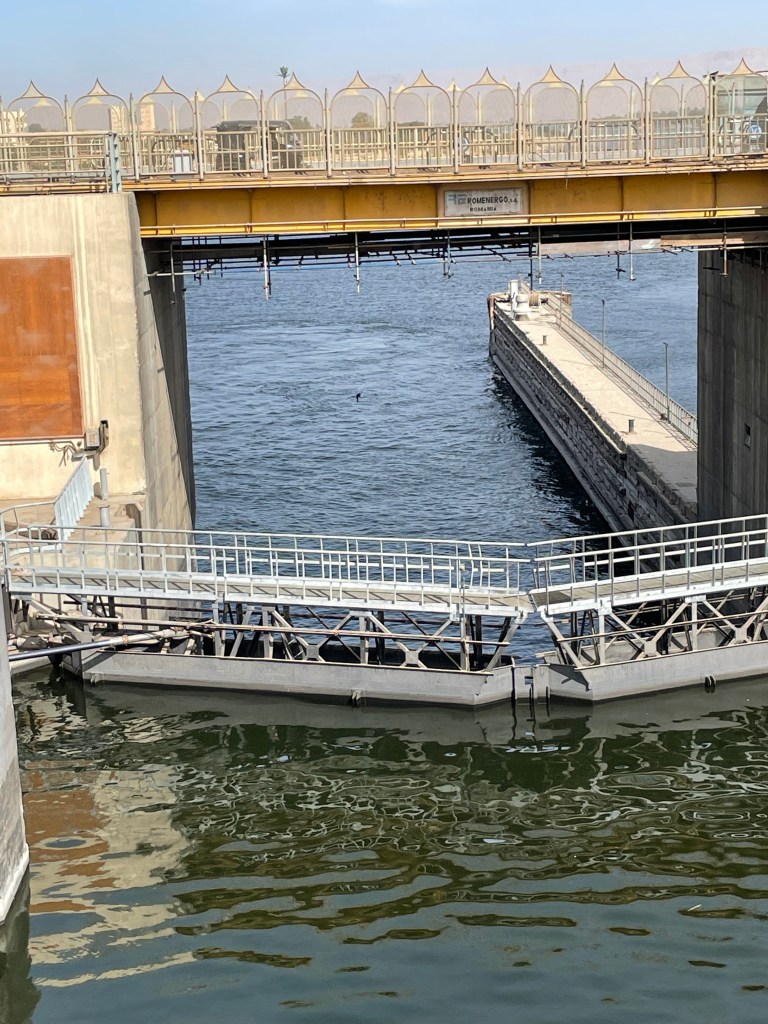
We returned to our room to rest a little longer, then got ready when we realized we were slowing down. We were close to the lock. As the boat slows, people in row boats come up and yell to you to buy their wares. One item was a beautiful tablecloth. One of our group members said her mother bought one with blue hieroglyphics and it was beautiful. She said she washed it and it was completely white afterwards. I’m glad we didn’t buy anything.
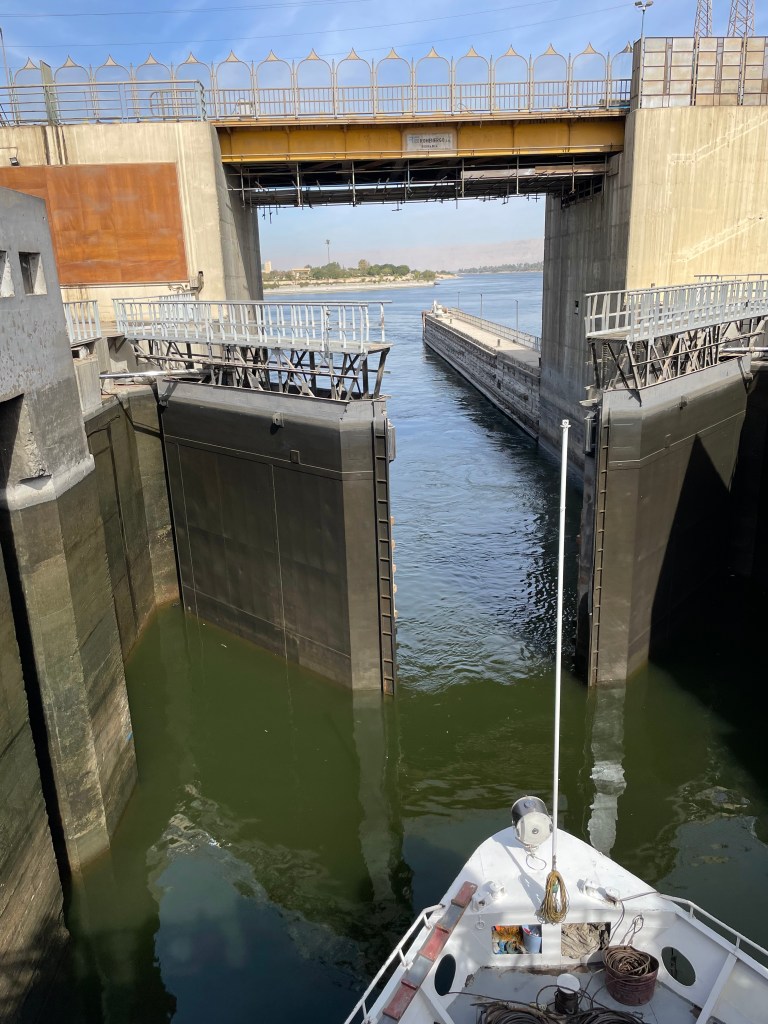
There were two locks and two boats were already in the first lock, so we pulled into the second and then had to wait for another boat to come in behind us. It did not take that long for the water to receded. We went down 8 meters. The top level of the boat was level with the bridge and then it was level with the ground. It was pretty cool.
We had lunch on the sun deck, which was so windy that our food was cold by the time we brought it to our table. It was unfortunate because it would have been a really nice BBQ otherwise.

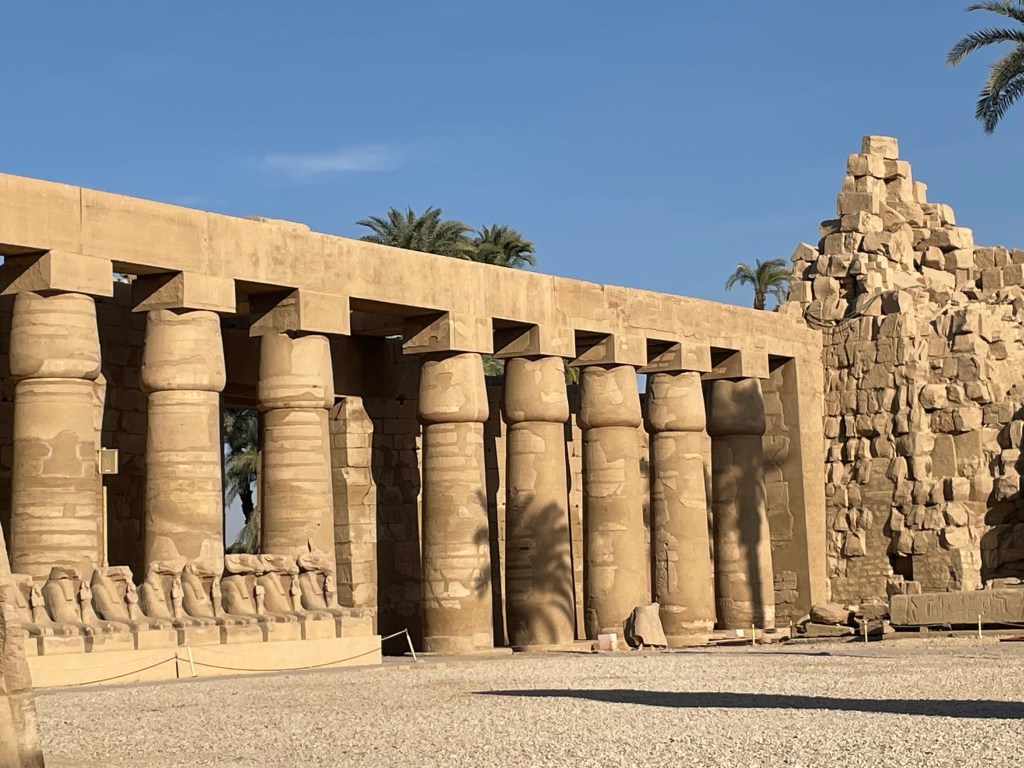
Our boat docked around 2:40 and we went through three other boats to get to the shore. We rode a van over to the Karnak Temple Complex. Inside the visitor center they have a model of the complex. Mohamed pointed out the areas that are found in all temples for example: the courtyard, the area where commoners can come and worship, the nobles area, and the area where only the king and the high priest of the temple can enter. Temples are always built on the same axis, but Karnak ran out of room, so they expanded on a different axis. The temple had the avenue of the sphinxes which was 2.7km long. You can see a good section of it here.
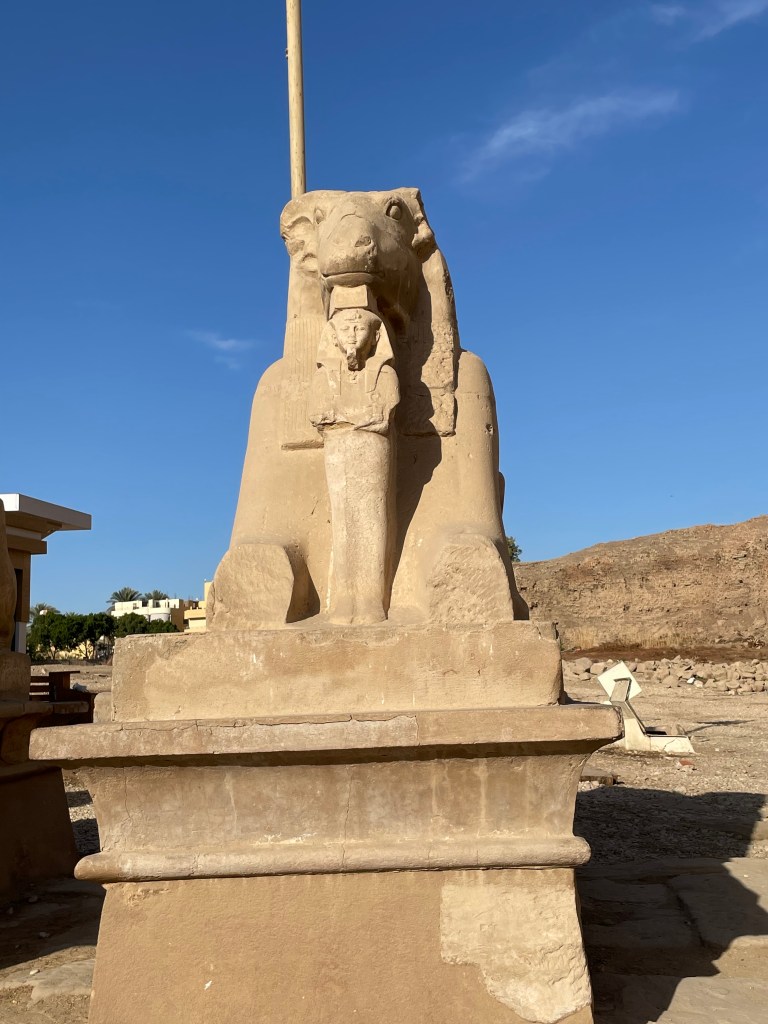
The king in the sphinx’s legs is Ramses II.
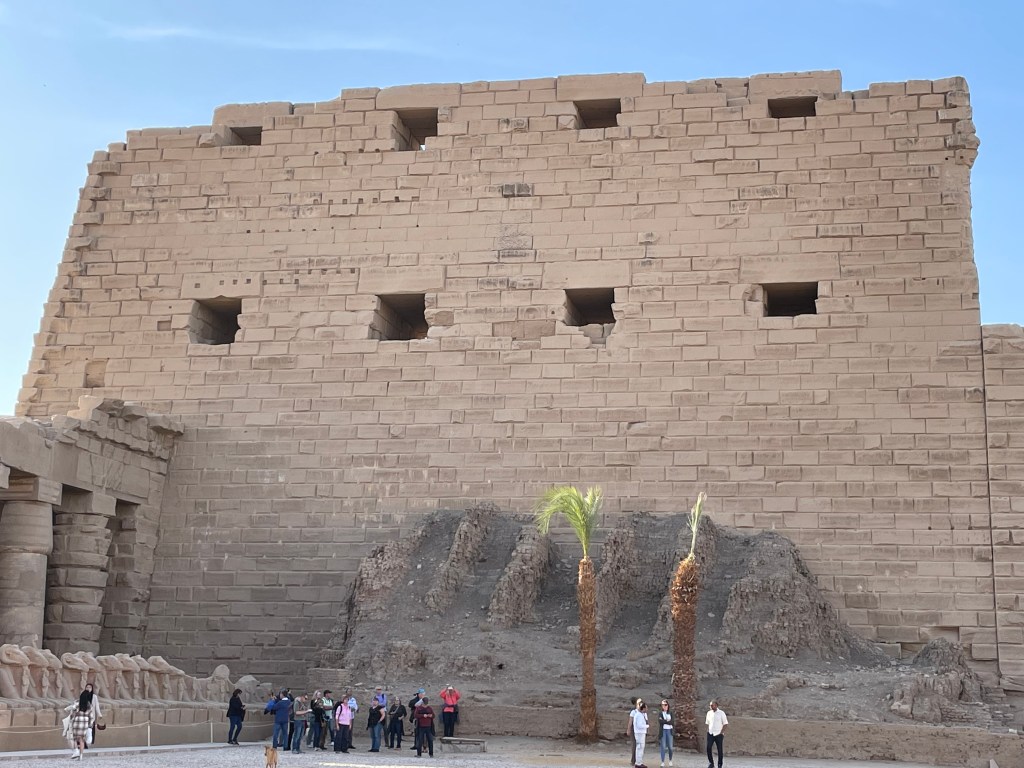
This area insides is an example of the ramps that Egyptologists think ancient Egyptians used to build the pyramids. You can see the wall is unfinished. This is why the ramp is still there. Once the wall is completed, they remove the ramp. Mohamed said the Egyptologists love when there is something not complete because it gives them more insight on how it was created.
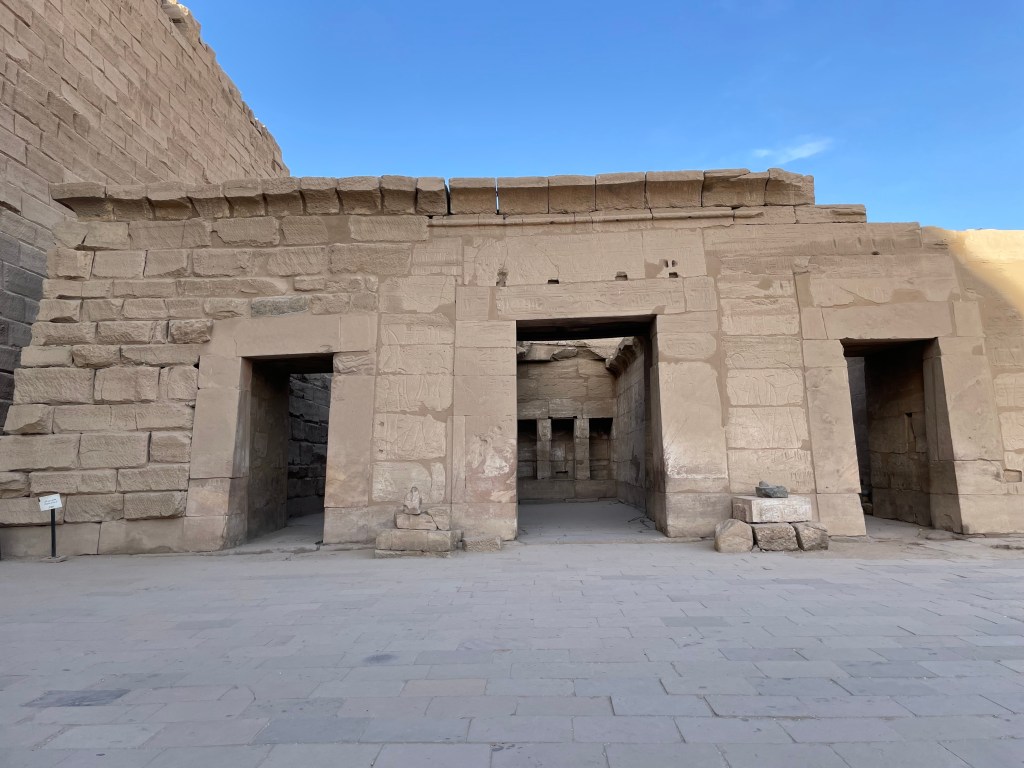
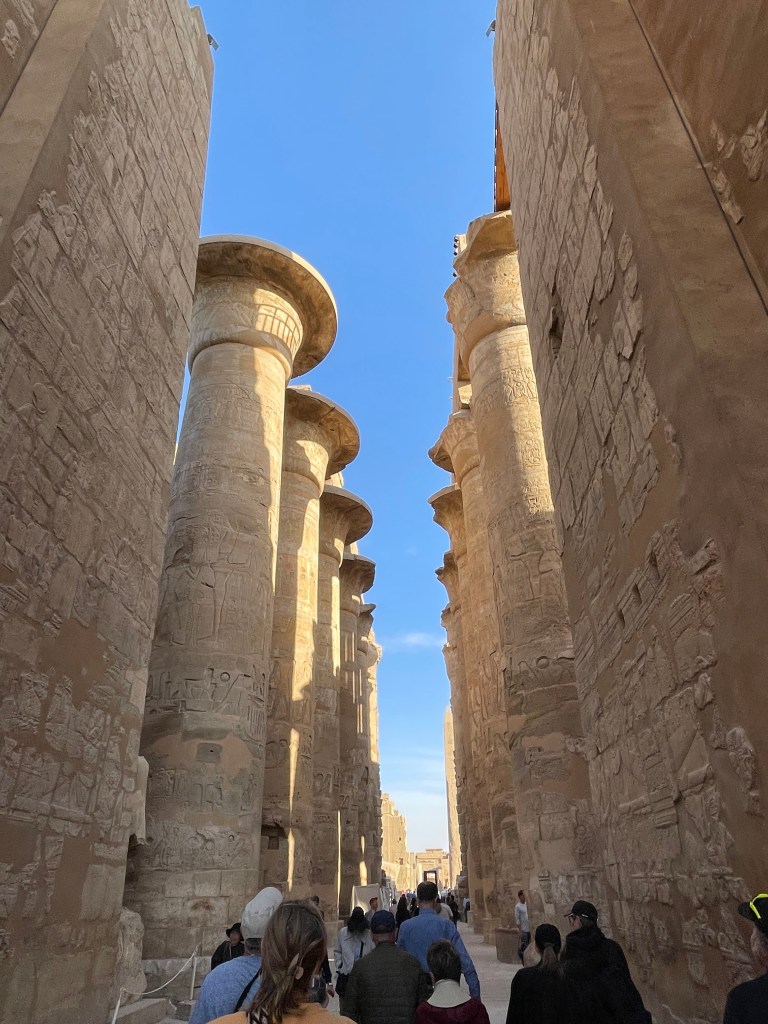
Each section of the temple had different kings adding to it. There are three chapels here representing the king, his wife, and their son. The columns were a representation of Ben Ben, which they believed to be the first land in creation. The columns represent the lotus. The 12 in the center row are open and the ones on the sides are not. This demonstrates the lotus fields, where some are mature and others are not.
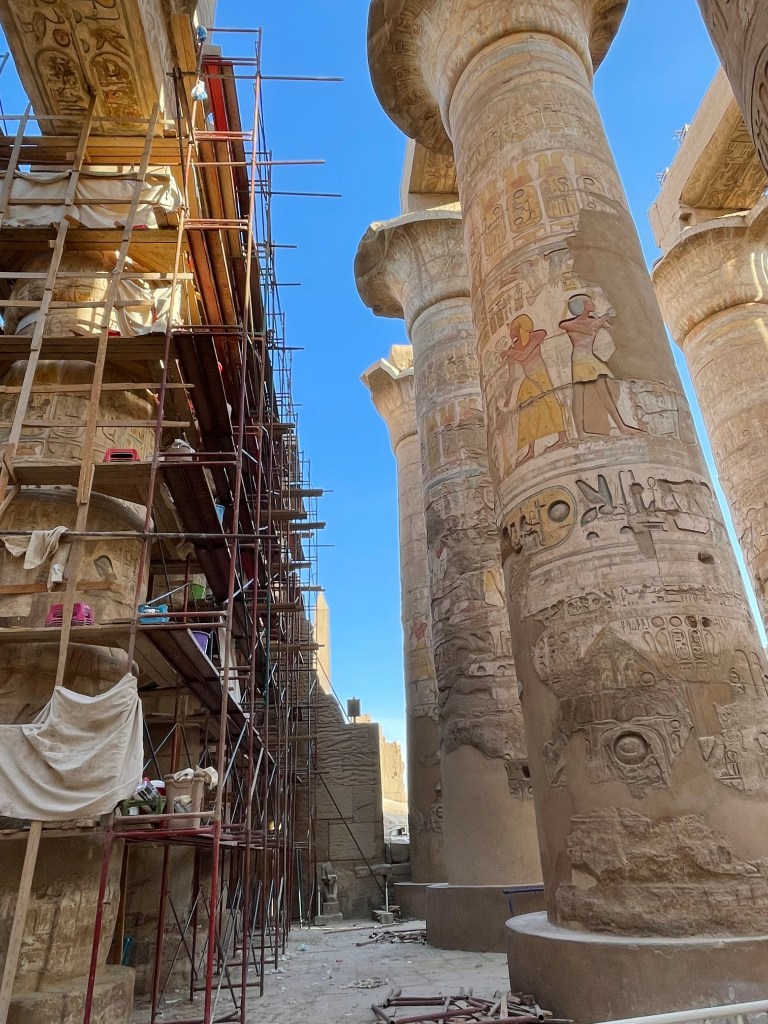
The columns are slowly being cleaned of soot to highlight the colors that are still amazingly bright. You can see the ones that are being worked on and the ones that have been cleaned already. They were just finished less than a year ago.

You can see on these columns the two different type of carvings. One is into the stone and the other is bas relief. The one in the stone is a lot cheaper and faster to complete. This was done by Ramses II after is predecessor died (who preferred the bas relief).
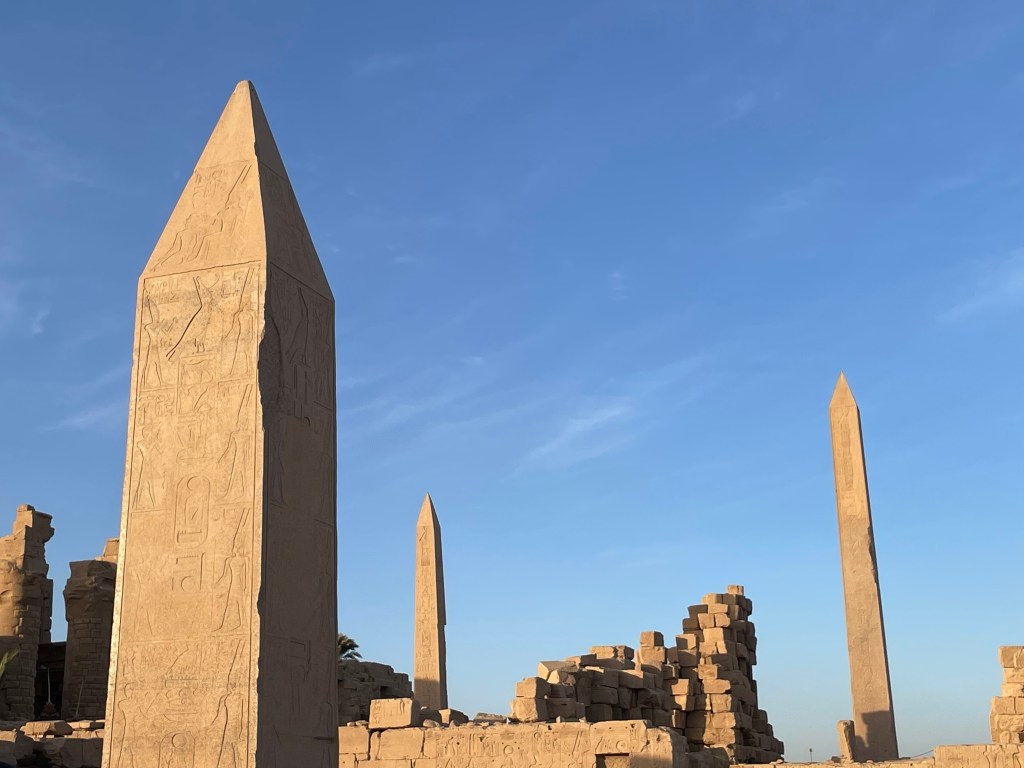
Obelisks are purely Egyptian. If you see other obelisks in the world, they are from Egypt. This is interesting because here in Egypt there are only 6 left. In Rome there are hundreds (the Romans stole them). The obelisks were carved out of granite and sent by river to the temple. They were erected by placing the bottom part in sand at the base and then slowly letting out the sand. The obelisk would then rise and they would use ropes to make sure it was straight.
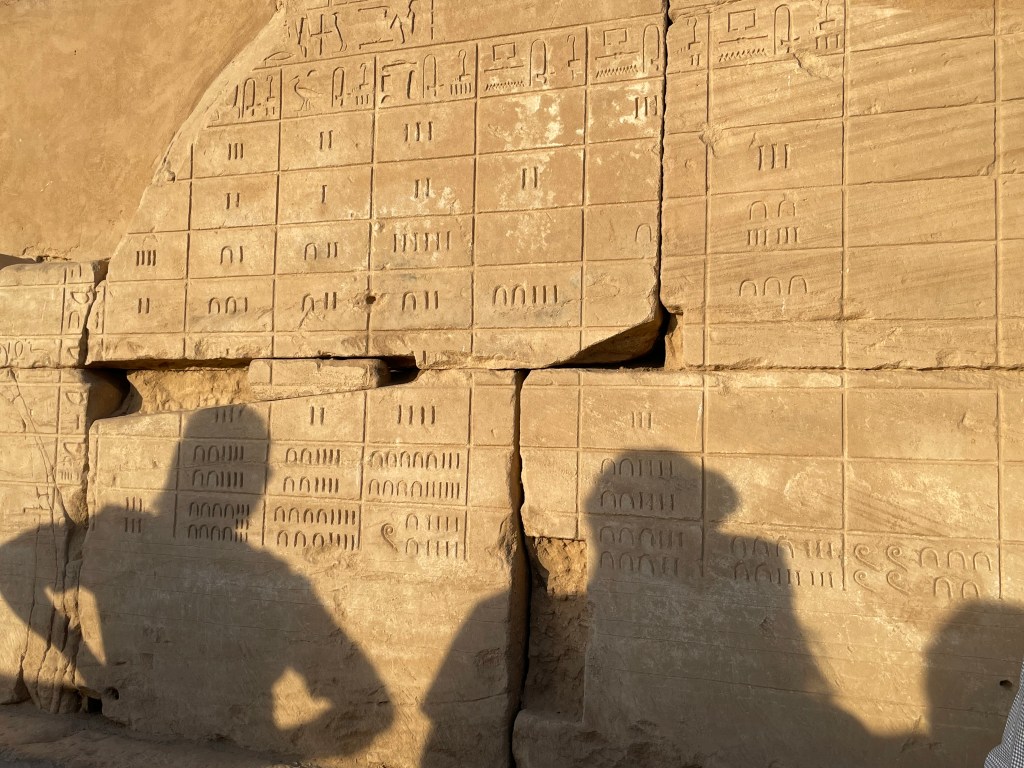
This wall is the first excel spread sheet. It shows the cities in which they bested and the numbers are the spoils of war. The number of the far right bottom is the total of all the spoils: 450. (Mohamed taught us the numbers in hieroglyphics.)
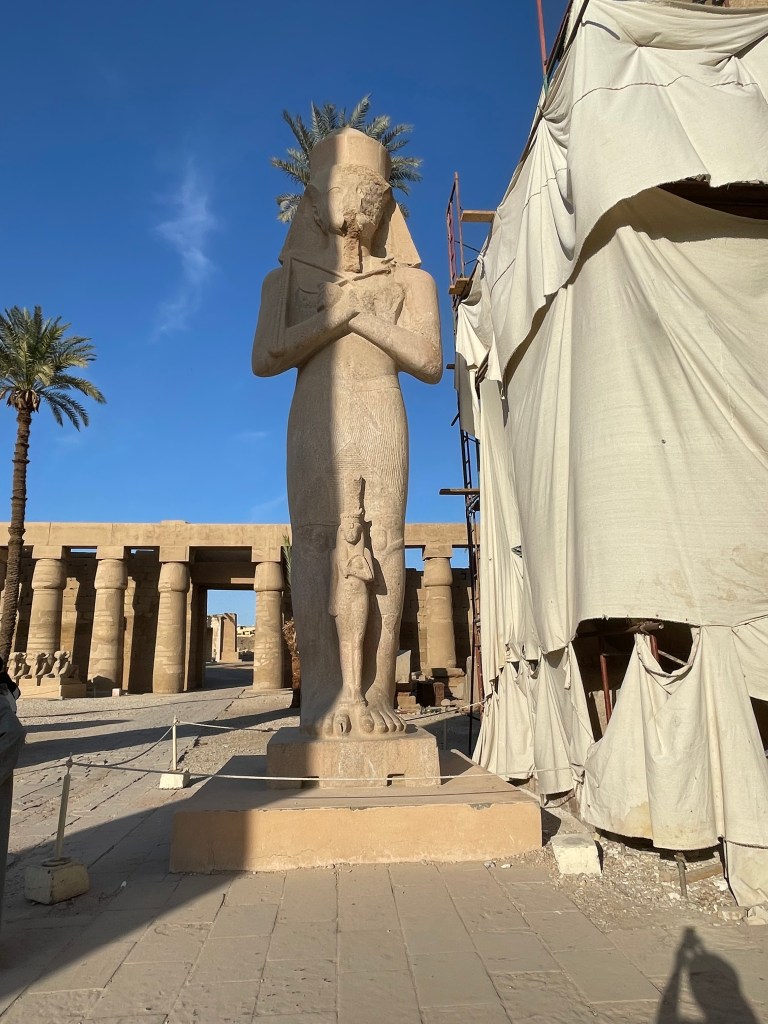
This statue is also Ramses II. In between his legs is not his favorite wife, Nefertari, but his favorite daughter, who I believe was Meritamen, but I may be mistaken. She was reportedly one of the most beautiful women of the time.
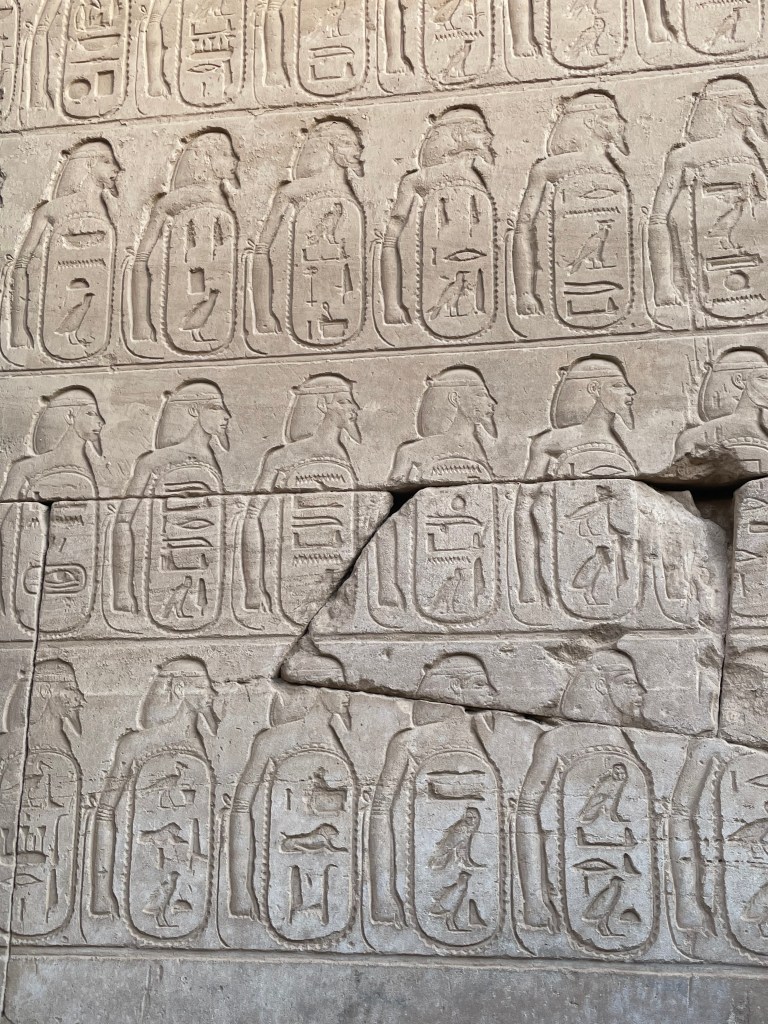
Remember the men with their arms removed from Kom Ombo? These men have both their arms tied behind their backs. They do not have cartouches on them. These are the names of the cities in which they were taken. They are not from lots of different places, but all Mesopotamians.
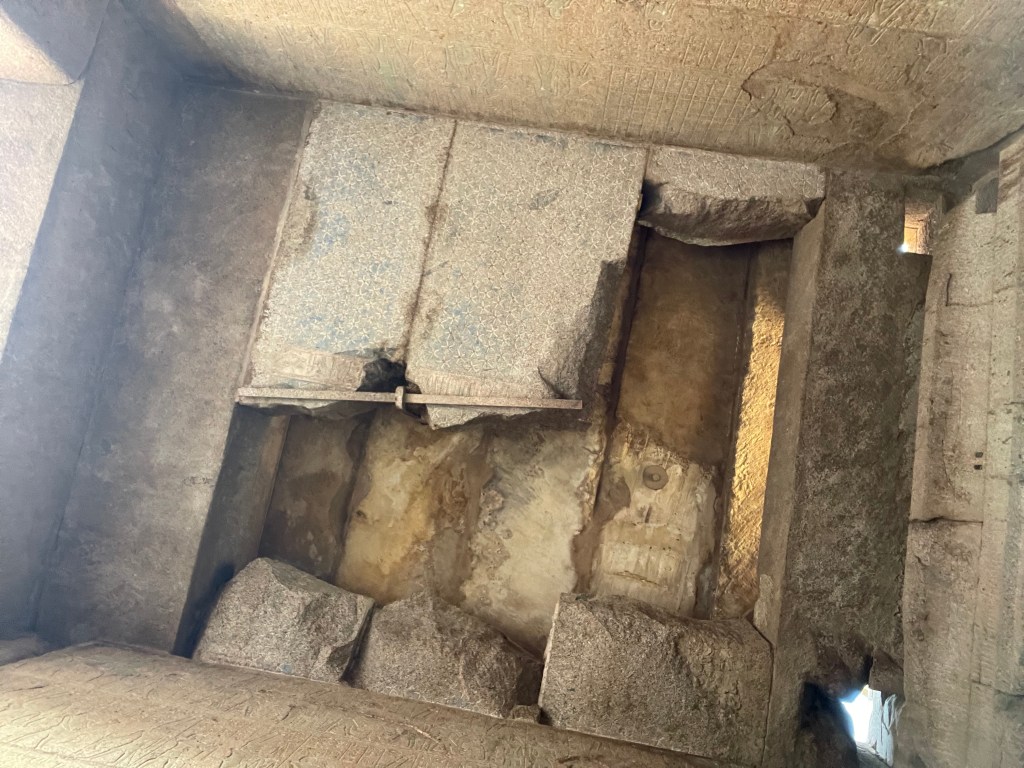
The ceiling of this chapel shows the old and new sections. It was rebuilt by Alexander’s brother. Alexander asked him to go around the country and preserve the temples so the people of Egypt would accept him as his king more easily.

 Bonney Voyage