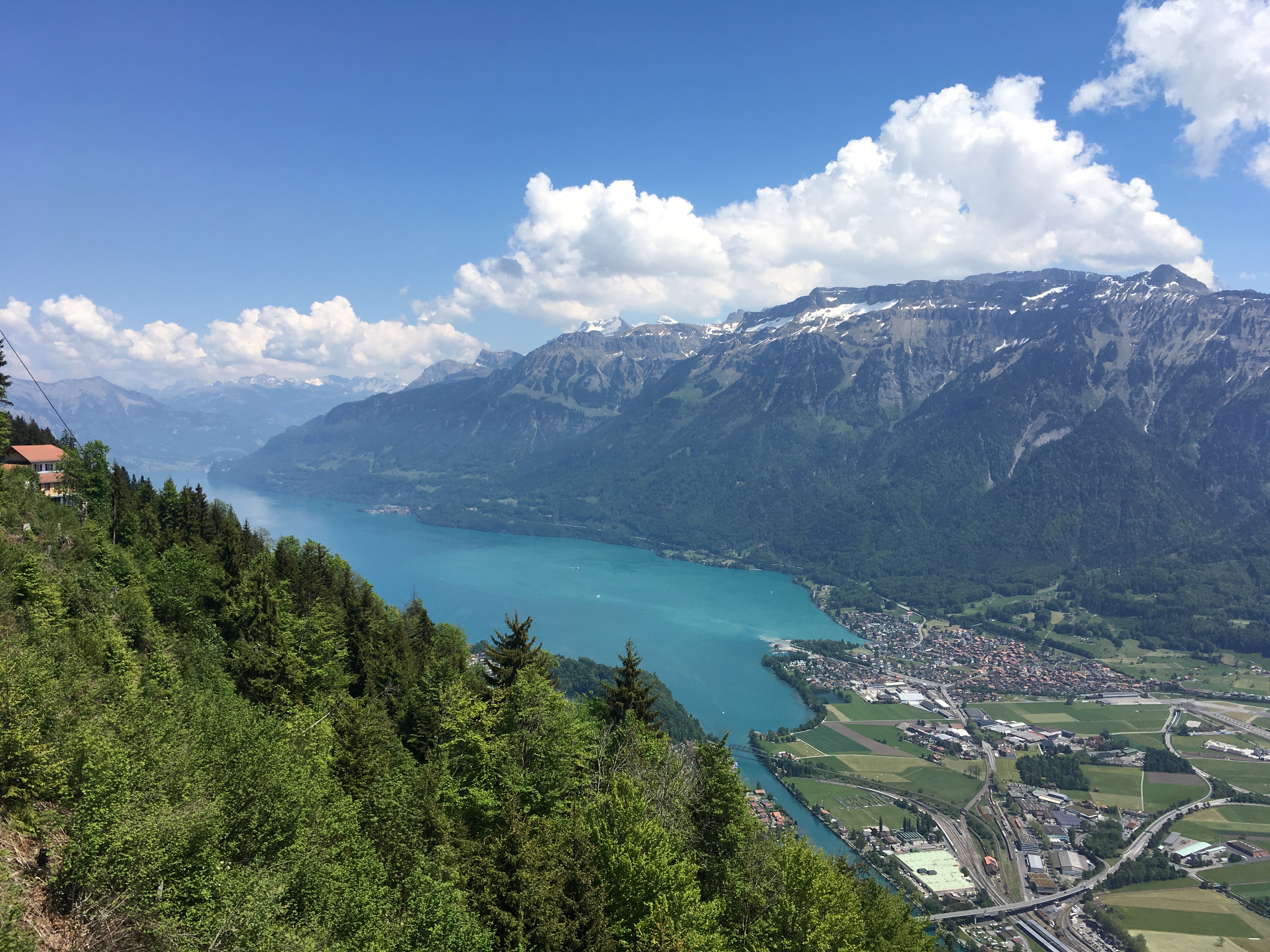

We are on a Carnival cruise to the ABC (Aruba, Bonaire, and Curaçao) Islands. I would rather not focus on the cruise side of this trip. Honestly, Carnival is not my favorite cruise line for a variety of reasons. However, you should know that if you take a cruise to these islands, there are going to be FOUR sea days. Two to get there and two to get back. This was very daunting to me, but so far it has not been terrible.
We decided to rent cars on each of the islands instead of doing any packaged excursions. Our rental guy told us he would meet us near the I Love Aruba sign to pick up our car and we agreed on 9:30am. We got off the boat and I discovered that my watch said it was 10:30. We thought we were in trouble, but the rental guy was there. It must have happened to him before. We rented a Jeep Wrangler and I would highly recommend renting some type of four wheel drive vehicle if you plan on exploring Aruba. Our Jeep may have been worth about the same as the price we paid to rent it. It made a lot of noise and when it rained, it dripped onto us inside.
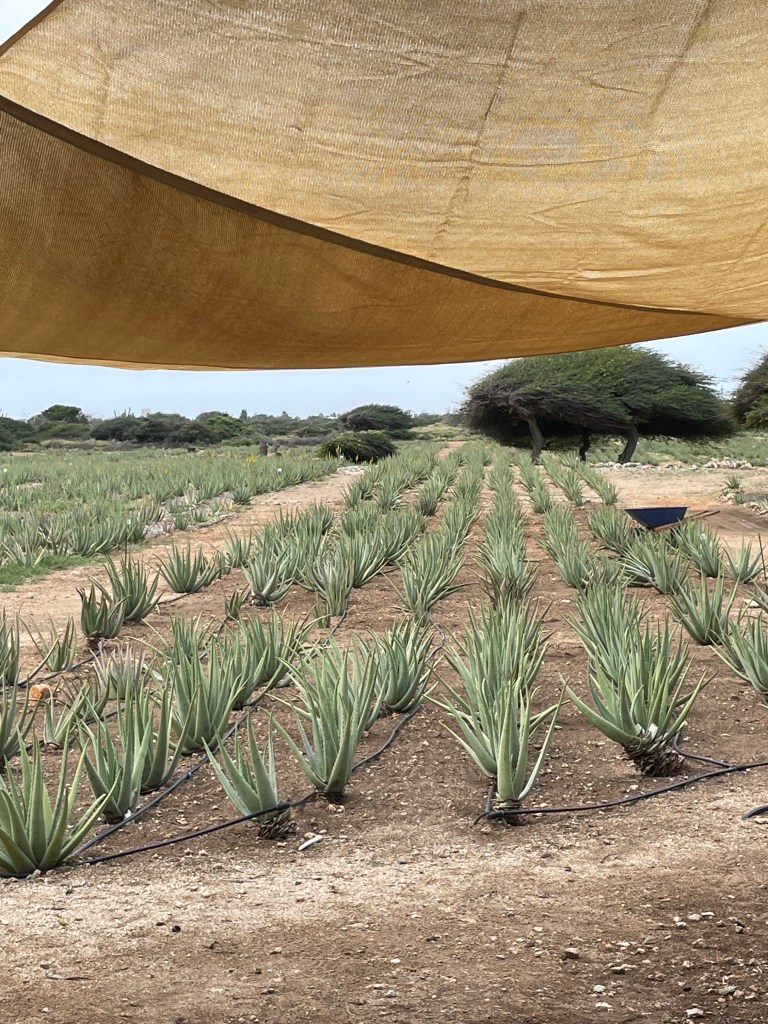
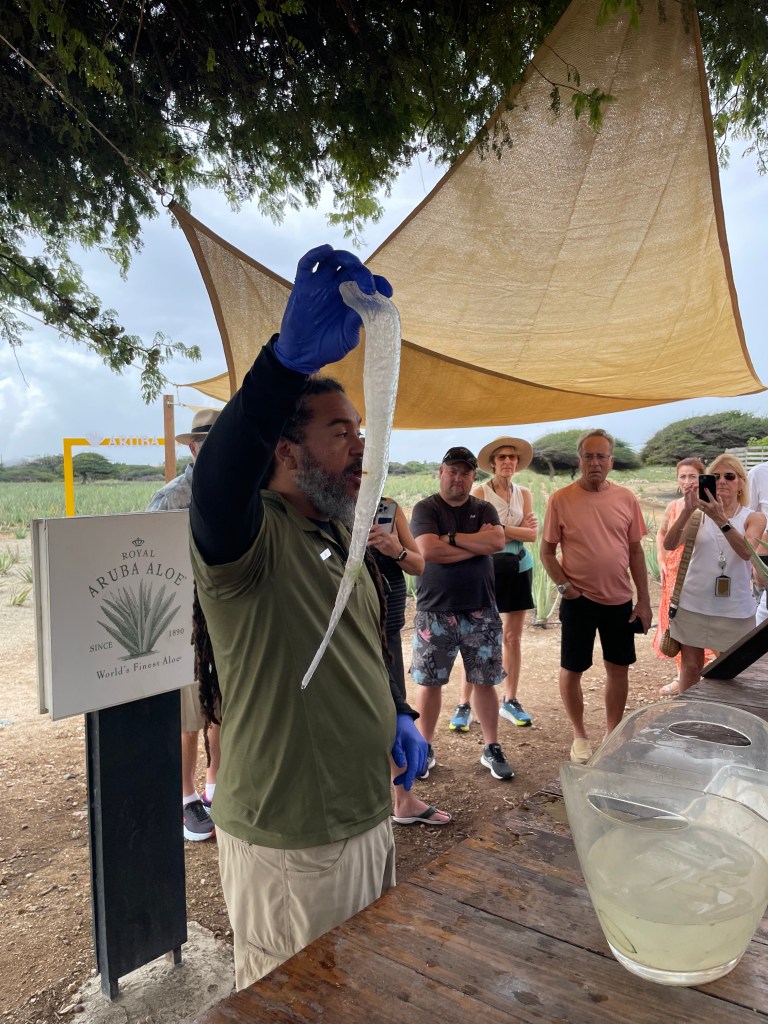
It started pouring almost immediately after we drove away. We were going to stop at a museum, but there were no open parking spaces and it was a downpour. Instead we drove to the Aruba Aloe Factory and Store. They give free tours. We signed up for one and a bus arrived at the same time. We went outside and he cut off a leaf of the aloe plant. It was dripping this nasty looking yellow liquid. The guide told us that yellow liquid is a powerful natural laxative and if you put a tablespoon in your drink, you will have no issues going to the bathroom. He told us that in most countries the liquid is white or clear and is not as powerful, but still acts as a laxative. It’s only yellow in hot dry places like Aruba and Africa and Arizona. He showed us how to cut the green off the plant and pull out the jelly like aloe. You need to put this is a bowl of water and let it soak for at least 45 minutes. He suggested a couple of hours. Once it soaks, the liquid laxative is washed away and you can use it for various purposes. Of course, as a balm for sunburn, but also as a moisturizer for your skin. You can also eat it and it helps with gastritis issues. I thought this was very interesting.
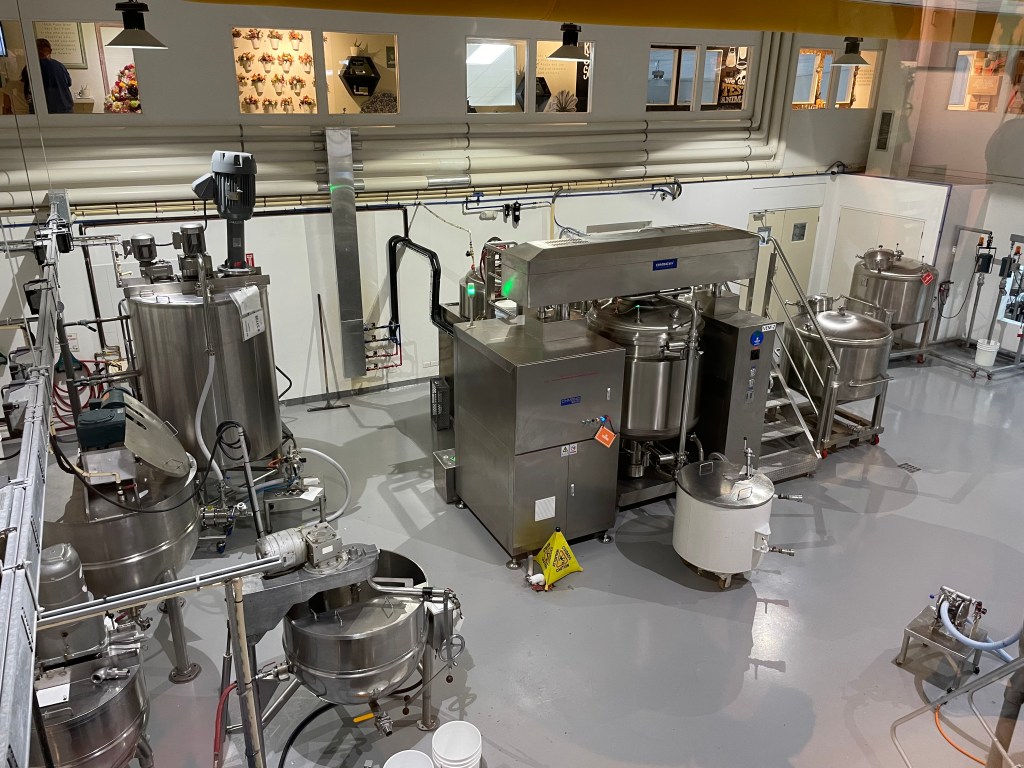
We went inside the store and up the stairs that overlooks the plant. We could watch the workers strip the green off the plants. They use this for composting and later fertilizing the aloe plants.
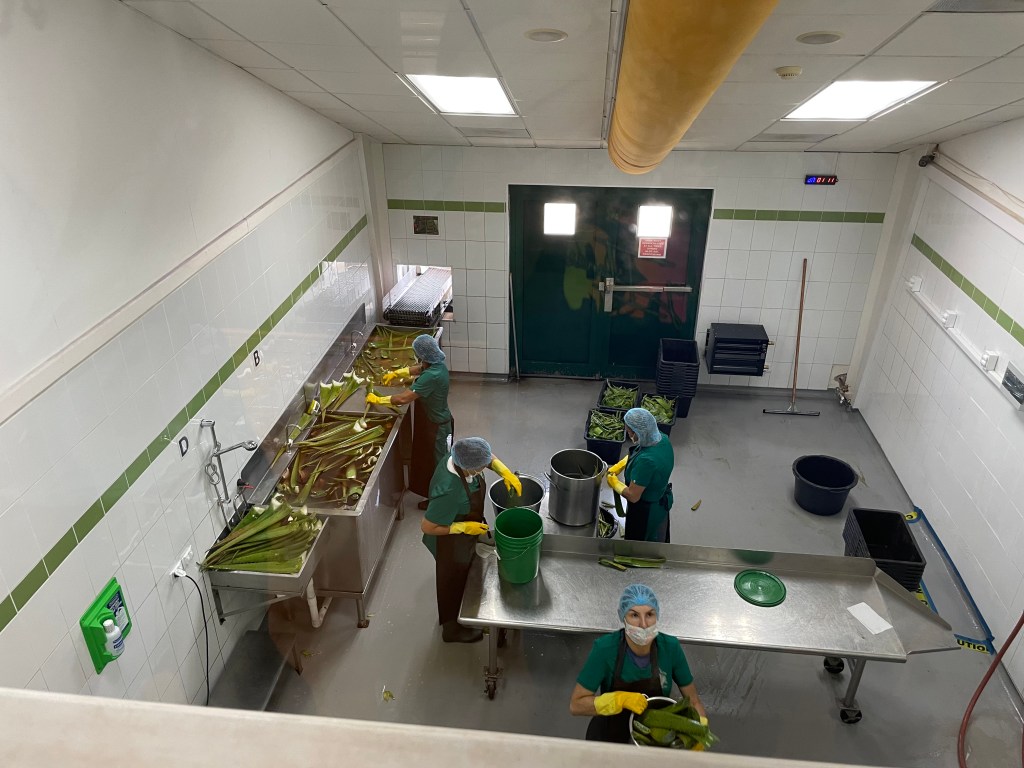
We could see the machines mixing the aloe gel and in another room the employees were putting together the bottles to attach to the machines. There was another room for experimenting. This factory does not make anything that you can eat with aloe. It is only for skin care products. They had a huge variety of types that you could purchase from bath salts to sunscreen to burn and scar care. After the tour, you can purchase products in the store and even try some out. There is also a section where there are boards that you can read about aloe (I’m guessing you can do the tour on your own as well and that is how you learn about it).
We did not buy anything. It was all quite expensive and I was not sure if I would use any of it. I did enjoy the smell of the coconut and aloe bath salts and sugar scrubs.
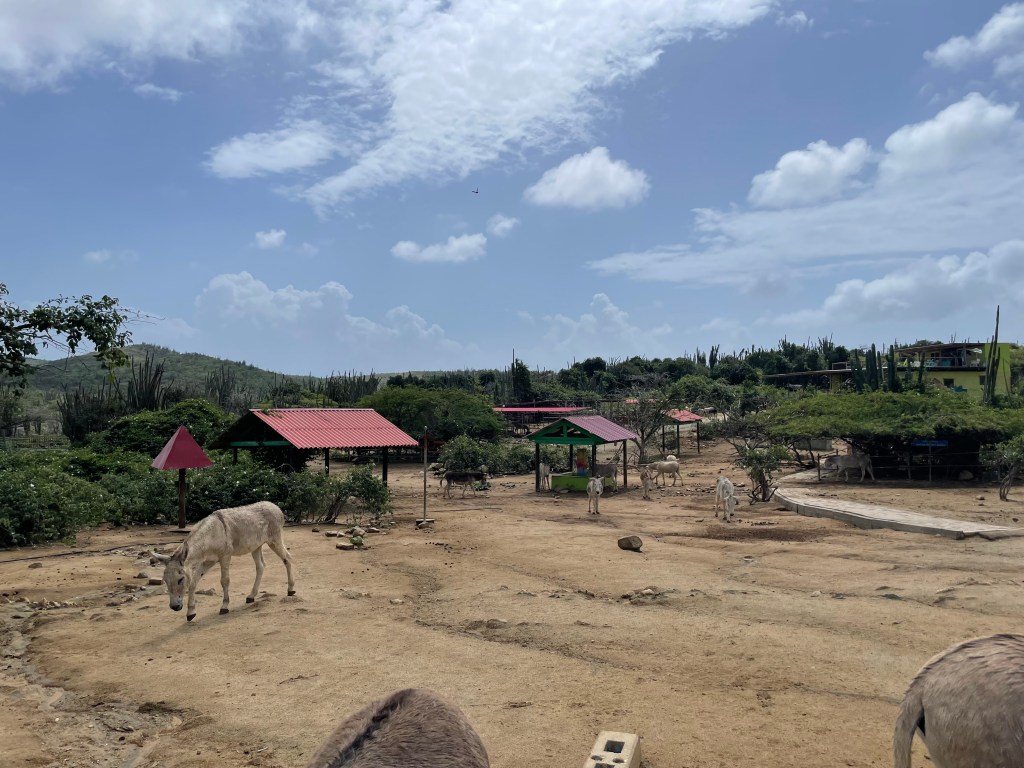
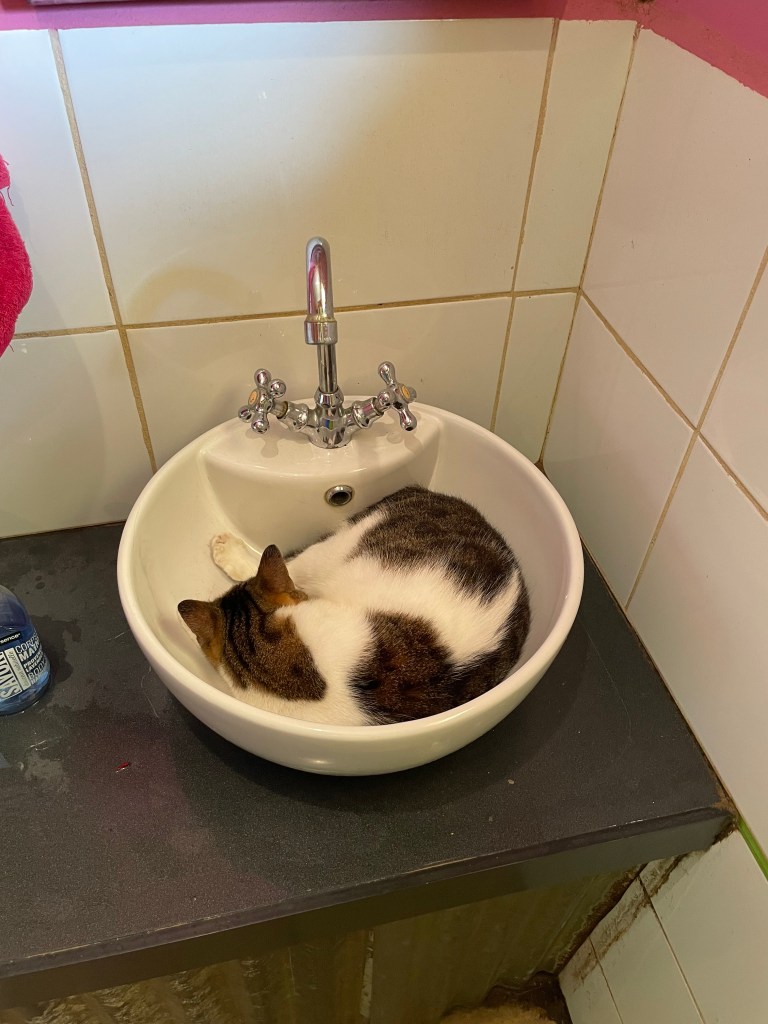
It stopped raining while we were on the tour. We next drove out to the donkey sanctuary. It is totally free, but you do have to purchase any feed to give to the donkeys. You have to walk through a gate (without letting out the donkeys) and walk in the area with them to get over to the visitor’s center. We found that the donkeys were not very interested in having you pet them. They only wanted food. At the visitors center they had some interesting facts about the donkeys, a neat store with donkey stuff, a place to buy food and drink, a bathroom, and some donkey feed. They also encourage you to donate for both the donkeys and the numerous cats they have wandering.
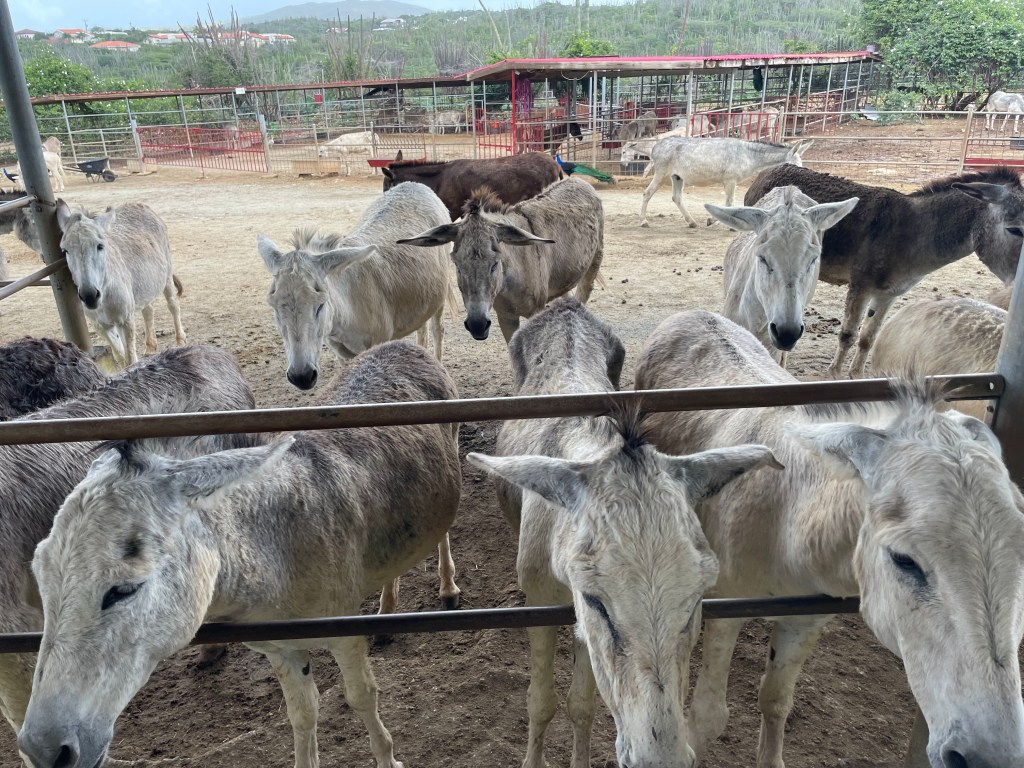
We bought the biggest pail of feed and wandered around feeding every single one that came up to the fence. We even found the three legged donkey that was hit by a car and they couldn’t save his leg. They were all very cute, but not interested in pets even with food. I also enjoyed petting the cats.
After the donkeys there are ruins of an old gold smelting place nearby. There was only one other car there when we visited. The pathway is uneven, but it’s pretty neat that there is a path all around the ruins.

We really wanted to try some local take away, but every place we looked was closed. We had to eat fast food and it was not good. We also stopped at a supermarket to pick up some cold drinks. Then we headed to Parke Nacional Arikok. Did you know that Aruba is Dutch? A lot of the signs look like they are in Spanish (and some are), but most are not. It cost $22 per person to enter the park. We don’t know if that was US or Floren (the local currency). We paid it because we wanted to explore the park a bit. This was where we were happy to have the Jeep Wrangler. The roads were pretty rough and rather muddy.
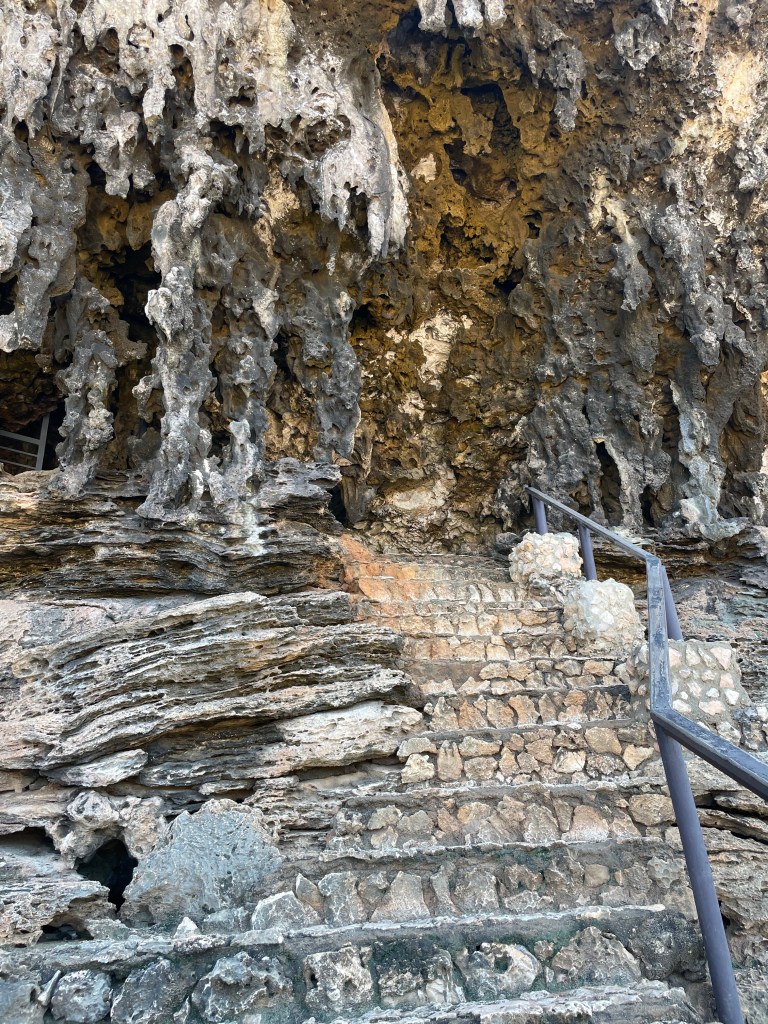
Our first stop was at the Quadirikiri Cave. It is a limestone cave and they prohibit flashlights because of the bats. Needless to say, there were several tourists with their phone flashlights on in the cave. It is sad how no one reads signs. The cave has two chambers and there is natural light coming in. The steps to get into the cave are very steep.
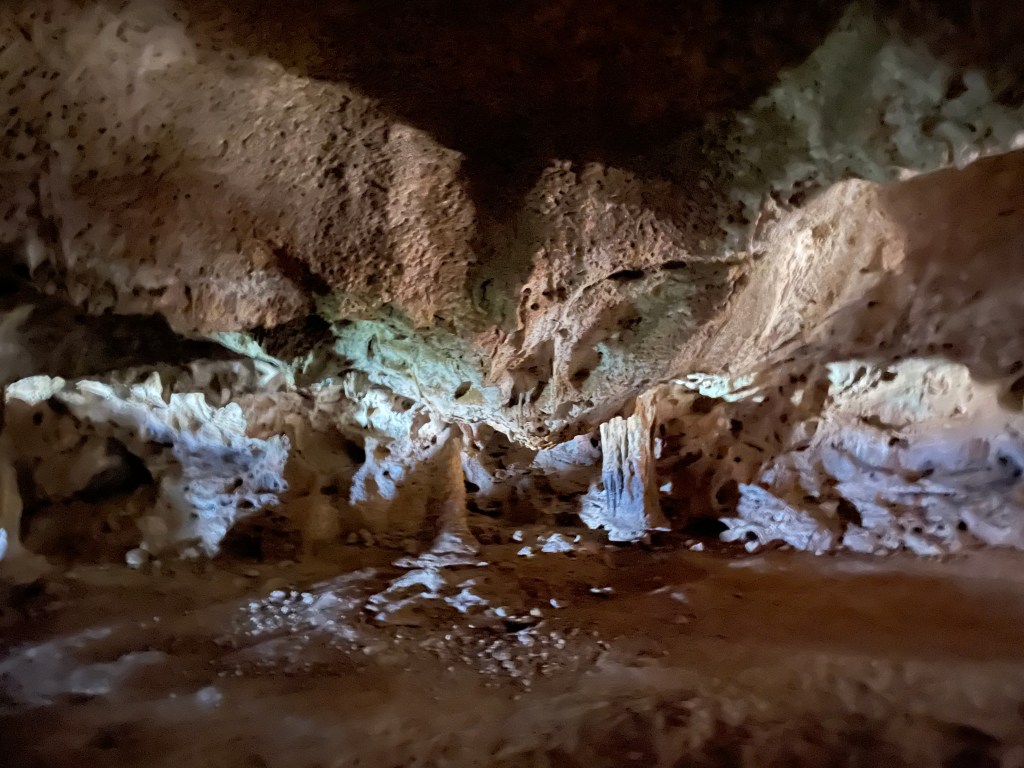
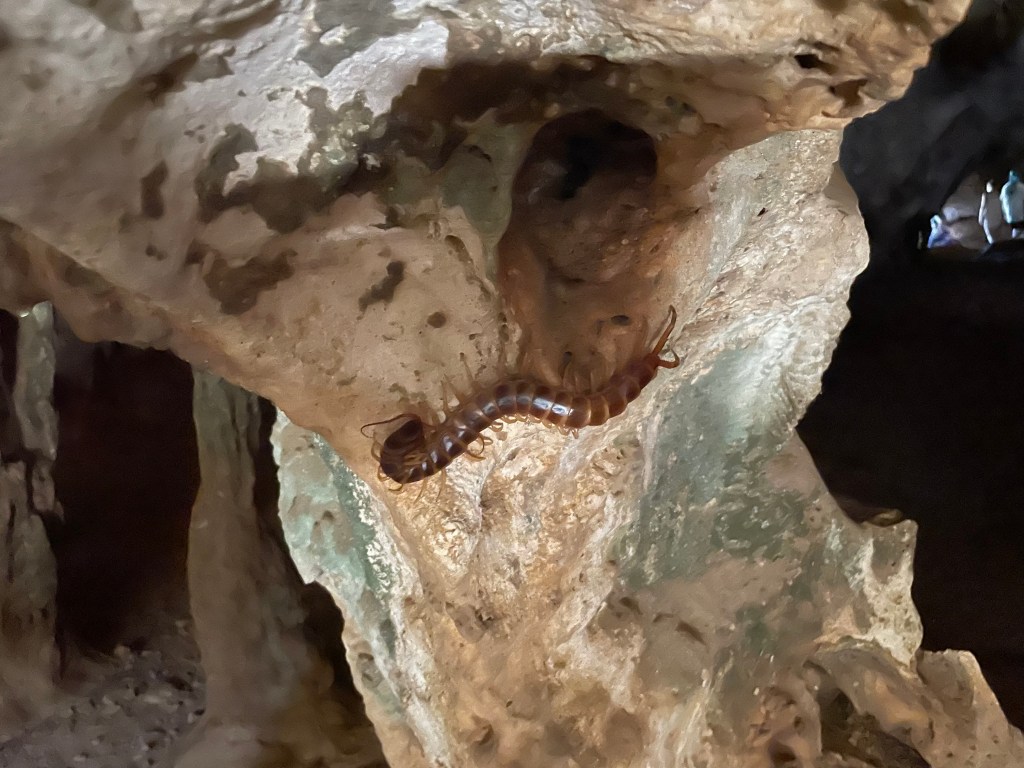
Inside, you can see fine without light and just need to step carefully in those few spots that are darker. The floor is uneven. As we entered the first chamber a group of people were standing around staring at a centipede. I glanced at it, not really paying attention. When I looked back to take a picture I couldn’t believe the size of it. It was as long as a loaf of bread and about three fingers thick! I couldn’t imagine stepping on it in the dark. Gross.
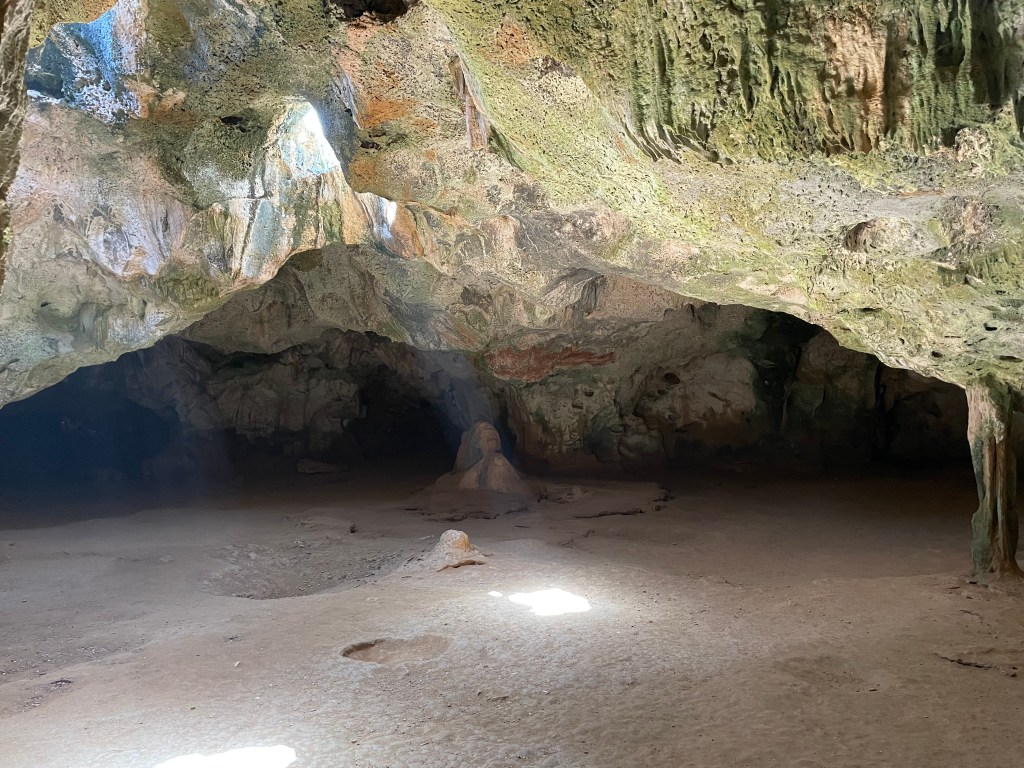
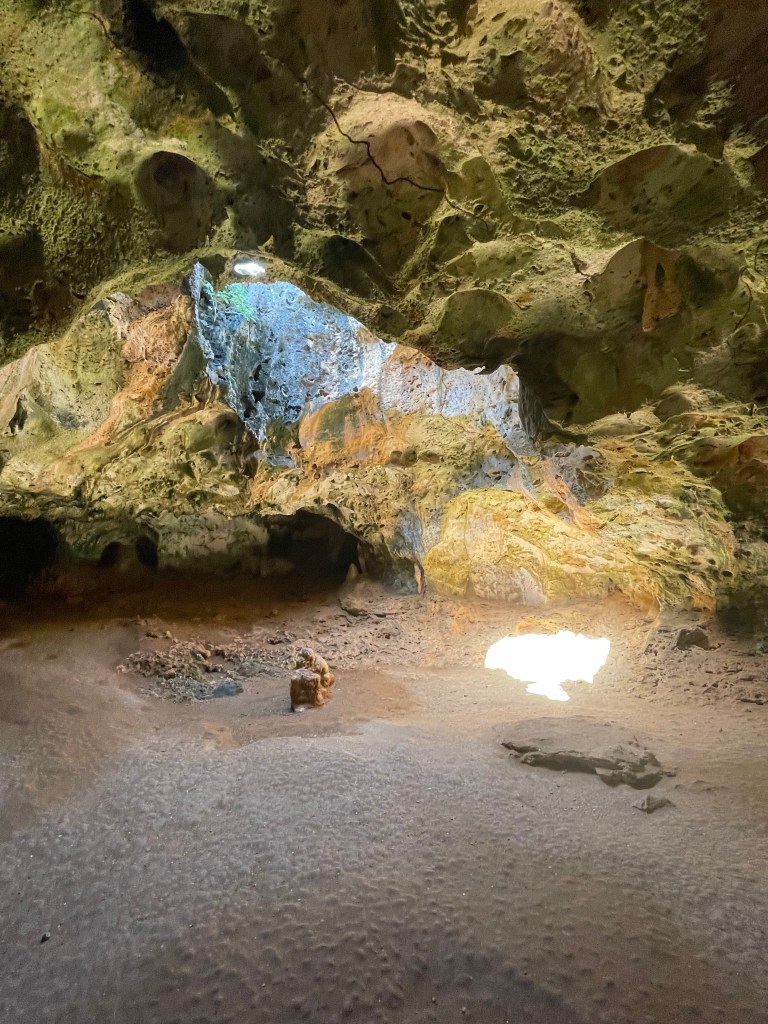
I really enjoyed the Quadirikiri Cave. There were all kinds of neat spots could check out inside and it was beautiful. I didn’t see any bats, but I also didn’t look that carefully. They say that at dusk the bats all come out of the cave at once. That must be really neat to watch!
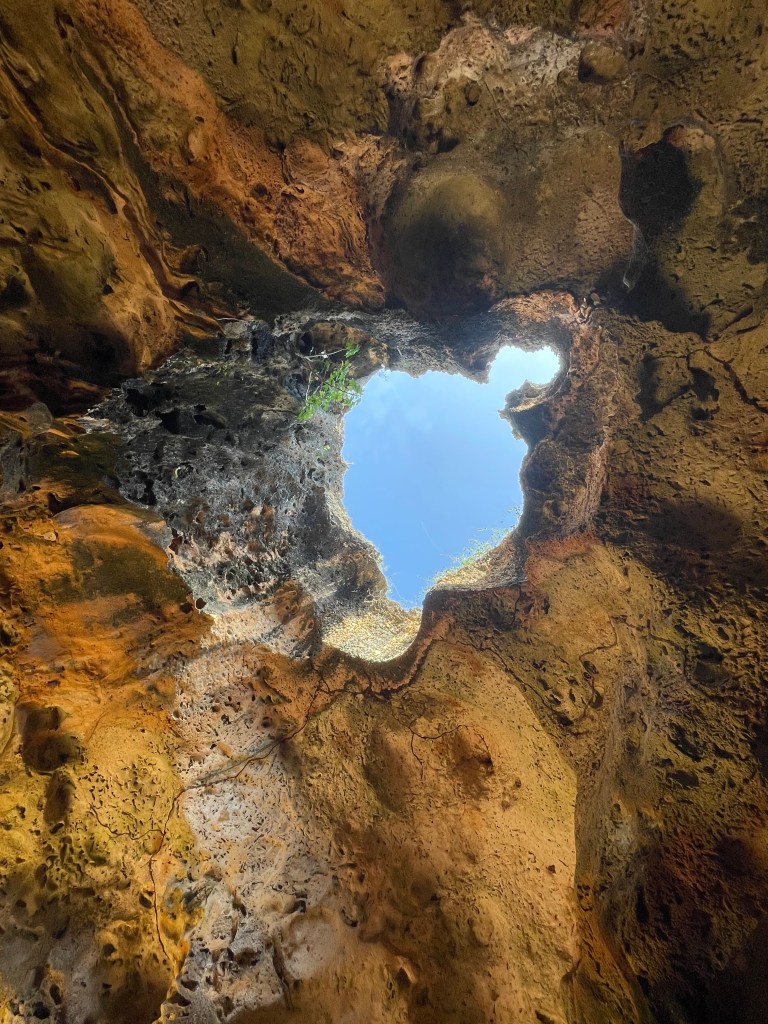
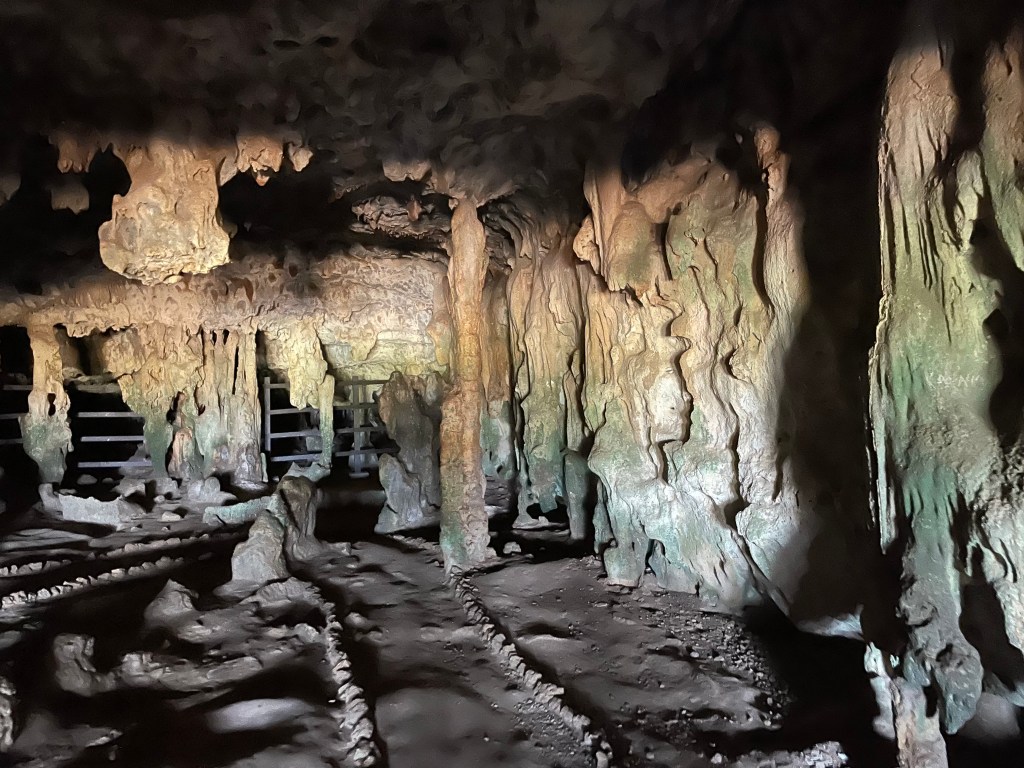
Our next cave was the Fontein Cave. I noticed that the groups excursion vehicles stopped at this cave, but not the other. I wonder if it was because of the steepness of the steps to get in. I’m not sure, but this cave was not very exciting. You didn’t go very far inside before it was blocked off. They said there were Indian pictographs inside, but unless you used a flashlight and had a guide, I’m not sure how you would know where they were located.
We stopped briefly at Boca Prins to take a picture of the ocean and try to spot some Atlantic Ghost crabs (we saw none).
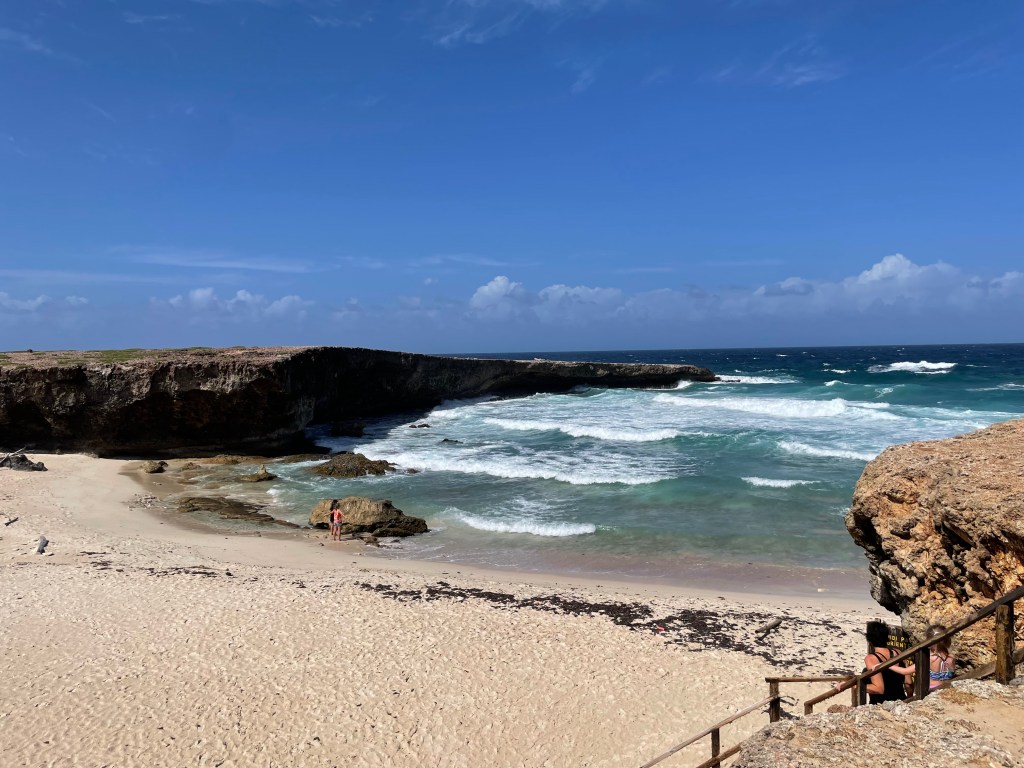
We then drove to Dos Playa, which was a pretty rough and muddy road. This beach is the only site in Aruba where all four types of sea turtles come to lay their eggs. I would LOVE to see a leatherback sea turtle. Did you know they are usually six feet long?! Of course it was not egg laying season so we didn’t see any turtles, but it was still a very pretty beach with cool cliffs. You are not allowed to swim in either of the beaches that we stopped at in the park.
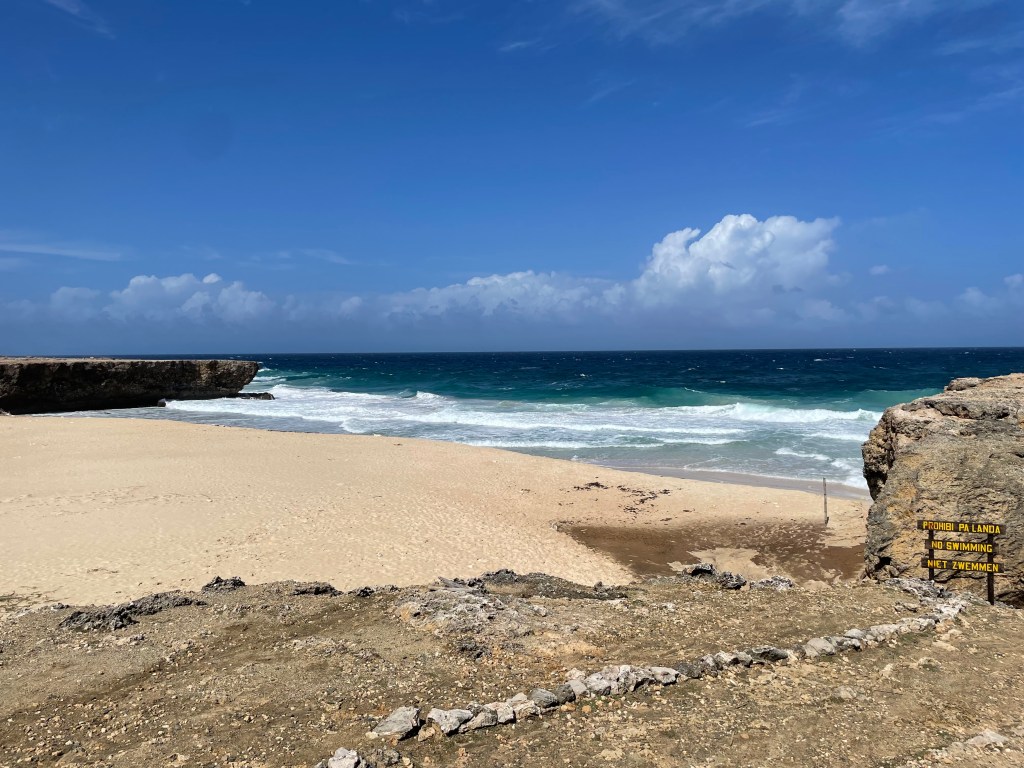
The other sections of the park require a hike and we did not have the inclination or the time to see any of those spots. We stopped briefly at the visitor center on the way out. They have restrooms, a coffee shop, and some exhibits about the island.
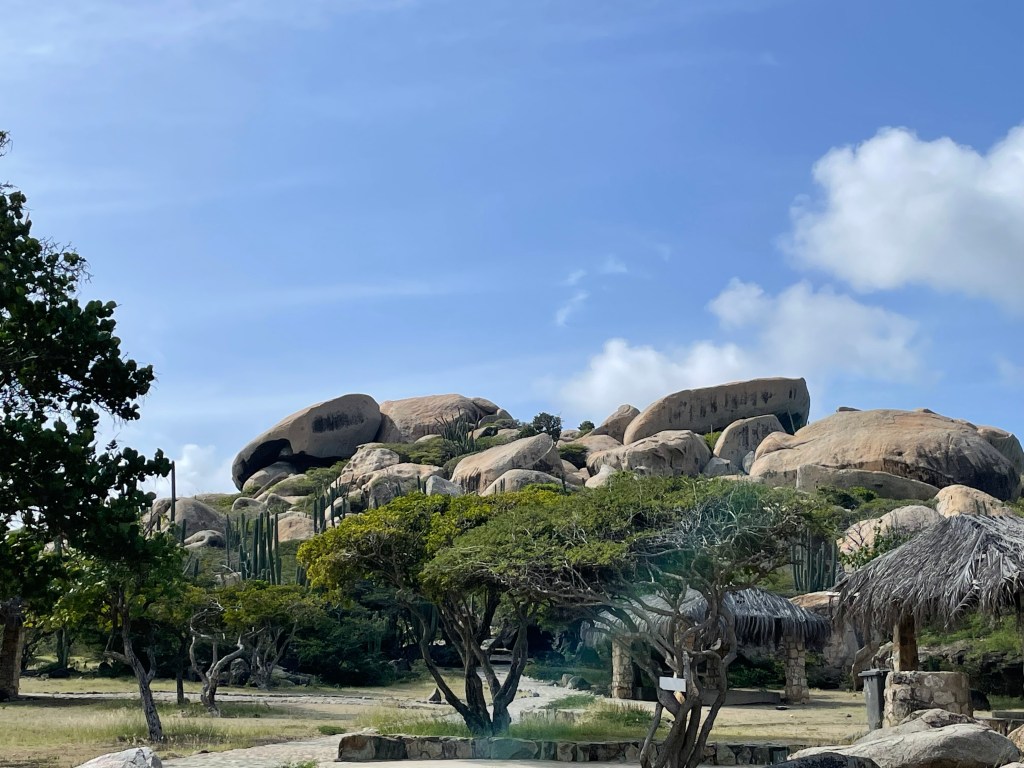
We stopped briefly at Ayo Rock Formation to take a picture. It would have been fun to climb around the rocks, which they allow, but warn you to do so at your own risk.
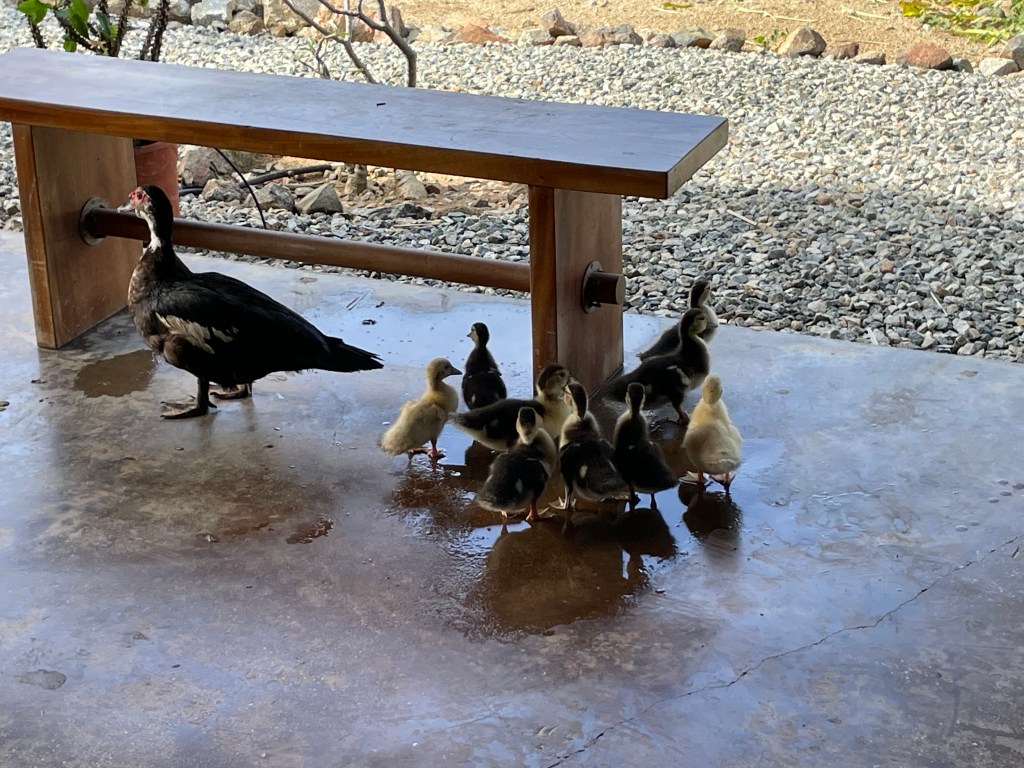
The Ostrich farm had already finished with its last tour by the time we got there, so we missed out on the ostriches, but we did see some cute baby ducks! The farm has a bar and restaurant and the tour costs $15 a person.
My husband read about a place where we might see flamingos, but after walking down the path and up the tower we found the vegetation was too overgrown to really get any kind of view. Instead we drove the road next to Eagle Beach where there are a ton of hotels and resorts. We stopped so I could feel the sand, but didn’t want to hang out on the beach. Why? Well, for one we live in Florida and can go anytime we want, but also it was super windy. It just didn’t feel like a beach day to me even though it was over 80 degrees.
We returned our Jeep and mentioned to the guy that we couldn’t believe some of the roads and how happy we were to have the Jeep. He said that most people rent a car because it’s only $60, but then bottom out and break things. We actually saw a guy trying to push part of his car back in place in the park.
There are a ton of little souvenir stores next to the port. We wandered around a bit and I was surprised to see how cheap hats and T-shirts cost. I bought a heavy T-shirt for $12 and they had hats for only $8. The magnets seemed expensive to me though and were very chintzy.
Inside the terminal they had an Aruba Aloe store, which I thought was pretty nice, especially for those people who did not get to tour the factory. You could still try out the products.
Aruba was an interesting island. It was fun exploring, but I don’t think that we will be back. If you want a beach vacation, I see the allure, but it’s an awfully far way to go to get that. If there is a reason you love Aruba so much, let me know!
 Bonney Voyage