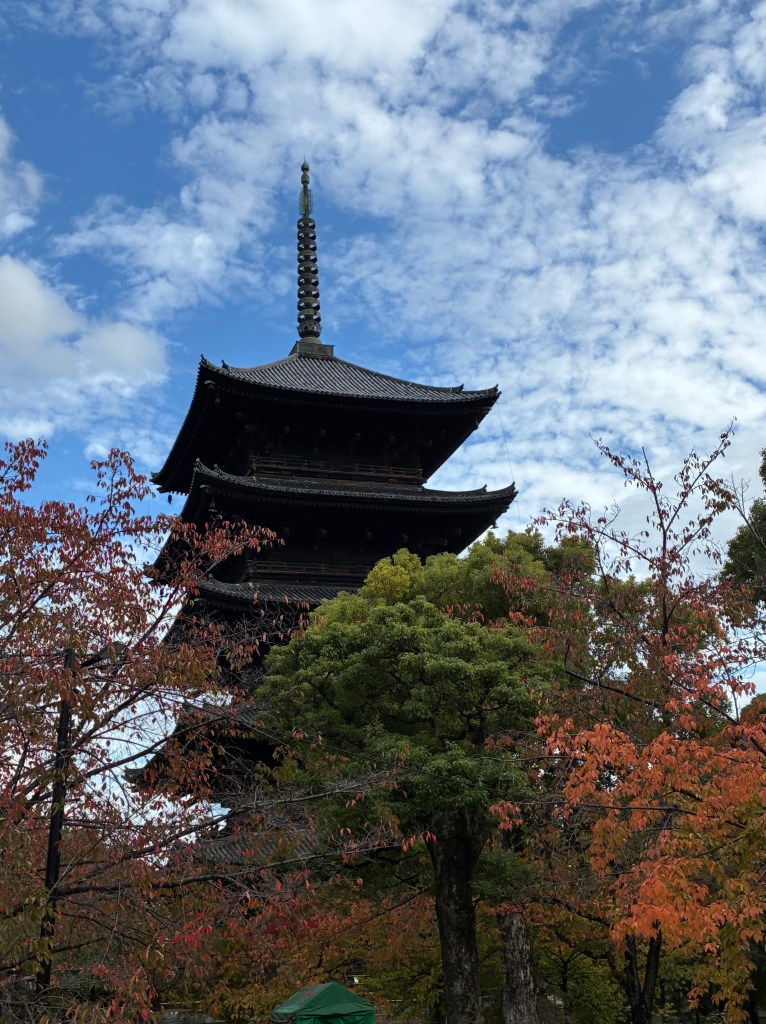
Today we had a plan to walk a little less than previous days. My husband had us on bus routes so we wouldn’t have to climb up and down the subway stairs. Our first stop was going to be the bamboo forest and monkeys. However, after reading some reviews, we realized it would be a lot of walking and uphill, so we got off the bus and were right near this temple.
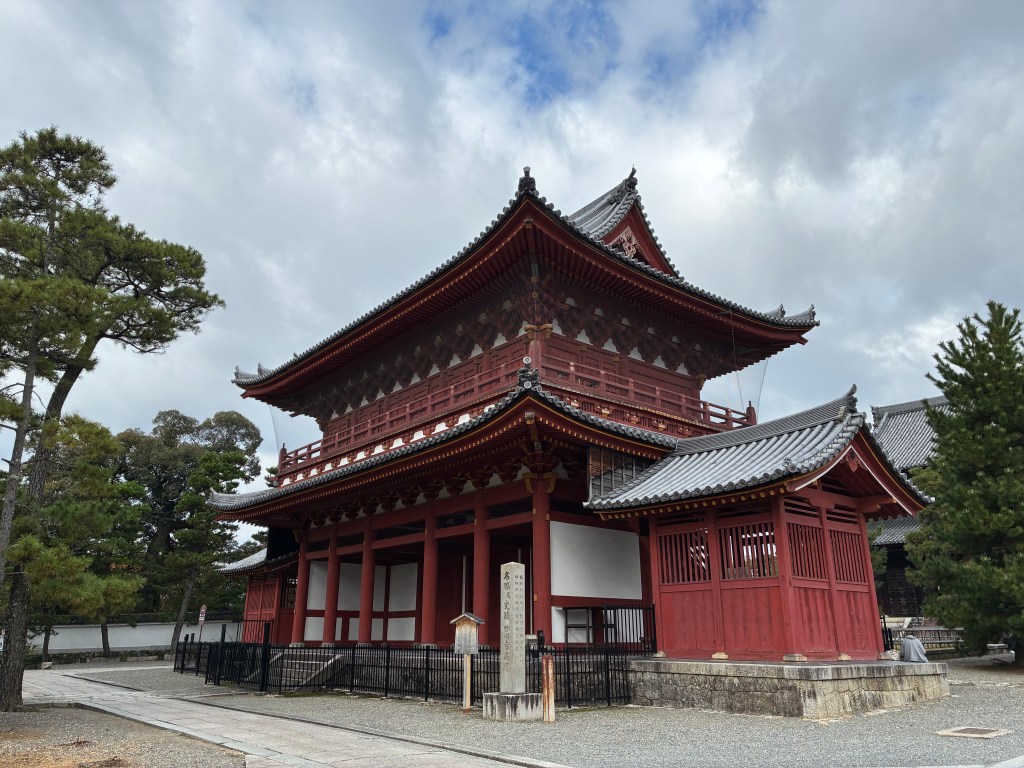
If you have been to Japan, you will know there is a temple or a shrine on almost every block. This one was a large complex that we only explored a small part. It’s called the Taizo-in Temple.
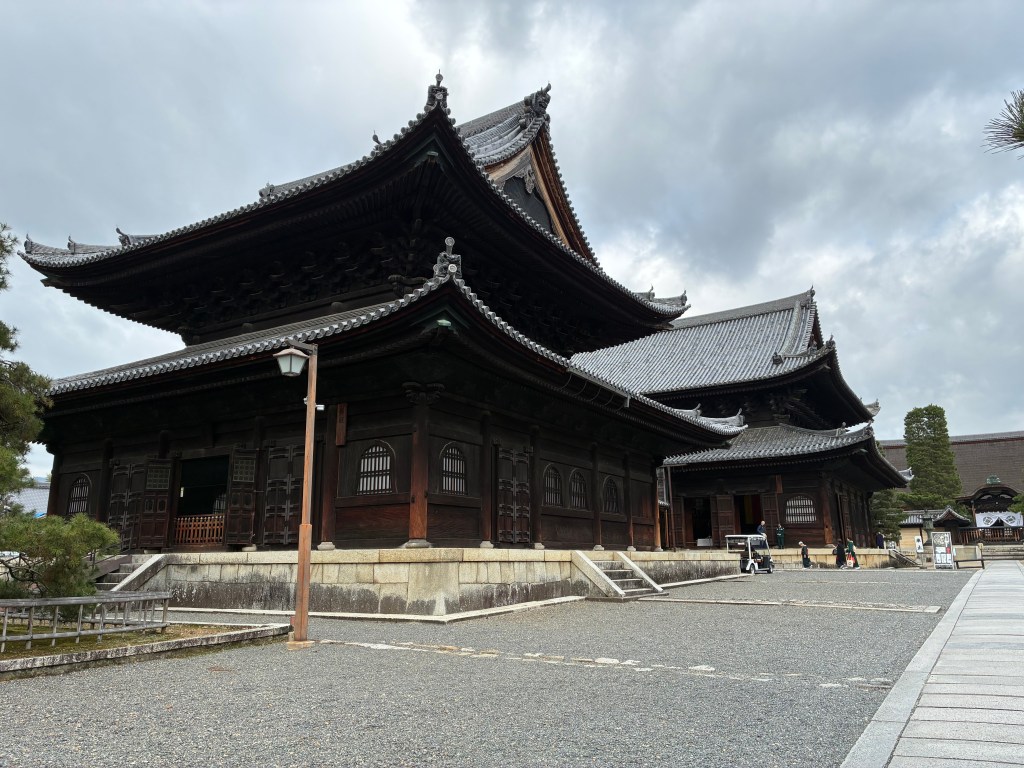
The main building had some kind of ceremony happening when we were there. We were lucky to see the processional into the building.
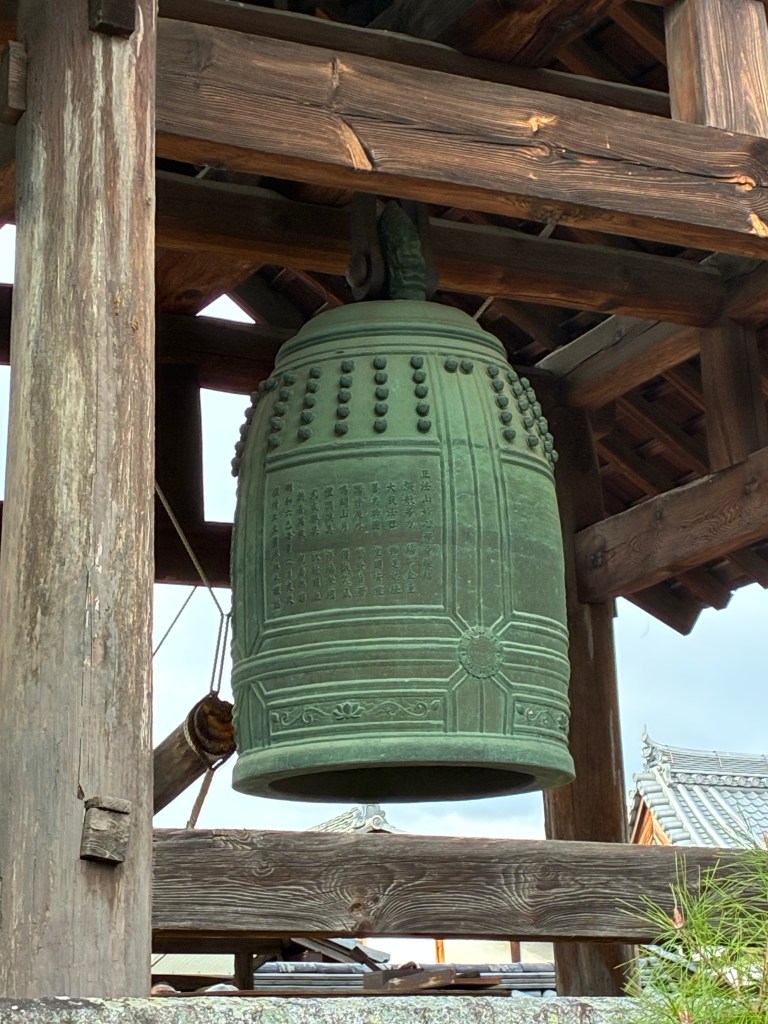
We also heard the bells toll.

I have never seen slippers anywhere like this so far and now I need to find them! They look very warm and comfortable.
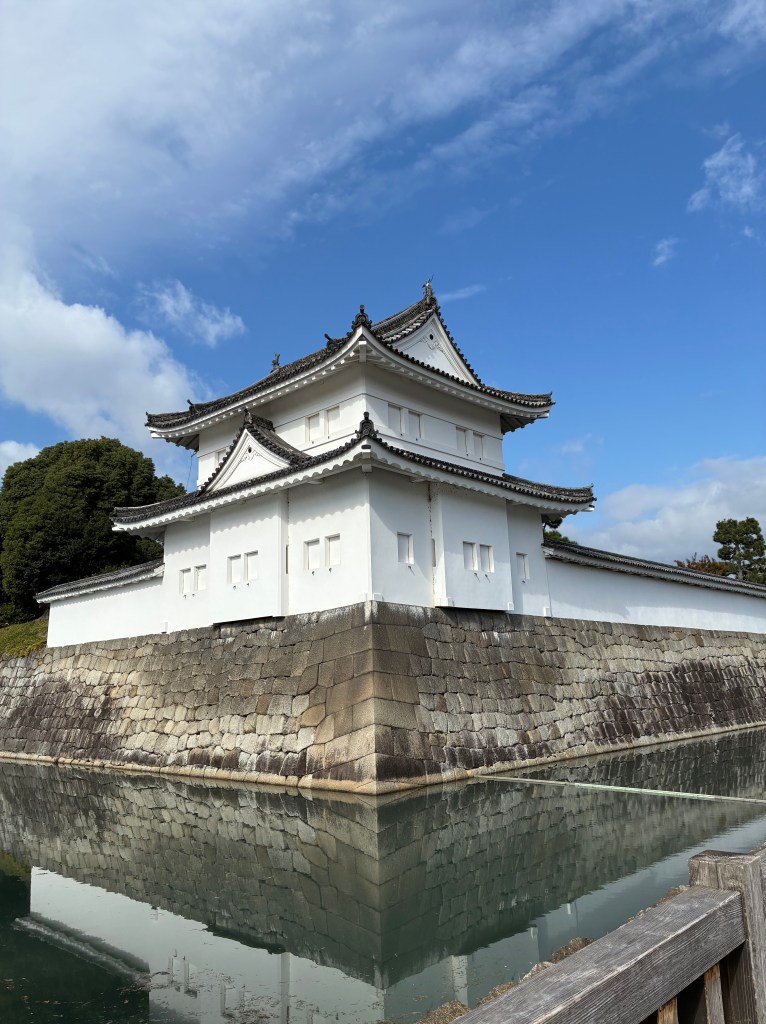
Our next stop was the Nijo-Jo Castle, which is not very far from our hotel. On each corner there were watchtowers that were lookouts and served as armories. There are only two left today. The other two were destroyed by fires.
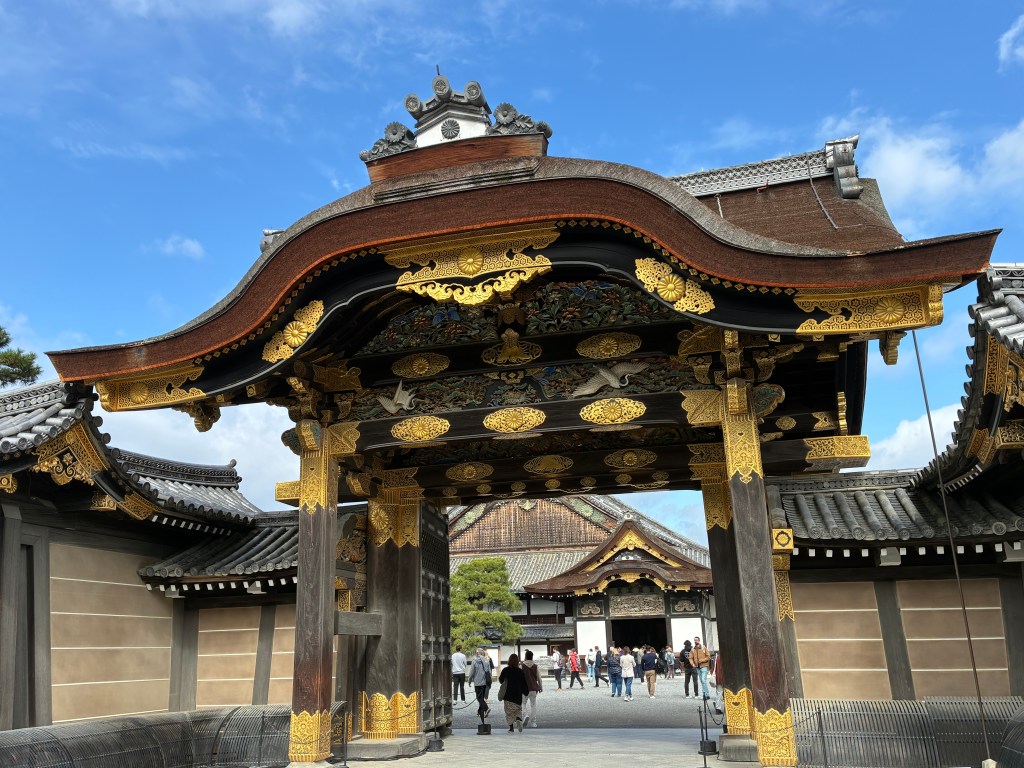
The Kara-mon Gate is the entrance to the Ninomaru-goten Palace. This gate represents the highest status, which is indicated by the architecture as well as the use of cypress bark for the roofing as well as the intricate carvings on the pillars.
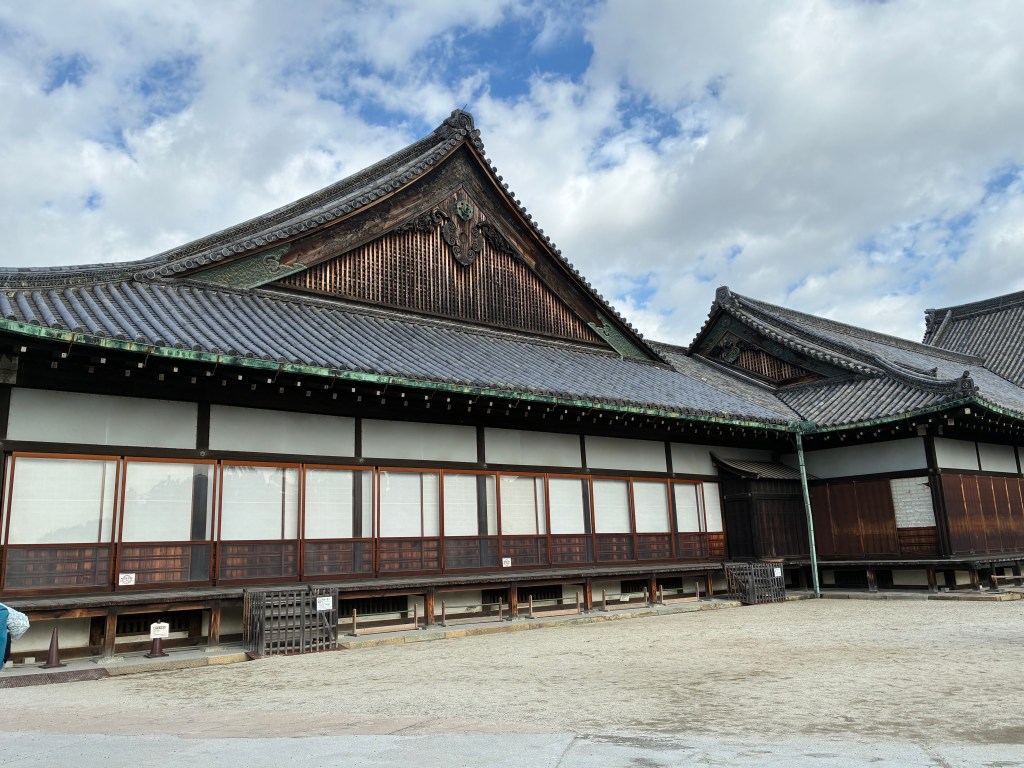
We bought the ticket that included the palace, which was 1300 yen each. You have to remove your shoes to enter the palace and you cannot take any pictures. As you walk on the ancient wood you can hear what sounds like birds. I thought some were inside, but it’s the structure itself. It makes a noise every time you step. There were a lot of people there so the sound never stopped. It was really neat.
The inside of the palace is filled with beautiful hand painted walls showing the significance of the shogun and his power. They are not the original paintings though. Those are on display at the painting gallery, which you can enter later for an additional fee. There were a lot of pine trees.
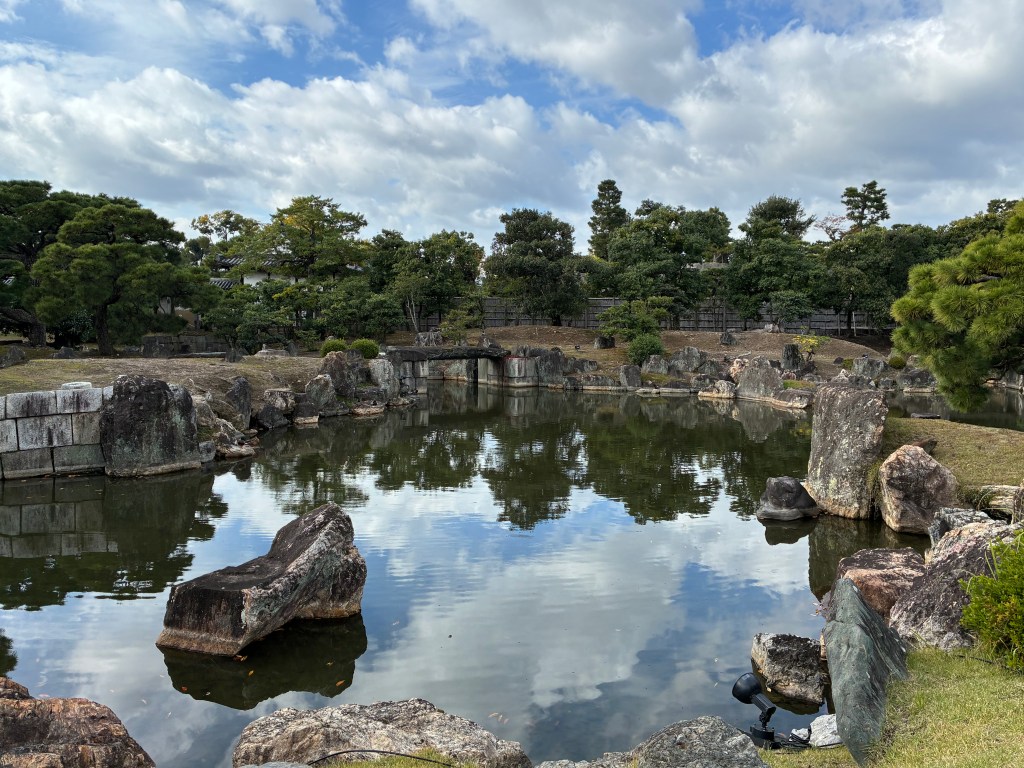
The Ninomaru Garden (also located in this complex) was created in 1626. There is one large island representing paradise and two smaller ones (cranes and turtles). It was very peaceful.

These stone ramparts were originally part of the base of the keep tower, which was struck by lightning and burned down in 1750. You can climb the area where it was once located.
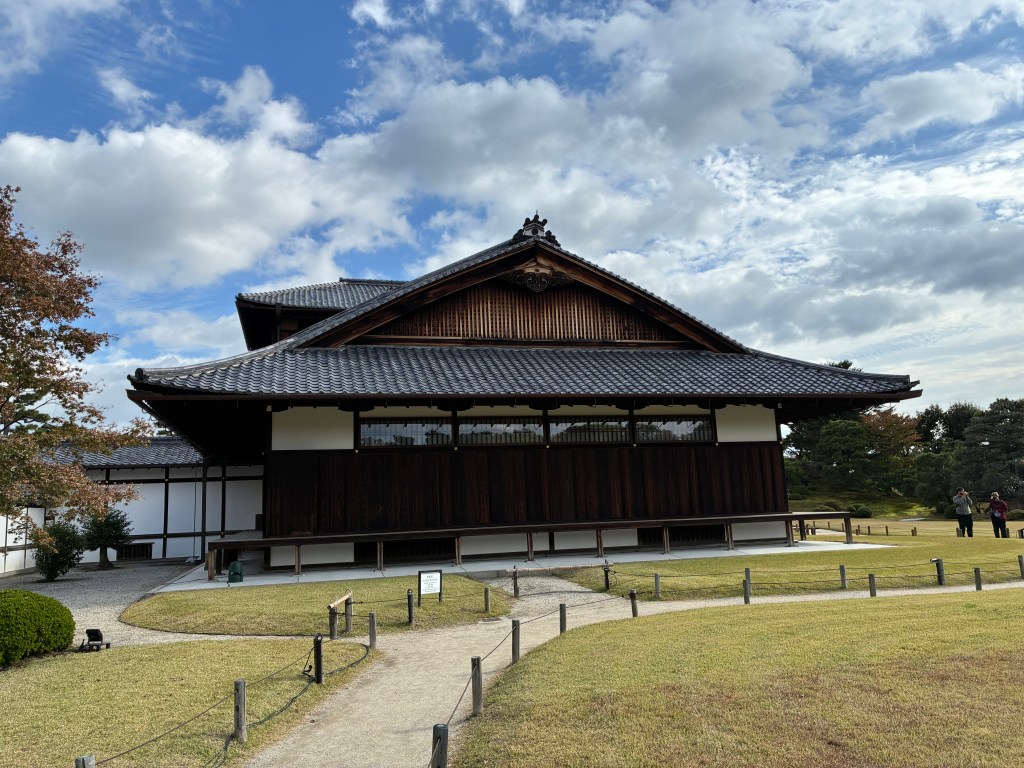
The Honmaru-goten Palace can be entered if you reserve a ticket online. We did not. It is a rare example of palace architecture for an imperial prince. It was moved to the Nijo-Jo Castle area in 1893.
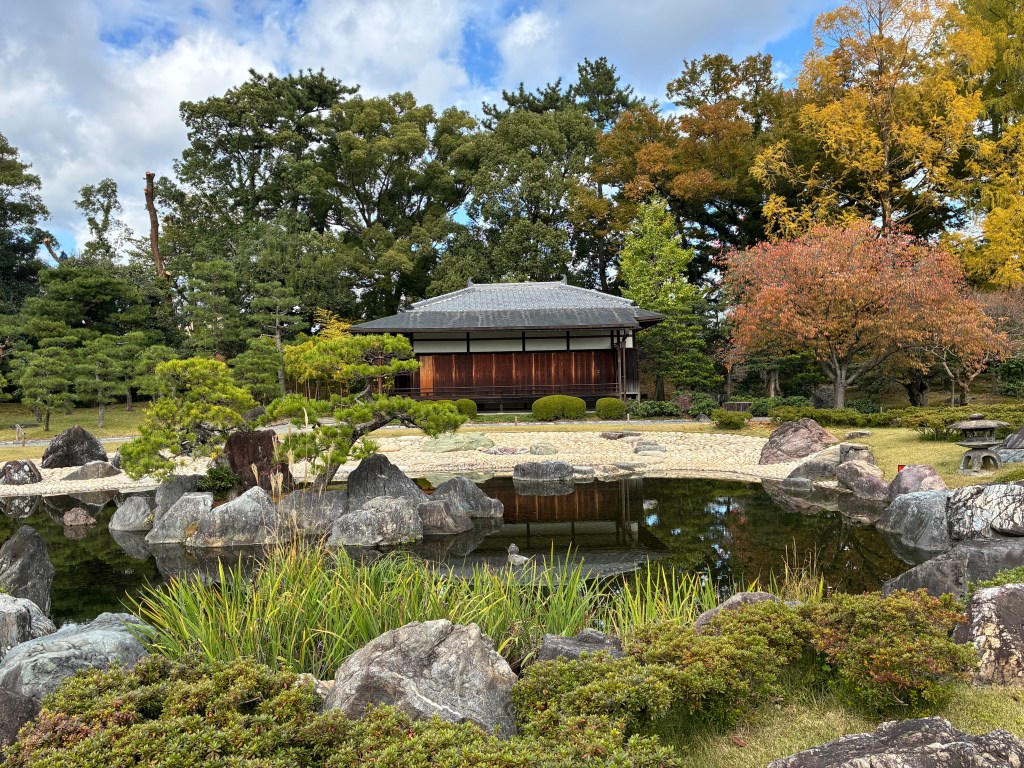
We walked around the gardens and took several pictures of both the plants and the gates to enter the castle.
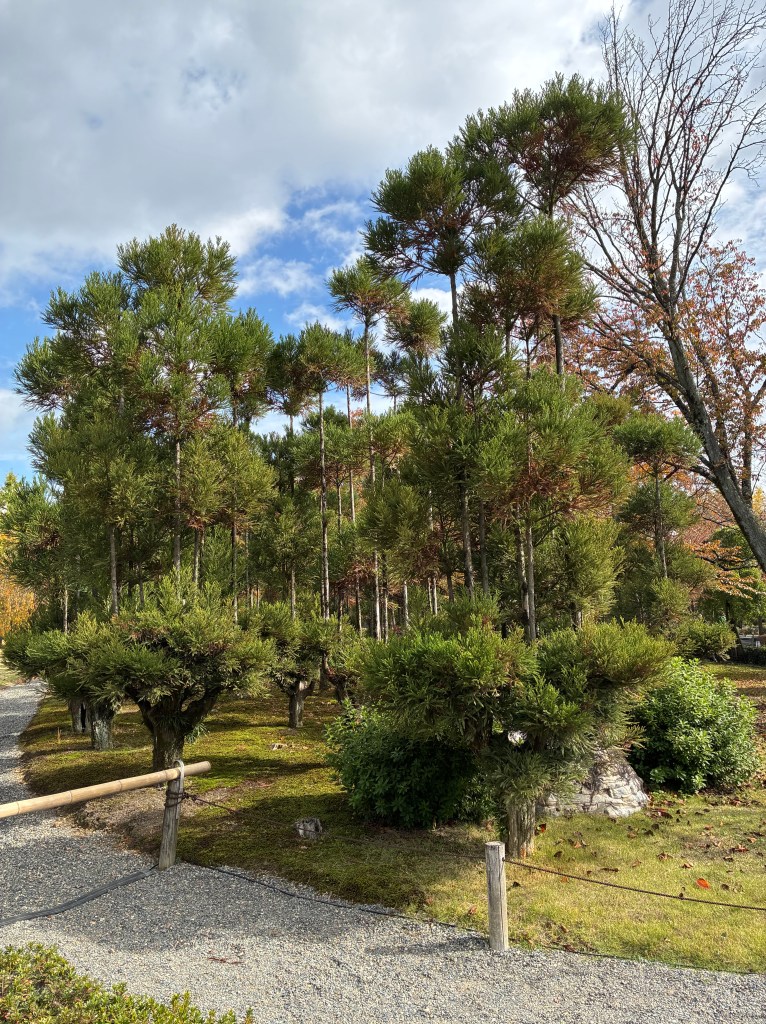
I thought these trees were really unique.
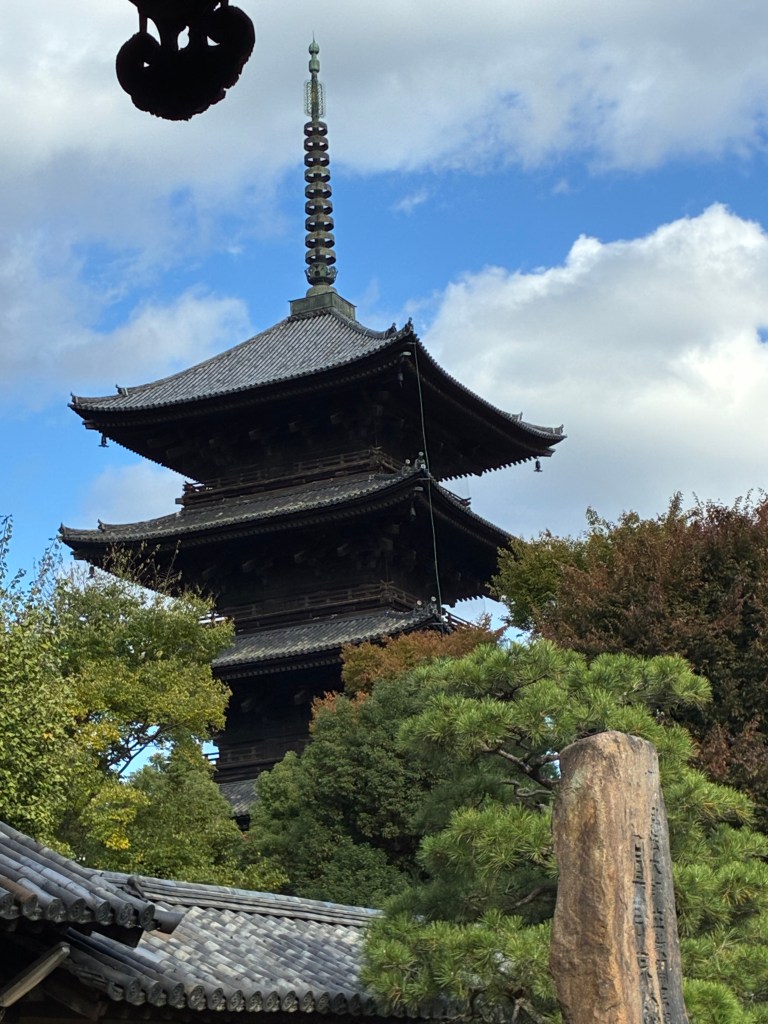
Our next stop was to see the Yasaka Pagoda. It was built in 589 by the Imperial Prince Shotoku. It is said to be inspired by a dream. You are allowed inside to see the statues and paintings.
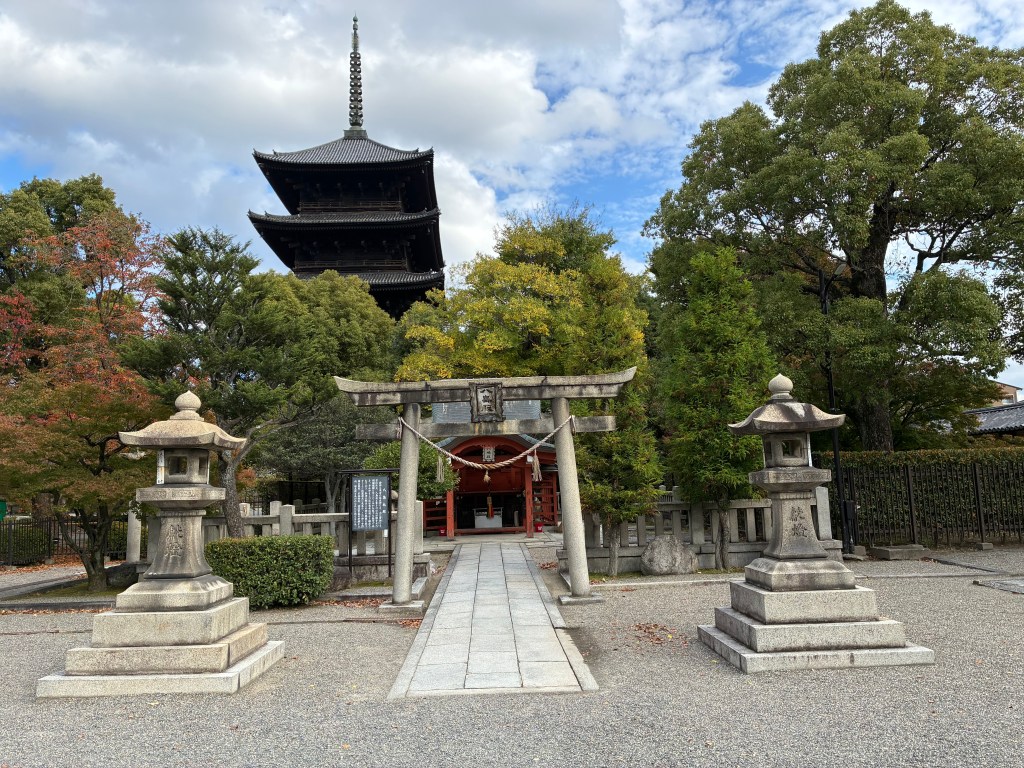
We admired it from the nearby shrine.
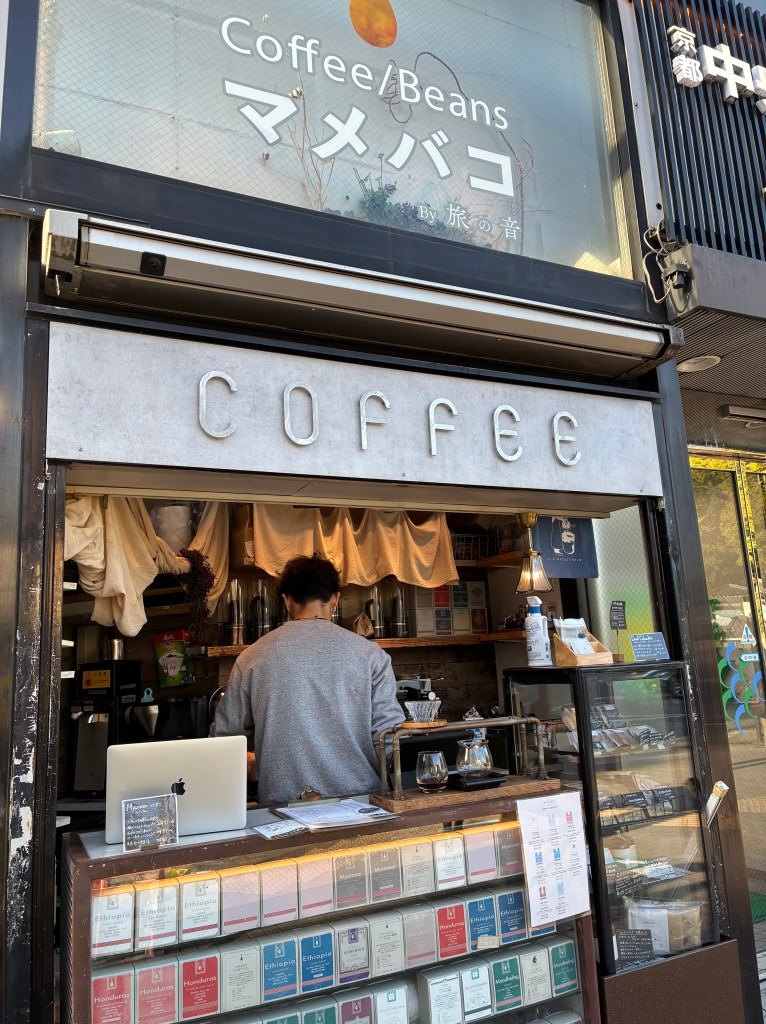
Our last stop before my coffee…
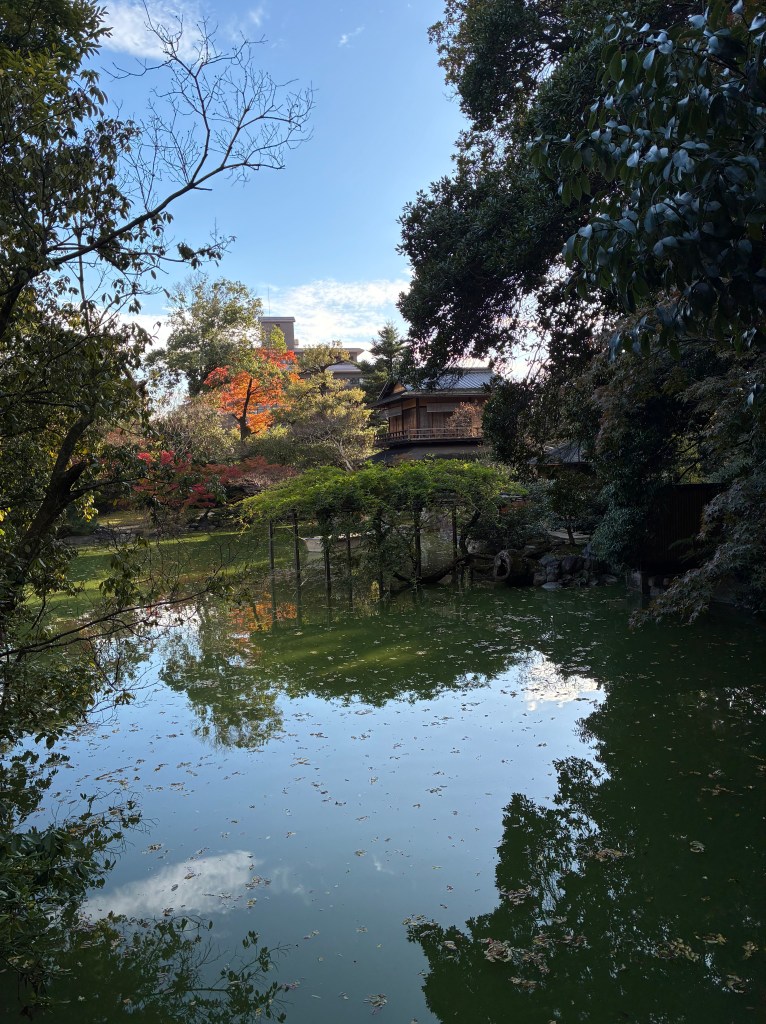
Was the Imperial Palace of Kyoto. Sadly, it was closed today. This meant that all the gates were shut, so we couldn’t even see into the area where the buildings are located. Apparently it’s a free tour, but you can’t go in the buildings on your own. The gardens and park are beautiful to walk through.

We saw a gray heron.

We also enjoyed the foliage.
 Bonney Voyage